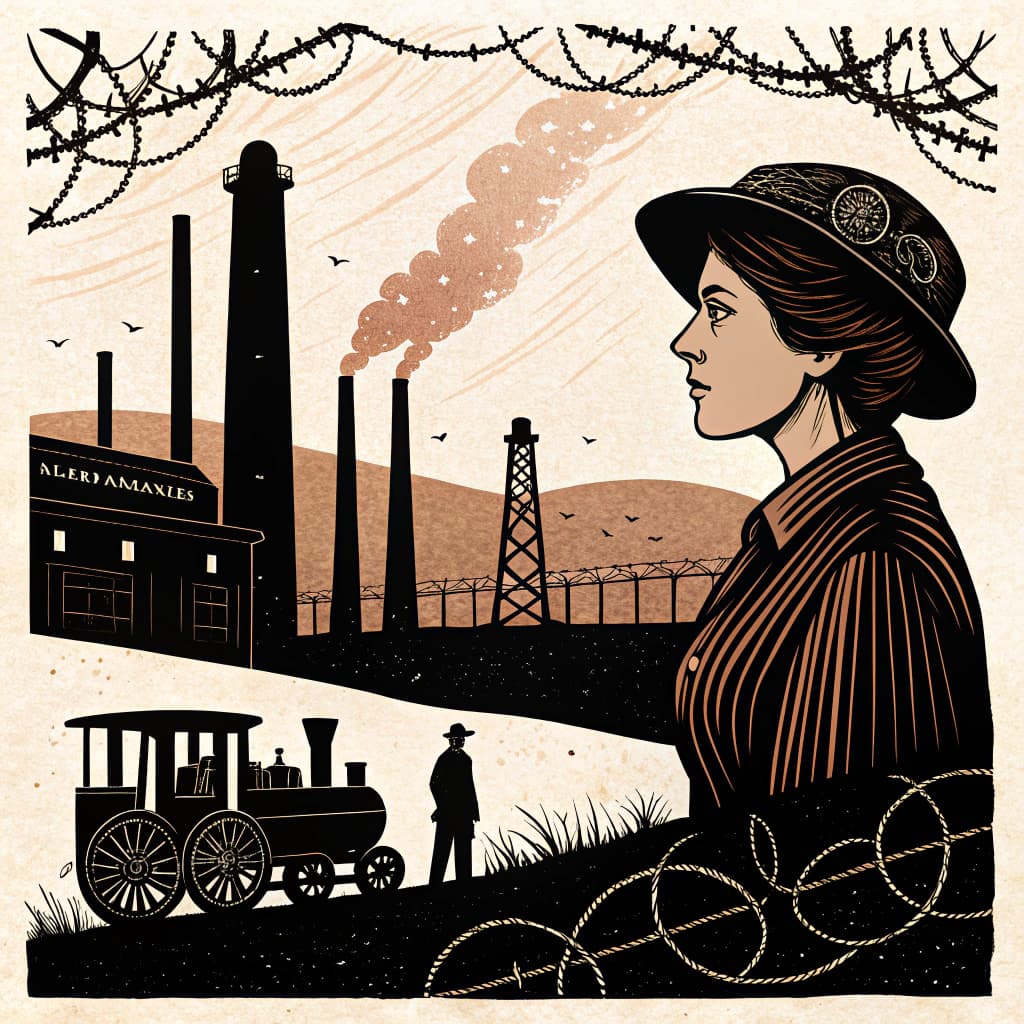
Early Working-Class Protest: Luddites & Swing Riots
Students will explore early forms of resistance to industrialisation, including machine-breaking and agricultural unrest.
TL;DR:Active learning helps students grasp the human cost behind historical events by making abstract grievances concrete. When Year 9s role-play a Luddite meeting or study protest letters up close, they move beyond textbook labels to understand the daily lives and decisions of workers facing technological disruption.
About This Topic
The Luddite movement and Swing Riots mark pivotal early protests by working-class people against the disruptions of industrialisation in early 19th-century Britain. Year 9 students investigate the Luddites, skilled textile workers from 1811 to 1816 who smashed knitting frames and power looms to protect their livelihoods from mechanisation. They also study the Swing Riots of 1830, when agricultural labourers destroyed threshing machines, sent threatening letters signed 'Captain Swing,' and demanded better wages amid enclosures and poor harvests. These events reveal deep economic grievances tied to technological change.
This topic aligns with KS3 History standards on industry, empire, and social reform from 1745-1901. Students address key questions about motivations, such as job losses and skill devaluation, and why protesters focused on machines rather than immediate political reform. Comparing the urban, craft-based Luddites with rural Swing Rioters sharpens skills in causation, similarity, and difference, using sources like letters, government reports, and ballads to build evidence-based arguments.
Active learning benefits this topic greatly. Role-plays of protests or debates between workers and owners bring motivations to life, while collaborative source sorting helps students uncover patterns in unrest. These methods foster empathy for historical actors and make abstract concepts of resistance concrete and engaging.
Key Questions
- Explain the motivations behind the Luddite movement and its targets.
- Analyze why early protests often focused on destroying machinery rather than political reform.
- Compare the Luddite movement with the Swing Riots in terms of goals and impact.
Learning Objectives
- Explain the primary motivations of Luddite protestors, identifying specific grievances related to mechanization.
- Analyze the strategic choices of early protestors, comparing machine-breaking with demands for political reform.
- Compare and contrast the Luddite movement and the Swing Riots, evaluating their respective goals, methods, and impacts on agricultural and industrial workers.
- Evaluate the effectiveness of early working-class protest tactics in response to industrial and agricultural changes.
Before You Start
Why: Students need a foundational understanding of pre-industrial work, craft skills, and rural life to appreciate the changes brought by industrialisation.
Why: A basic grasp of key inventions and the shift from cottage industries to factories is necessary to understand the context of mechanisation and its impact on workers.
Key Vocabulary
| Luddites | A group of English textile workers in the early 19th century who destroyed machinery as a form of protest against job losses and wage reductions due to industrialization. |
| Swing Riots | A series of rural protests in 1830 across southern England, where agricultural labourers destroyed threshing machines and demanded higher wages and better working conditions. |
| Mechanisation | The introduction of machines or automatic devices into a process, industry, or place, often leading to significant changes in labor and production. |
| Threshing machine | A piece of farm equipment used to separate grain from stalks and husks, the destruction of which was a key target during the Swing Riots. |
| Frame breaking | The act of deliberately destroying knitting frames or other textile machinery, a tactic employed by the Luddites. |
Watch Out for These Misconceptions
Common MisconceptionLuddites opposed all technology and progress.
What to Teach Instead
Luddites targeted specific machines that undercut skilled work, not technology itself. They sought fair wages and training. Active source analysis in groups helps students distinguish nuanced views from simplified narratives through peer comparison of artisan petitions.
Common MisconceptionSwing Riots and Luddites achieved nothing lasting.
What to Teach Instead
While suppressed harshly, they spotlighted worker plight, influencing later reforms like the Reform Act. Hands-on timeline activities reveal short-term failures alongside long-term sparks for unionism, as students connect events collaboratively.
Common MisconceptionProtests stemmed mainly from laziness, not real hardships.
What to Teach Instead
Grievances arose from wage cuts, unemployment, and enclosures. Role-plays let students embody workers' perspectives, using data on prices and jobs to counter stereotypes via empathetic discussion.
Active Learning Ideas
See all activities→Mock Trial
Role-Play: Luddite Meeting
Divide class into Luddites, factory owners, and magistrates. Groups prepare arguments for or against machine-breaking using provided sources. Hold a 20-minute debate, then vote on outcomes. Debrief on real historical responses.
Mock Trial
Source Stations: Protest Evidence
Set up stations with Luddite letters, Swing Riot threats, newspaper reports, and ballads. Pairs rotate, noting motivations and impacts at each. Groups share findings in a class chart.
Mock Trial
Comparison Timeline
In small groups, students create dual timelines of Luddite and Swing events, marking causes, actions, and government reactions. Add symbols for similarities like machine targets. Present to class.
Real-World Connections
- Modern workers in manufacturing sectors, such as automotive or electronics assembly, may face similar anxieties about job security due to automation and artificial intelligence, echoing the concerns of the Luddites.
- Farmers today still grapple with the impact of technology on their livelihoods, from large-scale combine harvesters to precision agriculture drones, and may organize to address issues like market prices or environmental regulations.
- The concept of 'technological unemployment' remains a significant economic and social issue, discussed by economists and policymakers when new technologies like generative AI emerge and potentially displace human workers.
Assessment Ideas
Provide students with a Venn diagram template. Ask them to compare the Luddites and Swing Rioters, listing at least two similarities and two differences in their motivations or targets. Collect and review for understanding of key distinctions.
Pose the question: 'If you were a skilled artisan losing your job to a new machine in 1812, would you smash the machine or write a letter to Parliament? Explain your reasoning, considering the potential consequences of each action.' Facilitate a brief class debate.
Present students with short descriptions of protest actions (e.g., 'Destroying a loom,' 'Sending a letter demanding higher pay,' 'Burning a threshing machine'). Ask them to categorize each action as primarily Luddite or Swing Rioter, or both, and briefly justify their choice.
Frequently Asked Questions
What caused the Luddite movement?
How do Luddites compare to Swing Riots?
Why did early protests target machines over politics?
How can active learning help teach Luddites and Swing Riots?
Planning templates for History
5E Model
The 5E Model structures lessons through five phases (Engage, Explore, Explain, Elaborate, and Evaluate), guiding students from curiosity to deep understanding through inquiry-based learning.
Unit PlannerThematic Unit
Organize a multi-week unit around a central theme or essential question that cuts across topics, texts, and disciplines, helping students see connections and build deeper understanding.
RubricSingle-Point Rubric
Build a single-point rubric that defines only the "meets standard" level, leaving space for teachers to document what exceeded and what fell short. Simple to create, easy for students to understand.
More in The Industrial Revolution & Victorian Britain
Britain's Industrial Head Start
Students will analyze the unique combination of geographical, economic, and political factors that made Britain the first industrial nation.
8 methodologies
Technological Innovations: Textiles & Steam
Students will explore the key inventions in textiles and steam power, understanding their impact on production and society.
8 methodologies
The Rise of the Factory System
Students will investigate the shift from cottage industries to factory production, examining its economic and social implications.
8 methodologies
Urbanisation and Industrial Cities
Students will investigate the rapid growth of industrial cities, focusing on the challenges of overcrowding and sanitation.
8 methodologies
Child Labour in Factories and Mines
Students will examine primary sources to understand the realities of child labour and the arguments for and against it.
8 methodologies
The Chartist Movement
Students will investigate the Chartist demands for political reform and evaluate their methods and ultimate impact.
8 methodologies