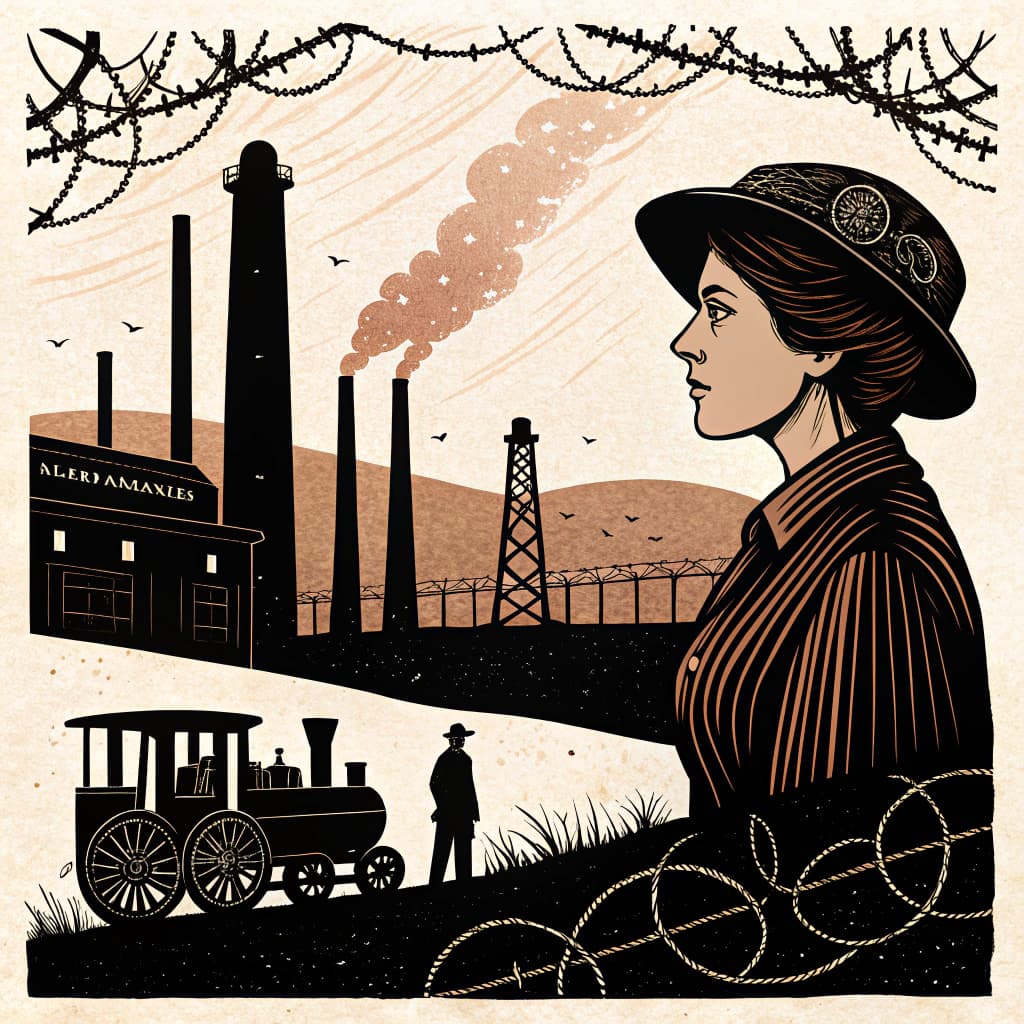
Britain's Industrial Head Start
Students will analyze the unique combination of geographical, economic, and political factors that made Britain the first industrial nation.
TL;DR:Active learning helps students move beyond memorizing dates and names by letting them analyze the real-world conditions that shaped Britain’s industrial rise. Working with maps, primary sources, and collaborative tasks makes abstract economic and geographical factors concrete and memorable for adolescents.
About This Topic
This topic explores the specific conditions that allowed Britain to become the first industrial nation. Students examine a combination of geographical advantages, such as abundant coal and iron ore, alongside economic factors like the capital generated from the transatlantic slave trade and colonial expansion. The curriculum focuses on how these elements converged with scientific ingenuity and the enclosure movement to shift Britain from an agrarian society to an industrial powerhouse.
Understanding these origins is vital for Year 9 students to grasp the foundations of the modern world and Britain's historical global standing. It sets the stage for discussing later themes of empire, class struggle, and urbanisation. This topic particularly benefits from hands-on, student-centered approaches where students can physically map resources or simulate the economic decisions of early entrepreneurs.
Key Questions
- Analyze the key factors that positioned Britain as the birthplace of the Industrial Revolution.
- Evaluate whether industrialisation was an inevitable outcome for Britain or a result of specific circumstances.
- Explain how changes in agriculture contributed to the growth of the industrial workforce.
Learning Objectives
- Analyze the interplay of geographical features, natural resources, and technological innovations that facilitated Britain's industrialization.
- Evaluate the extent to which agricultural reforms, such as enclosure, were a necessary precursor to the growth of an industrial workforce.
- Explain the role of capital, trade networks, and political stability in Britain's emergence as the first industrial nation.
- Compare the pre-industrial economic structure of Britain with its emerging industrial model, identifying key shifts in production and labor.
Before You Start
Why: Understanding the preceding social and economic structures provides a baseline for appreciating the dramatic changes brought about by industrialization.
Why: Knowledge of existing trade routes and capital accumulation from exploration and colonialism is essential for understanding the financial basis of early industrial ventures.
Key Vocabulary
| Enclosure Movement | The process of consolidating small landholdings into larger farms and fencing off common land, which displaced rural populations and contributed to urbanization. |
| Cottage Industry | A system of manufacturing where goods were produced in people's homes, often on a piecework basis, prior to the widespread adoption of factories. |
| Factors of Production | The essential elements required for industrialization: land (natural resources), labor (workforce), and capital (money for investment). |
| Innovation | The introduction of new methods, ideas, or products, particularly key inventions like the steam engine and power loom that transformed production. |
Watch Out for These Misconceptions
Common MisconceptionIndustrialisation happened solely because of British 'genius' or better inventions.
What to Teach Instead
While ingenuity played a part, it was the combination of cheap raw materials from the colonies, capital from the slave trade, and geographical luck (coal near the surface) that made it possible. Peer discussion helps students weigh these factors against each other.
Common MisconceptionThe Industrial Revolution happened overnight.
What to Teach Instead
It was a slow, messy process spanning decades. Using a timeline-building activity helps students see the gradual transition from domestic systems to the factory system.
Active Learning Ideas
See all activities→Inquiry Circle
The 'Ingredients' for Industry
Small groups are given 'resource packs' representing different countries in 1750. They must trade or use their internal resources (coal, navigable rivers, colonies, stable banks) to see who can 'launch' an industrial revolution first.
Think-Pair-Share
The Enclosure Dilemma
Students take on roles of wealthy landowners or tenant farmers. They discuss the impact of the Enclosure Acts on their livelihoods before sharing their conclusions on why this forced migration to cities was necessary for factory growth.
Gallery Walk
Inventions that Changed the World
Stations around the room display diagrams of the Flying Shuttle, Spinning Jenny, and Watt's Steam Engine. Students move in groups to annotate how each invention solved a specific bottleneck in production.
Real-World Connections
- The development of canal networks, like the Bridgewater Canal, directly transported coal from mines in Lancashire to industrial centers, mirroring modern logistics challenges for raw material delivery.
- Entrepreneurs like Richard Arkwright, who established the first true factories using water power, represent early examples of business leaders who shaped industrial landscapes and labor practices still relevant to modern management.
Assessment Ideas
Provide students with three factors: abundant coal, enclosure movement, and the invention of the steam engine. Ask them to rank these factors by their perceived importance in Britain's industrial head start and write one sentence justifying their top choice.
Display a map of Britain highlighting key resources like coalfields and iron ore deposits. Ask students: 'Identify two geographical advantages shown on this map that would have aided industrial development and explain how each advantage could be used.'
Pose the question: 'Was Britain destined to industrialize, or was it a series of specific historical events and choices?' Facilitate a class discussion where students must support their arguments with evidence from the lesson regarding geography, politics, and economics.
Frequently Asked Questions
How did the British Empire contribute to the Industrial Revolution?
Why was coal so important for Britain's start?
What role did the Agricultural Revolution play?
How can active learning help students understand the causes of industrialisation?
Planning templates for History
5E Model
The 5E Model structures lessons through five phases (Engage, Explore, Explain, Elaborate, and Evaluate), guiding students from curiosity to deep understanding through inquiry-based learning.
Unit PlannerThematic Unit
Organize a multi-week unit around a central theme or essential question that cuts across topics, texts, and disciplines, helping students see connections and build deeper understanding.
RubricSingle-Point Rubric
Build a single-point rubric that defines only the "meets standard" level, leaving space for teachers to document what exceeded and what fell short. Simple to create, easy for students to understand.
More in The Industrial Revolution & Victorian Britain
Technological Innovations: Textiles & Steam
Students will explore the key inventions in textiles and steam power, understanding their impact on production and society.
8 methodologies
The Rise of the Factory System
Students will investigate the shift from cottage industries to factory production, examining its economic and social implications.
8 methodologies
Urbanisation and Industrial Cities
Students will investigate the rapid growth of industrial cities, focusing on the challenges of overcrowding and sanitation.
8 methodologies
Child Labour in Factories and Mines
Students will examine primary sources to understand the realities of child labour and the arguments for and against it.
8 methodologies
Early Working-Class Protest: Luddites & Swing Riots
Students will explore early forms of resistance to industrialisation, including machine-breaking and agricultural unrest.
8 methodologies
The Chartist Movement
Students will investigate the Chartist demands for political reform and evaluate their methods and ultimate impact.
8 methodologies