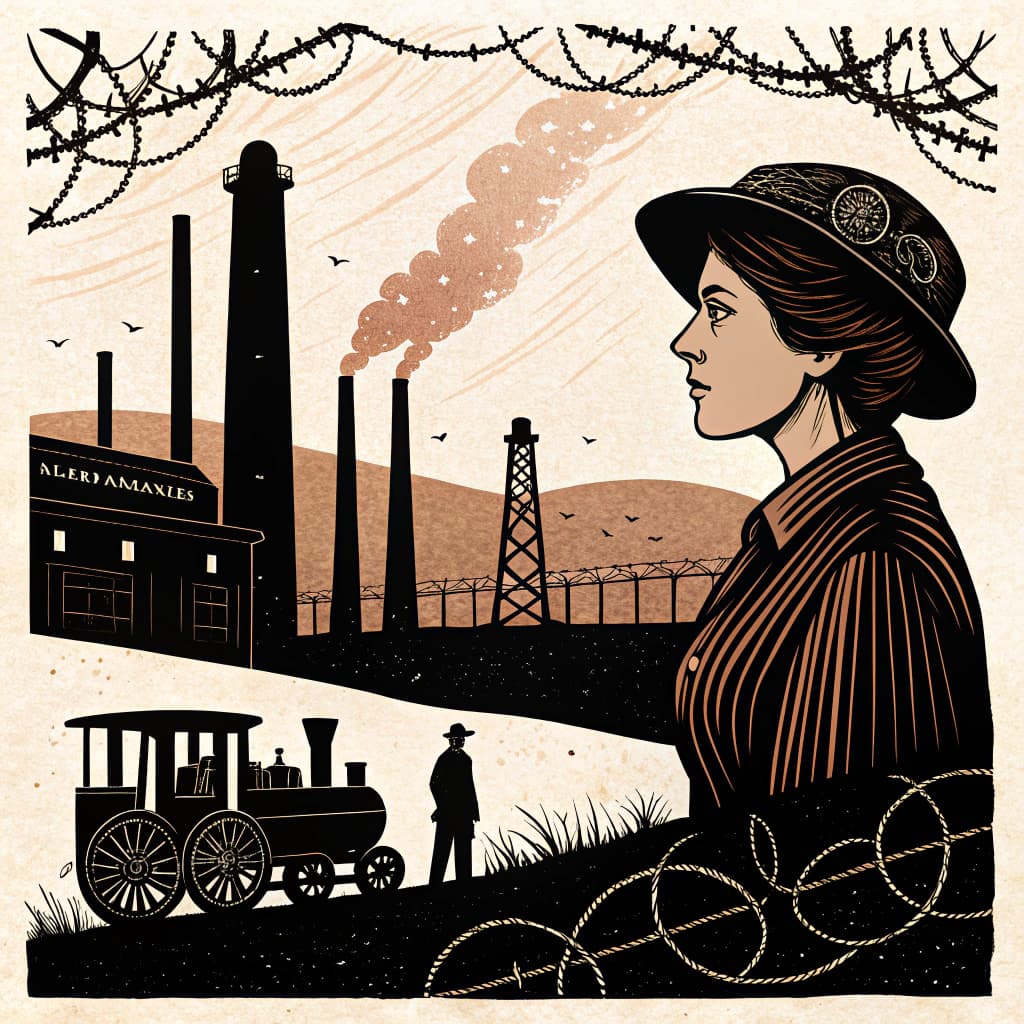
Technological Innovations: Textiles & Steam
Students will explore the key inventions in textiles and steam power, understanding their impact on production and society.
TL;DR:Active learning helps students grasp how technological innovations reshaped society by making abstract concepts concrete. Hands-on modeling and debates let students experience the scale of change, turning dates and names into lived history they can question and test.
About This Topic
Students examine key inventions such as the spinning jenny, power loom, and James Watt's steam engine, which marked the early Industrial Revolution in textiles and steam power. The spinning jenny, invented by James Hargreaves, multiplied yarn production by allowing one worker to spin multiple threads simultaneously. The power loom, developed by Edmund Cartwright, automated weaving, shifting production to factories. Watt's improvements to the steam engine provided reliable power for machinery, extending beyond coal mines to textiles, ironworks, and transport. These changes boosted output, created urban factories, and reshaped society through migration and class shifts.
This topic aligns with KS3 History standards on the Industrial Revolution from 1745-1901, addressing ideas, political power, industry, and empire. Students compare impacts on production, analyze the steam engine's cross-industry revolution, and evaluate the most significant innovation. Such analysis develops skills in causation, continuity, and change, essential for understanding modern industrial legacies.
Active learning benefits this topic because students handle replica models of spinning wheels or build simple pulley systems to simulate power looms, directly experiencing mechanical advantages. Role-playing factory shifts or inventor debates fosters evaluation skills, while collaborative timelines reveal invention sequences, making historical causation vivid and memorable.
Key Questions
- Compare the impact of the spinning jenny and the power loom on textile production.
- Analyze how James Watt's steam engine revolutionised various industries beyond mining.
- Evaluate the most significant technological innovation of the early Industrial Revolution.
Learning Objectives
- Compare the impact of the spinning jenny and the power loom on the speed and scale of textile production.
- Analyze how James Watt's steam engine provided consistent power for machinery in industries beyond mining, such as textiles and iron production.
- Evaluate the relative significance of the spinning jenny, power loom, or steam engine in initiating the early Industrial Revolution.
- Explain the social and economic consequences of factory production on the lives of workers and the growth of towns.
Before You Start
Why: Students need to understand the limitations of handcraft and cottage industries to appreciate the revolutionary nature of new inventions.
Why: A foundational understanding of simple machines and how they multiply force or change direction helps students grasp the mechanical advantages of inventions like the spinning jenny and power loom.
Key Vocabulary
| Spinning Jenny | An invention by James Hargreaves that allowed one worker to spin multiple threads of yarn at once, significantly increasing yarn production. |
| Power Loom | A mechanized loom invented by Edmund Cartwright that automated the weaving process, leading to the shift of textile production from homes to factories. |
| Steam Engine | An engine developed by James Watt, which used steam power to drive machinery, revolutionizing industrial processes and transportation. |
| Factory System | A method of manufacturing using machinery and division of labor, concentrating production in large buildings called factories. |
Watch Out for These Misconceptions
Common MisconceptionThe steam engine was only used in coal mines.
What to Teach Instead
Watt's engine powered factories, ships, and railways too. Model-building activities let students test pulley systems, revealing versatile applications and correcting narrow views through hands-on trials.
Common MisconceptionTextile inventions instantly improved workers' lives.
What to Teach Instead
They caused long hours and poor conditions initially. Role-plays of factory life prompt discussions on mixed impacts, helping students weigh productivity gains against social costs via peer evidence-sharing.
Common MisconceptionThe spinning jenny was the main textile breakthrough.
What to Teach Instead
It led to power loom and ring spinning advancements. Timeline sorts in groups clarify invention sequences, building accurate mental maps through collaborative sequencing.
Active Learning Ideas
See all activities→Trading Cards
Pairs Debate: Jenny vs Loom
Pair students to research and debate the spinning jenny's and power loom's impacts on textile production, using timelines and production stats. Each pair presents one argument for 2 minutes, then switches sides. Conclude with a class vote on greater impact.
Trading Cards
Small Groups: Steam Engine Stations
Set up stations with sources on Watt's engine in mining, textiles, and transport. Groups rotate every 10 minutes, noting cross-industry effects and sketching a flowchart of power spread. Share key insights in plenary.
Trading Cards
Whole Class: Innovation Evaluation
Project images of three inventions; students vote anonymously on the most significant via mini-whiteboards, justifying with evidence. Tally votes and facilitate discussion on criteria like economic reach and social change.
Real-World Connections
- Textile designers today use advanced computer-aided design (CAD) software, but the fundamental principles of yarn creation and fabric weaving trace back to innovations like the spinning jenny and power loom.
- Modern power plants, whether coal, nuclear, or even some forms of renewable energy, still rely on steam turbines, a direct descendant of the principles demonstrated by James Watt's steam engine.
Assessment Ideas
On an index card, ask students to write: 1) The name of one invention and its primary impact. 2) One way the steam engine changed industries beyond mining. 3) One question they still have about the Industrial Revolution.
Pose the question: 'If you were a factory owner in 1790, which invention, the spinning jenny, the power loom, or the steam engine, would you invest in first, and why?' Facilitate a class discussion where students justify their choices based on potential profit and efficiency.
Present students with short scenarios describing different aspects of life during the early Industrial Revolution. Ask them to identify which invention (spinning jenny, power loom, steam engine) is most directly related to each scenario and explain their reasoning.
Frequently Asked Questions
How to teach spinning jenny and power loom impacts in Year 9 History?
What made James Watt's steam engine revolutionary?
How can active learning engage Year 9 on Industrial Revolution inventions?
Differentiation strategies for textiles and steam topic?
Planning templates for History
5E Model
The 5E Model structures lessons through five phases (Engage, Explore, Explain, Elaborate, and Evaluate), guiding students from curiosity to deep understanding through inquiry-based learning.
Unit PlannerThematic Unit
Organize a multi-week unit around a central theme or essential question that cuts across topics, texts, and disciplines, helping students see connections and build deeper understanding.
RubricSingle-Point Rubric
Build a single-point rubric that defines only the "meets standard" level, leaving space for teachers to document what exceeded and what fell short. Simple to create, easy for students to understand.
More in The Industrial Revolution & Victorian Britain
Britain's Industrial Head Start
Students will analyze the unique combination of geographical, economic, and political factors that made Britain the first industrial nation.
8 methodologies
The Rise of the Factory System
Students will investigate the shift from cottage industries to factory production, examining its economic and social implications.
8 methodologies
Urbanisation and Industrial Cities
Students will investigate the rapid growth of industrial cities, focusing on the challenges of overcrowding and sanitation.
8 methodologies
Child Labour in Factories and Mines
Students will examine primary sources to understand the realities of child labour and the arguments for and against it.
8 methodologies
Early Working-Class Protest: Luddites & Swing Riots
Students will explore early forms of resistance to industrialisation, including machine-breaking and agricultural unrest.
8 methodologies
The Chartist Movement
Students will investigate the Chartist demands for political reform and evaluate their methods and ultimate impact.
8 methodologies