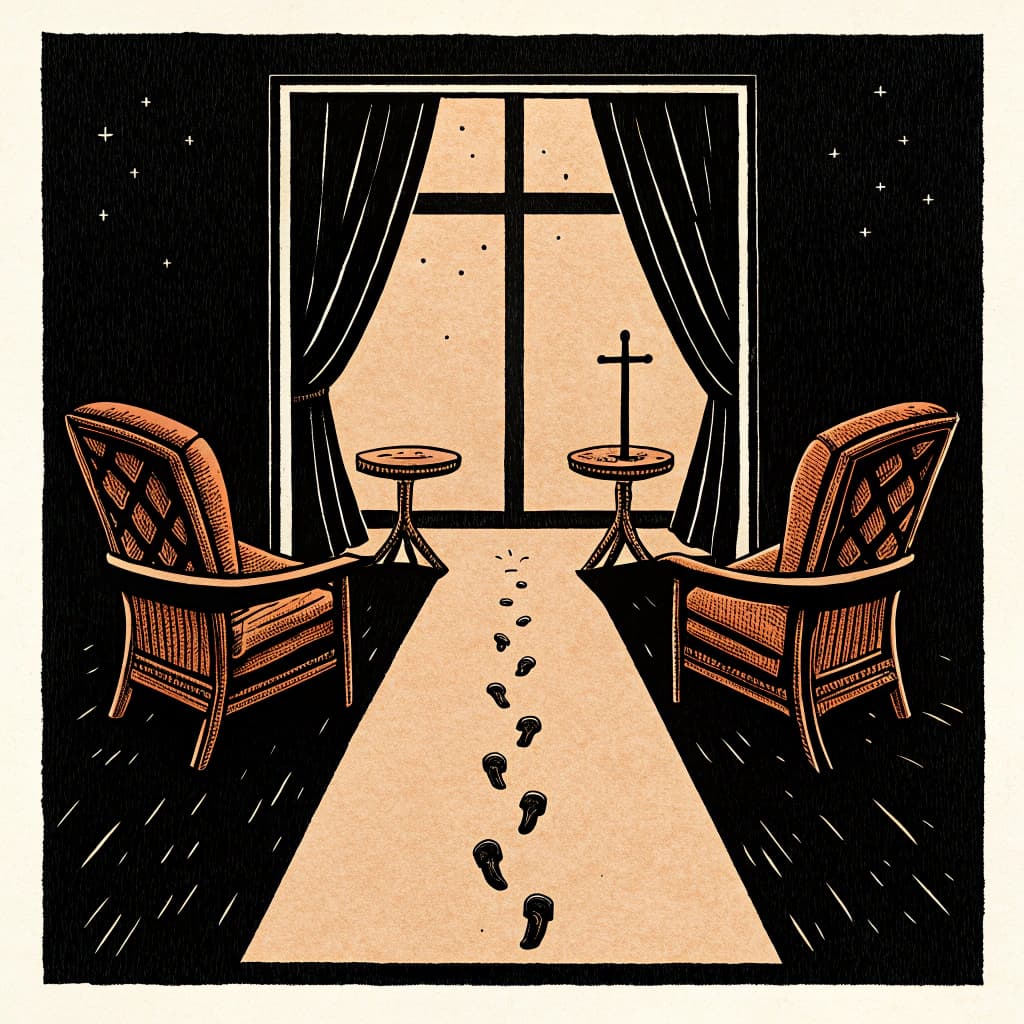
Take a side, argue, and move if persuaded
Philosophical Chairs
The room is divided into two sides: Agree and Disagree (with an optional "Undecided" middle). A provocative statement is read. Students physically move to their side and take turns presenting arguments. If someone's argument changes your mind, you physically move to the other side. Visible, kinesthetic, and electric.
What is Philosophical Chairs?
Philosophical Chairs is a structured discussion methodology designed to make abstract ethical and philosophical questions accessible through physical commitment and deliberate perspective-taking. By requiring students to physically take a side, to stand on one half of the room or another, it transforms the abstract question "where do you stand on this?" into a literal one. This physical commitment is pedagogically powerful: it forces an initial position before the discussion begins, creates a visual representation of the class's thinking, and makes the act of changing your mind visible and consequential.
The method's roots are in the liberal arts tradition of structured controversy, the idea that engaging with genuinely difficult questions requires more than reading about them or hearing experts discuss them. It requires taking a position, defending it, hearing the best arguments against it, and deciding whether to hold or revise. This dialectical process (position, challenge, response, revision) has been central to philosophical education since Plato's dialogues, and Philosophical Chairs gives it a physical, social, and time-bounded form.
The statement design is the most critical pedagogical decision in planning a Philosophical Chairs session. A good Philosophical Chairs statement is simultaneously: connected to genuine philosophical principles (justice, autonomy, equality, truth, obligation), relevant to the curriculum content being studied, genuinely ambiguous (reasonable people with reasonable values could land on either side), and not directly mapped to current electoral politics (to avoid partisan polarization that short-circuits philosophical reasoning). Statements that meet all four criteria produce the most productive discussions; statements that fail any criterion typically produce frustration, disengagement, or counterproductive debate.
The 'middle' position, occupied by students who are genuinely undecided or who can see strong arguments on both sides, is often the most intellectually interesting position in the room, and it's frequently the most neglected by teachers who default to calling on students at the two ends of the room. Students in the middle have often done the most careful thinking: they've identified the strongest arguments on each side, they understand the conditions under which each argument holds, and they've located the precise values conflict that makes the question genuinely difficult. Deliberately calling on middle-position students, and pressing them to articulate what they're weighing, often shifts the quality of the whole-class discussion.
The physical movement of changing positions, crossing the room from one side to the other based on a persuasive argument, is what makes Philosophical Chairs distinct from a verbal debate. The movement is evidence: it shows that genuine intellectual engagement is possible, that minds can be changed by good arguments, and that the movement is a mark of intellectual strength, not weakness. Many teachers explicitly acknowledge position changes during the debrief: "I noticed several people moved when [student] made that argument about autonomy. What did that argument do for you?" This acknowledgment models the intellectual norm the method is designed to develop.
Written reflection after Philosophical Chairs is where students consolidate the philosophical learning the discussion opened. The most productive post-session writing asks students to articulate: where they ended up and why, what argument most influenced their thinking, what they're still uncertain about, and what additional information or reasoning would help them reach greater certainty. This writing converts the visceral experience of physical position-taking into articulated, examined reasoning, and often produces the most honest and sophisticated student writing of any writing task in the curriculum.
How to Run Philosophical Chairs: Step-by-Step
Select a Central Prompt
4 min
Choose a controversial, open-ended statement related to your curriculum that does not have a simple 'right' or 'wrong' answer.
Configure the Room
4 min
Arrange chairs in two facing rows or clear a central aisle to designate 'Agree' and 'Disagree' zones, with a small 'Undecided' area in the middle.
Establish Norms and Rules
4 min
Explain that students must summarize the previous speaker's argument before speaking and that they are encouraged to move if their opinion changes.
Take Initial Positions
5 min
Read the prompt aloud and give students one minute of silent reflection before they physically move to the side that represents their current stance.
Facilitate the Dialogue
5 min
Moderate the discussion by alternating between sides, ensuring that no single student dominates and that everyone uses evidence to support their claims.
Encourage Movement
4 min
Remind students throughout the session that they should physically walk to the other side of the room if a peer's argument shifts their thinking.
Conduct a Debrief
4 min
Conclude the activity by having students write a brief reflection on which arguments were most persuasive and why they chose their final position.
BEFORE YOU TEACH THIS
Read the Teacher's Guide first.
Flip Education's Teacher's Guide walks you through how to facilitate any active learning lesson: mindset, pre-class checklist, phase-by-phase facilitation, and a Quick Reference Card you can print and bring to class.
Read the Teacher's Guide →When to Use Philosophical Chairs in the Classroom
- Controversial statements and claims
- Testing historical hypotheses
- Exploring moral and ethical questions
- Encouraging evidence-based persuasion
Subject Fit
Common variants
Classic philosophical chairs
Two sides face each other. Speakers alternate, and students can physically switch sides when persuaded. The movement is the signal.
Three-chair variant
Add an undecided middle row. Students in the middle must name what would move them before the discussion ends. Prevents performative commitment.
Research Evidence for Philosophical Chairs
Kuhn, D., & Crowell, A. (2011, Psychological Science, 22(4), 545-552)
Engaging in structured dialogic argumentation significantly develops students' ability to construct and evaluate evidence-based arguments over time.
Kuhn, D. (2015, Educational Researcher, 44(1), 46-53)
Structured peer-to-peer debate and dialogic argumentation are highly effective at helping students internalize dialectical thinking frameworks and increasing overall engagement.
Common Philosophical Chairs Mistakes and How to Avoid Them
Statements that are too political rather than philosophical
Statements tied to current political controversies polarize students along party lines rather than stimulating genuine philosophical reflection. Choose statements that engage core questions (justice, identity, obligation, truth) without mapping directly onto electoral politics.
Not honoring moves toward the middle
When a student changes position, it should be celebrated, not ignored. Explicitly acknowledge movement: 'I notice three people just moved to the center. What persuaded you?' This models that changing your mind based on evidence is intellectual strength, not weakness.
Discussion that never gets past opinion-sharing
Students stating positions without reasoning produces shallow discussion. After each claim, apply a consistent push: 'What's the principle behind that?' 'Can you give a scenario where your position would fail?' Require reasoning, not just assertion.
Letting the room become two loud camps
Philosophical Chairs discussions can devolve into competitive point-scoring between agree/disagree camps. Use deliberate facilitation moves: ask someone to voice the strongest counterargument to their own position, invite quiet voices, call the center group to summarize what they're weighing.
No written reflection after
The post-discussion writing is where students consolidate their thinking. Skip it and you skip consolidation. A brief exit write ('What moved me, what I'm still weighing, what evidence would change my mind') takes 5 minutes and dramatically improves retention.
How Flip Education Helps
Printable discussion prompt cards and response scaffolds
Get a set of printable prompt cards featuring central questions for the discussion, along with response scaffolds to help students articulate their positions. These materials provide the structure for students to move and debate based on their viewpoints. Everything is formatted for quick printing.
Curriculum-aligned prompts for academic debate
Flip generates prompts that are directly tied to your lesson topic and grade level, ensuring the discussion supports your curriculum standards. The activity is designed to fit into a single class period, focusing on evidence-based reasoning and respectful dialogue. This alignment keeps the focus on your learning goals.
Facilitation script and numbered movement steps
The generation includes a briefing script to set the stage and numbered action steps with teacher tips for managing the movement and discussion flow. You receive intervention tips for encouraging students to switch sides based on evidence and managing dominant voices. This structure keeps the activity productive.
Reflection debrief and individual exit tickets
End the session with debrief questions that ask students to reflect on how their thinking evolved during the discussion. The printable exit ticket provides a way to assess individual understanding of the topic and the arguments presented. A final note links the activity to your next curriculum goal.
Tools and Materials Checklist for Philosophical Chairs
- Clear statement/prompt
- Designated 'Agree' sign/area
- Designated 'Disagree' sign/area
- Optional 'Undecided' sign/area (optional)
- Whiteboard or projector for rules/statement
- Timer (physical or digital)
- Student notes/evidence sheets (optional)
- Rubric for participation/argumentation (optional)
- Digital discussion platform for post-activity reflection (optional)
Frequently Asked Questions About Philosophical Chairs
What is Philosophical Chairs in education?
Philosophical Chairs is a student-centered discussion strategy where learners move to different sides of the room based on their agreement or disagreement with a prompt. It focuses on active listening and the fluid nature of opinions rather than rigid competition. This method encourages students to change their minds when presented with compelling evidence.
How do I use Philosophical Chairs in my classroom?
Start by presenting a binary 'agree/disagree' statement and designating two sides of the room for these positions. Students choose a side, and you facilitate a discussion where speakers must summarize the previous person's point before sharing their own. You should act as a neutral moderator to ensure all voices are heard and the rules of civil discourse are followed.
What are the benefits of Philosophical Chairs for students?
The primary benefits include improved critical thinking, enhanced oral communication, and the development of empathy through active listening. It also provides a kinesthetic outlet for energy, which can increase engagement for students who find traditional seating restrictive. Students learn to value evidence over emotion when forming and defending their viewpoints.
What is the difference between Philosophical Chairs and Socratic Seminar?
Philosophical Chairs is physically active and usually centers on a binary choice, whereas Socratic Seminars are typically seated and focus on open-ended text analysis. While both emphasize inquiry, Philosophical Chairs uses movement to make student stances visible and dynamic. Socratic Seminars tend to be more collaborative in meaning-making, while Chairs involves more direct persuasion.
Classroom Resources for Philosophical Chairs
Free printable resources designed for Philosophical Chairs. Download, print, and use in your classroom.
Philosophical Chairs Position Tracker
Students document their initial position, the evidence behind it, arguments that challenged them, and whether their position shifted during the discussion.
Download PDFPhilosophical Chairs Reflection
Students reflect on how physically moving to show their position affected their engagement and how their thinking evolved.
Download PDFPhilosophical Chairs Role Cards
Assign roles to support a structured, respectful discussion where students physically show their positions.
Download PDFPhilosophical Chairs Statements & Prompts
Ready-to-use statements and discussion prompts designed for the physical positioning format of Philosophical Chairs.
Download PDFSEL Focus: Self-Awareness in Philosophical Chairs
A card focused on recognizing one's own beliefs, biases, and emotional responses when taking a public stance on a controversial issue.
Download PDFRelated
Methodologies Similar to Philosophical Chairs
Ready to try this?
- Read the Teacher's Guide →
- Generate a mission with Philosophical Chairs →
- Print the toolkit after generating
Generate a Mission with Philosophical Chairs
A complete lesson plan, aligned to your curriculum.