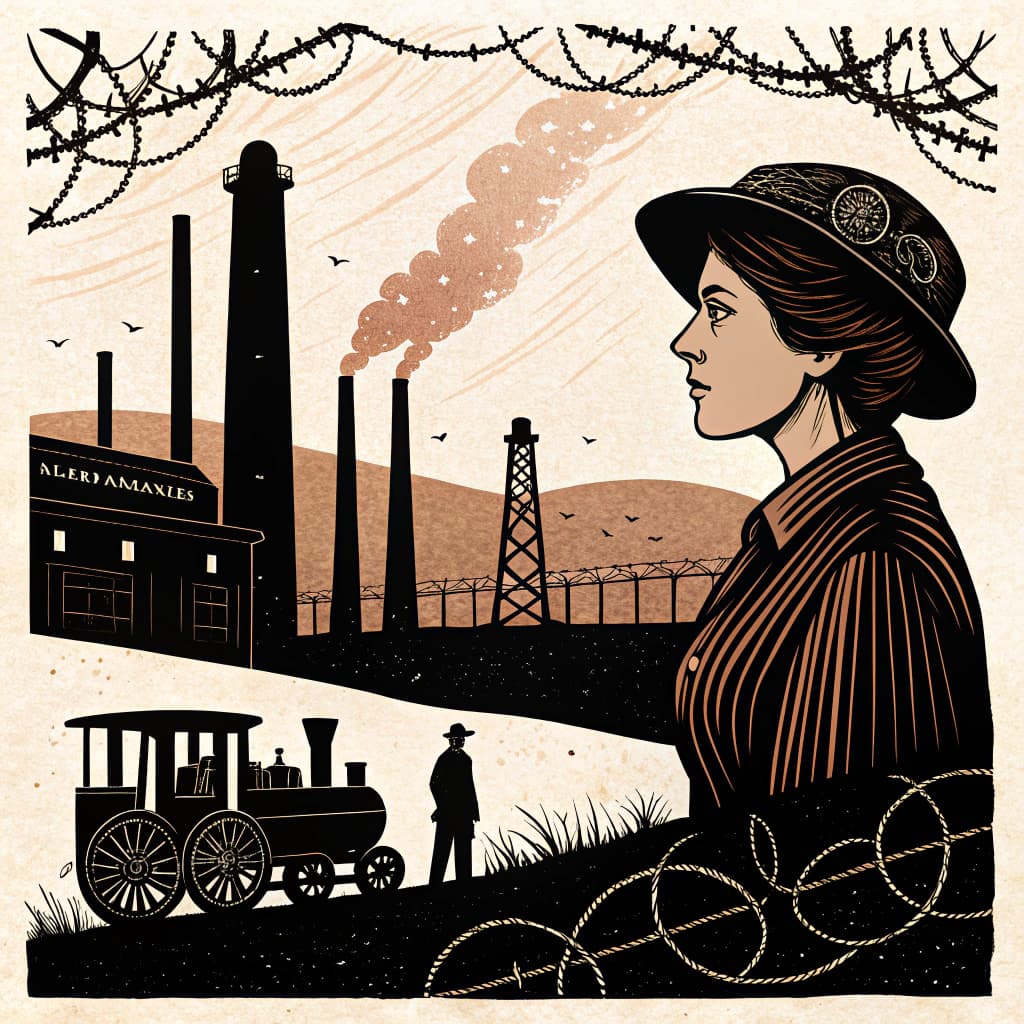
Child Labour in Factories and Mines
Students will examine primary sources to understand the realities of child labour and the arguments for and against it.
TL;DR:Active learning helps students grasp the human cost behind industrial statistics. Handling primary sources lets Year 9s see child labour as lived experience rather than abstract numbers, building empathy and critical analysis at the same time.
About This Topic
Child labour in factories and mines shaped Britain's Industrial Revolution and Victorian society. Year 9 students examine primary sources such as the 1842 Children's Employment Commission reports, Sadler's Committee testimonies, factory photographs, and mine diagrams. These reveal economic motivations: children cost less to employ, their small bodies navigated narrow mine tunnels and textile machinery gaps. Reformers like Lord Shaftesbury highlighted moral issues, including 14-hour days, physical deformities, and high death rates from accidents.
Students compare dangers across settings. Textile factories exposed children to limb-crushing machines, cotton dust causing respiratory illness, and scalding boilers. Coal mines added roof falls, explosions, flooding, and hauling in darkness. This analysis builds KS3 skills in source evaluation, argumentation, and understanding political power from 1745-1901.
Active learning suits this topic well. Role-plays of parliamentary inquiries let students voice worker and owner perspectives, while sorting sources into 'economic' or 'moral' categories encourages collaborative judgment. These methods make distant suffering immediate, fostering empathy and deeper historical insight.
Key Questions
- Analyze the economic motivations behind the widespread use of child labour.
- Evaluate the moral arguments used by reformers to campaign against child exploitation.
- Compare the dangers faced by children in textile factories versus coal mines.
Learning Objectives
- Analyze the primary economic factors that led to the employment of children in Victorian factories and mines.
- Evaluate the effectiveness of reform movements in changing legislation regarding child labour.
- Compare and contrast the specific dangers and working conditions faced by children in textile factories versus coal mines.
- Synthesize information from primary sources to construct an argument about the social impact of child labour.
Before You Start
Why: Understanding the shift from rural, agrarian work to urban, factory-based labour provides essential context for the rise of industrial child labour.
Why: Familiarity with the class system and the roles of different social groups (working class, middle class, industrialists) helps students grasp the power dynamics involved in child labour debates.
Key Vocabulary
| Factory Acts | A series of laws passed in Britain throughout the 19th century that aimed to regulate working conditions, including limiting the hours and improving the safety for child workers. |
| Child Chimney Sweep | A child employed to clean chimneys, often forced into narrow, dangerous spaces, facing severe health risks and exploitation. |
| Bobbin Boy/Girl | A child worker in a textile mill, typically responsible for tasks such as fetching bobbins or piecing together broken threads, often working long hours near dangerous machinery. |
| Coal Hurrier | A child employed in a coal mine to drag or push carts of coal along the mine tunnels, a physically demanding and hazardous job. |
Watch Out for These Misconceptions
Common MisconceptionChild labour existed only in mines.
What to Teach Instead
Children worked widely in textile factories too, often from age five. Active source comparison activities help: students match images and accounts to sites, revealing factory prevalence and building accurate overviews through group verification.
Common MisconceptionReforms ended child labour quickly.
What to Teach Instead
Changes like the 1842 Mines Act took decades amid resistance. Timeline-building tasks clarify this: students sequence laws and events, debate causes of delays in pairs, correcting rushed timelines via evidence discussion.
Common MisconceptionAll supported child labour purely for profit.
What to Teach Instead
Some families chose it for income amid poverty. Role-plays expose nuances: students argue family views from sources, gaining balanced empathy through peer challenge and source-backed rebuttals.
Active Learning Ideas
See all activities→Document Mystery
Source Carousel: Labour Testimonies
Print excerpts from Sadler's Committee and Mines Report. Small groups rotate every 10 minutes to read, note key claims, and discuss reliability. Groups then share one economic and one moral point with the class.
Document Mystery
Danger Mapping: Factories vs Mines
Provide diagrams of a factory and mine. Pairs label hazards like machinery, dust, collapses using sources, then compare severity with evidence. Present maps to class for vote on worst risks.
Document Mystery
Reformers' Debate Prep
Assign roles as reformer, factory owner, or child worker. In small groups, prepare 2-minute speeches using sources on for/against child labour. Hold whole-class debate with voting.
Real-World Connections
- The legacy of child labour reform directly influenced the establishment of international labour standards, such as those promoted by the International Labour Organization (ILO), which today works to prevent child labour globally.
- Modern debates about working conditions in global supply chains, particularly in industries like electronics or garment manufacturing in countries such as Bangladesh or Vietnam, echo the historical struggles against exploitative labour practices.
Assessment Ideas
Provide students with a short excerpt from a primary source (e.g., a testimony from the 1842 Children's Employment Commission). Ask them to identify: 1) One specific danger mentioned, and 2) Whether the economic or moral argument for/against child labour is more evident in this excerpt, explaining why.
Pose the question: 'If you were a factory owner in 1840, what would be your strongest argument for employing children? If you were a reformer like Lord Shaftesbury, what would be your strongest counterargument?' Facilitate a brief class debate, encouraging students to use evidence from the sources studied.
Display images of children working in factories and mines. Ask students to write down one word describing the conditions in each setting and one question they still have about the experience of these children.
Frequently Asked Questions
What economic reasons drove child labour in Victorian factories?
How did dangers differ between factories and mines for children?
Who were key reformers against child labour and their arguments?
How does active learning improve teaching child labour history?
Planning templates for History
5E Model
The 5E Model structures lessons through five phases (Engage, Explore, Explain, Elaborate, and Evaluate), guiding students from curiosity to deep understanding through inquiry-based learning.
Unit PlannerThematic Unit
Organize a multi-week unit around a central theme or essential question that cuts across topics, texts, and disciplines, helping students see connections and build deeper understanding.
RubricSingle-Point Rubric
Build a single-point rubric that defines only the "meets standard" level, leaving space for teachers to document what exceeded and what fell short. Simple to create, easy for students to understand.
More in The Industrial Revolution & Victorian Britain
Britain's Industrial Head Start
Students will analyze the unique combination of geographical, economic, and political factors that made Britain the first industrial nation.
8 methodologies
Technological Innovations: Textiles & Steam
Students will explore the key inventions in textiles and steam power, understanding their impact on production and society.
8 methodologies
The Rise of the Factory System
Students will investigate the shift from cottage industries to factory production, examining its economic and social implications.
8 methodologies
Urbanisation and Industrial Cities
Students will investigate the rapid growth of industrial cities, focusing on the challenges of overcrowding and sanitation.
8 methodologies
Early Working-Class Protest: Luddites & Swing Riots
Students will explore early forms of resistance to industrialisation, including machine-breaking and agricultural unrest.
8 methodologies
The Chartist Movement
Students will investigate the Chartist demands for political reform and evaluate their methods and ultimate impact.
8 methodologies