Victorian Society: Class and Gender
Students will investigate the rigid class structure and evolving gender roles in Victorian Britain, from aristocracy to the working poor.
TL;DR:Active learning works well for this topic because students must grapple with complex social hierarchies and conflicting evidence about class mobility and gender roles. Moving beyond lectures, students analyze primary sources and role-play scenarios to test their assumptions against historical realities.
About This Topic
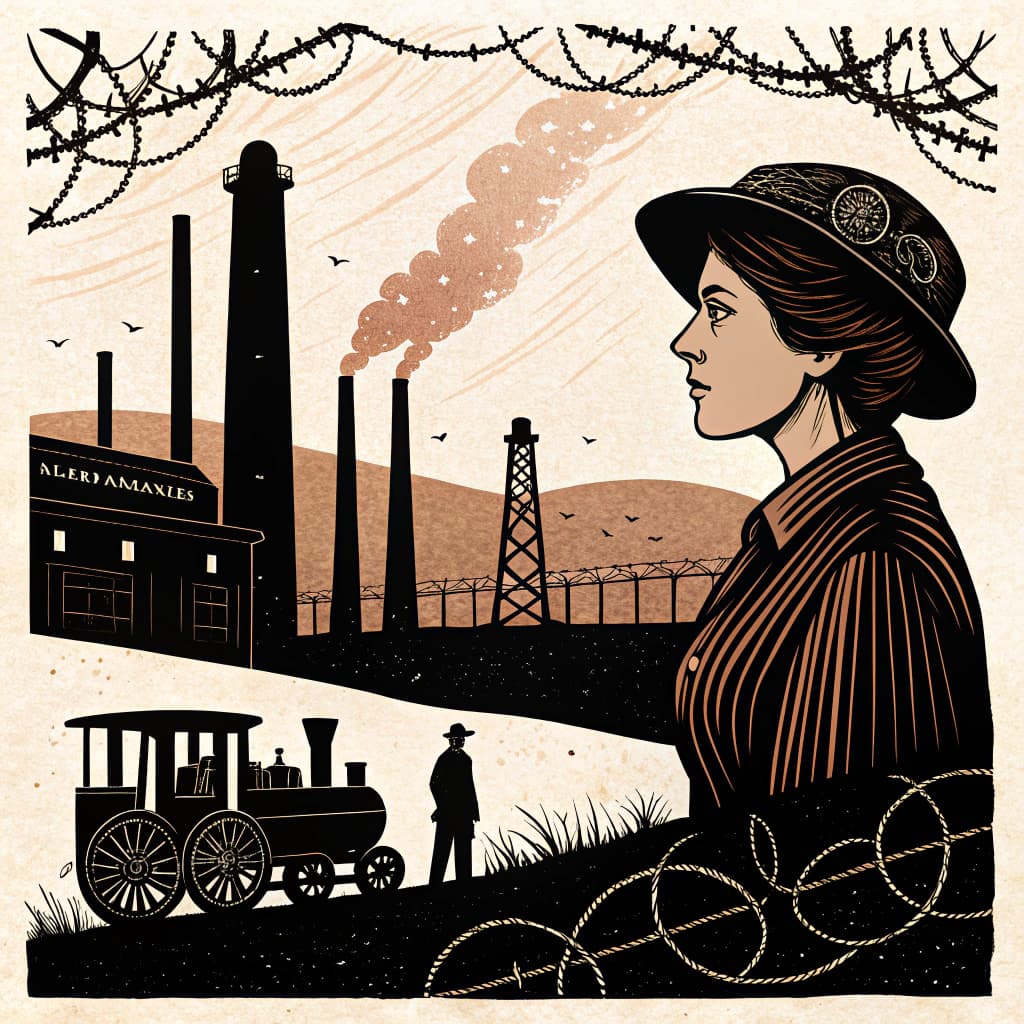
Victorian society in Britain displayed a rigid class structure that stretched from the aristocracy and new industrial wealthy to the working poor crammed into urban slums. Students examine how the Industrial Revolution reshaped this hierarchy by generating fortunes from factories and railways, while deepening divides through child labour and poverty. They also study gender roles, noting how upper-class women managed households under strict etiquette, middle-class women pursued limited charity work, and working-class women endured factory shifts with domestic burdens.
This content aligns with KS3 History standards on Ideas, Political Power, Industry and Empire from 1745-1901, and Victorian Society. Key enquiries focus on industrialisation's impact on social order, class-specific limits on women, and contrasts between a wealthy industrialist's leisure-filled days and a factory worker's twelve-hour shifts amid hazardous conditions. Primary sources such as Charles Booth's poverty maps, factory acts, and diaries sharpen students' abilities to compare evidence and trace change over time.
Active learning excels with this topic. Role-plays of class interactions or source-based debates on gender expectations make inequalities vivid and spur thoughtful discussions. Students connect historical constraints to personal values, boosting retention and analytical skills through collaboration and empathy-building exercises.
Key Questions
- Analyze how industrialisation reshaped the social hierarchy of Victorian Britain.
- Explain the expectations and limitations placed upon women in different social classes.
- Compare the daily lives of a wealthy industrialist and a factory worker in Victorian England.
Learning Objectives
- Analyze primary source accounts to compare the daily experiences of individuals from different Victorian social classes.
- Explain the societal expectations and legal limitations placed upon women in aristocratic, middle, and working classes during the Victorian era.
- Evaluate the extent to which industrialisation altered the traditional social hierarchy in Victorian Britain.
- Compare the educational opportunities available to boys and girls across the Victorian class spectrum.
Before You Start
Why: Students need to understand the preceding changes in farming that led to population shifts and the availability of labor for factories.
Why: Familiarity with key inventions like the steam engine and power loom is necessary to understand the context of industrial growth and its impact on society.
Key Vocabulary
| Social Stratification | The hierarchical arrangement of social classes in a society, reflecting inequalities in wealth, status, and power. |
| Bourgeoisie | The middle class, particularly those who owned or managed the means of production during the Industrial Revolution, such as factory owners and merchants. |
| Proletariat | The working class, who sold their labor for wages, often in factories and mines, and typically lived in poor conditions. |
| Separate Spheres | The Victorian ideology that men and women belonged in different social domains: men in the public sphere of work and politics, women in the private sphere of home and family. |
| Pauperism | A state of extreme poverty where individuals relied on poor relief or charity for survival, often associated with the lowest social strata. |
Watch Out for These Misconceptions
Common MisconceptionVictorian society offered no social mobility across classes.
What to Teach Instead
Industrialisation created self-made industrialists from modest origins, though most remained trapped in poverty. Active role-plays of 'rags to riches' stories help students weigh evidence of limited upward movement and recognise barriers like education access.
Common MisconceptionAll Victorian women had identical restrictions regardless of class.
What to Teach Instead
Upper-class women influenced society through salons, unlike working-class women in factories. Source comparison activities reveal these nuances, as students debate excerpts and adjust preconceptions through group evidence sharing.
Common MisconceptionGender roles stayed unchanged throughout the Victorian era.
What to Teach Instead
Reforms like factory acts improved some conditions, driven by campaigns. Timeline-building in pairs shows evolution, with discussions clarifying gradual shifts via active source interrogation.
Active Learning Ideas
See all activities→Role Play
Role-Play: Victorian Class Court
Assign roles as aristocrats, industrialists, factory workers, and reformers in a mock trial on social reforms. Groups prepare evidence from sources on class or gender issues, present cases, and vote on verdicts. Conclude with a class reflection on power dynamics.
Stations Rotation
Daily Lives Sources
Set up stations with artefacts and extracts for upper class, middle class, working class, and women's roles. Groups rotate every 10 minutes, noting contrasts in diet, work, and leisure. Each group shares one key insight with the class.
Role Play
Pairs: Timeline of Gender Reforms
Pairs research and plot events like the Married Women's Property Act on timelines, linking to class impacts. Add illustrations and quotes, then present to swap with another pair for peer feedback.
Real-World Connections
- The legacy of Victorian class divisions can still be observed in modern housing patterns and access to opportunities in cities like Manchester, which grew rapidly during the industrial period.
- The historical debate over women's suffrage, a movement gaining momentum in the late Victorian era, directly challenged the 'separate spheres' ideology and fought for political representation.
- Museums like the V&A in London display artifacts from Victorian homes, offering tangible insights into the material culture and daily lives of different social classes.
Assessment Ideas
Present students with contrasting images: one of a grand Victorian manor and another of a crowded tenement building. Ask: 'Based on these images, what can you infer about the daily lives and opportunities of people living in these different environments during the Victorian era? What specific questions do these images raise about class and gender?'
Provide students with a short excerpt from a primary source, such as a diary entry from a factory worker or a letter from an aristocratic lady. Ask them to identify the social class of the author and explain two specific details from the text that reveal their gender role or social position.
Display a list of Victorian occupations (e.g., factory owner, governess, coal miner, lady of leisure). Ask students to categorize each occupation by social class (upper, middle, working) and briefly explain their reasoning, focusing on wealth and required skills.
Frequently Asked Questions
What were the main features of Victorian class structure?
How did industrialisation affect gender roles in Victorian society?
How can active learning help teach Victorian class and gender?
What sources best show contrasts in Victorian daily lives?
Planning templates for History
5E Model
The 5E Model structures lessons through five phases (Engage, Explore, Explain, Elaborate, and Evaluate), guiding students from curiosity to deep understanding through inquiry-based learning.
Unit PlannerThematic Unit
Organize a multi-week unit around a central theme or essential question that cuts across topics, texts, and disciplines, helping students see connections and build deeper understanding.
RubricSingle-Point Rubric
Build a single-point rubric that defines only the "meets standard" level, leaving space for teachers to document what exceeded and what fell short. Simple to create, easy for students to understand.
More in The Industrial Revolution & Victorian Britain
Britain's Industrial Head Start
Students will analyze the unique combination of geographical, economic, and political factors that made Britain the first industrial nation.
8 methodologies
Technological Innovations: Textiles & Steam
Students will explore the key inventions in textiles and steam power, understanding their impact on production and society.
8 methodologies
The Rise of the Factory System
Students will investigate the shift from cottage industries to factory production, examining its economic and social implications.
8 methodologies
Urbanisation and Industrial Cities
Students will investigate the rapid growth of industrial cities, focusing on the challenges of overcrowding and sanitation.
8 methodologies
Child Labour in Factories and Mines
Students will examine primary sources to understand the realities of child labour and the arguments for and against it.
8 methodologies
Early Working-Class Protest: Luddites & Swing Riots
Students will explore early forms of resistance to industrialisation, including machine-breaking and agricultural unrest.
8 methodologies