United Kingdom · National Curriculum Attainment Targets
Year 10 History
Key Stage 4 GCSE History Year 10: a comprehensive study of British history, featuring the thematic study of Crime and Punishment (c.1000–present), the historic environment of Whitechapel, and the depth study of Anglo-Saxon and Norman England.
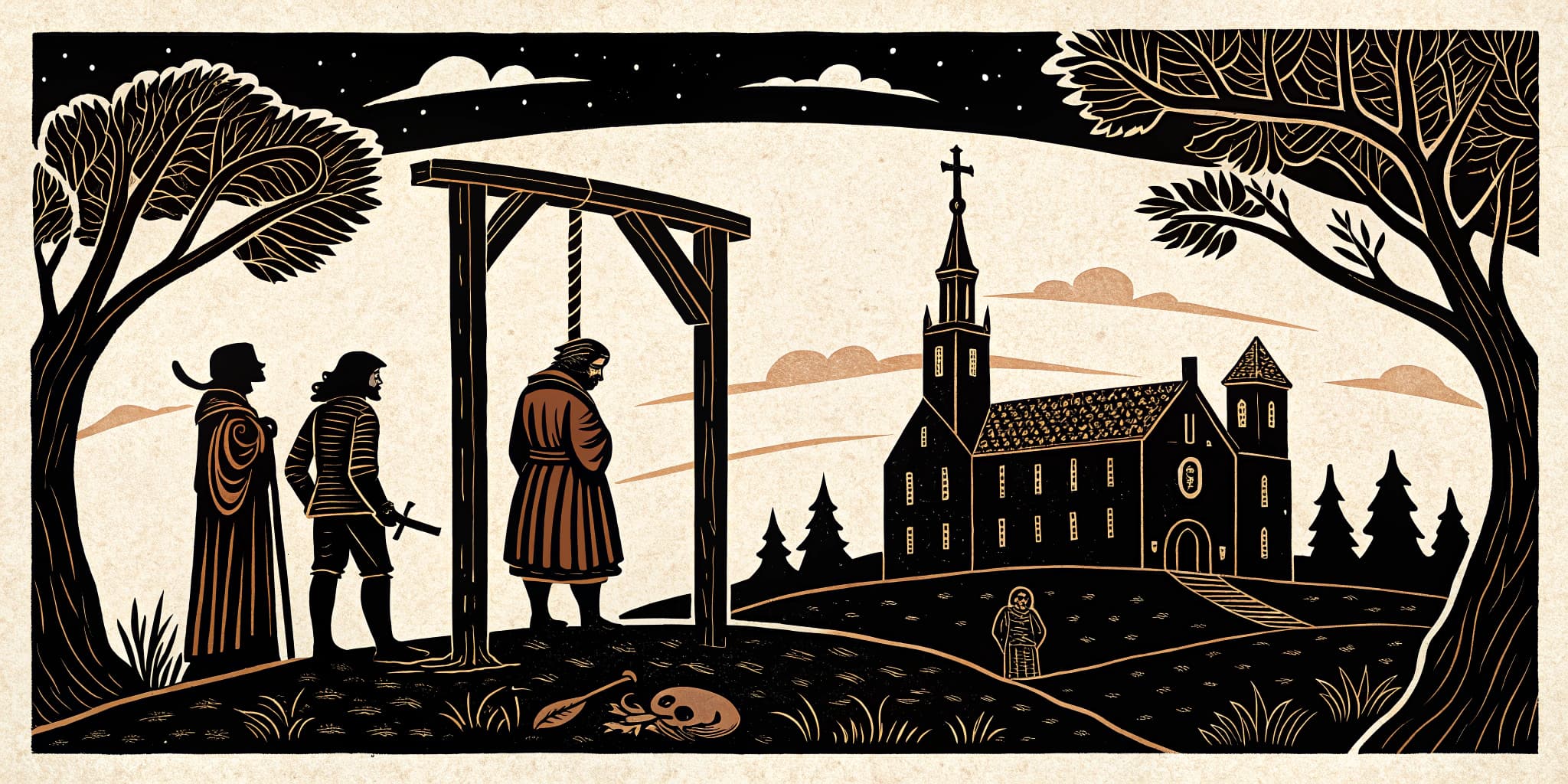
01Crime and Punishment in Medieval England
Examining the transition from Anglo-Saxon community-based justice to the more formalised systems of the Normans and later Middle Ages.
Exploring tithings, hue and cry, and the role of the community in maintaining peace.
Analysing the introduction of Forest Laws, Murdrum fines, and the use of Norman-French in courts.
Investigating the religious basis for trials by fire, water, and combat, and why they ended in 1215.
Examining Benefit of Clergy, Sanctuary, and the conflict between King and Church.
The rise of Justices of the Peace and the shift towards professionalised local government.
The roles of the King, Earls, Thegns, and Ceorls in late Anglo-Saxon society.
The rise of the Godwins and the 1065 Northumbrian uprising.
Evaluating the claims of Harold Godwinson, William of Normandy, and Harald Hardrada.
The Viking invasion and Harold's victory in the North.
Military tactics, the shield wall, and the reasons for William's victory.
How William secured London and the initial response of the Anglo-Saxon nobility.
The design, function, and psychological impact of Norman castles.
The brutal suppression of the 1069 rebellions and its long-term impact.
The redistribution of land and the hierarchy of tenants-in-chief.
The Great Survey of 1086 and its purpose for taxation and control.
Lanfranc's reforms and the replacement of English bishops.
The division of the kingdom between Robert Curthose and William Rufus.
Odo of Bayeux's attempt to overthrow William Rufus.
The conflict with Anselm and the exploitation of Church wealth.
The mysterious hunting accident in the New Forest.
02Early Modern Challenges: 1500–1700
The impact of the Reformation, social unrest, and the growth of the 'Bloody Code'.
How religious changes under the Tudors made belief a criminal offence.
The criminalisation of the 'unworthy poor' and the 1547 Vagrancy Act.
Why crimes like smuggling were supported by local communities despite being illegal.
Investigating the peak of witch trials and the role of Matthew Hopkins.
The expansion of the death penalty to over 200 offences.
A case study of the 1605 plot and the harsh response to Catholic dissent.
The first attempts at a professional detective force in London.
The establishment of the Metropolitan Police and the 'Peelian Principles'.
The rise and fall of the convict colonies as an alternative to execution.
The Victorian obsession with prison discipline and the design of Pentonville.
The impact of humanitarian reformers on the prison system.
Why the 1868 Capital Punishment Amendment Act moved hangings behind closed doors.
A case study in the use of the law to suppress early trade unions.
Housing, rookeries, and the impact of immigration (Jewish and Irish).
The structure and duties of the local Metropolitan Police branch.
Investigating the 'canonical five' and the failure of the investigation.
How sensationalist journalism impacted the police work and public fear.
Evaluating police records, census data, and workhouse registers.
The impact of the conquest on the lives of ordinary people.
Exploring the evolution of Norman castles from Motte and Bailey to stone keeps and their defensive capabilities.

03Modern Britain: The 20th and 21st Centuries
New crimes in a technological age and the abolition of capital punishment.
The criminalisation of those who refused to fight in the World Wars.
The cases of Derek Bentley, Ruth Ellis, and Timothy Evans.
The move from the 'walking beat' to forensics, DNA, and cyber-policing.
How social changes and global politics have created new legal definitions.
From Borstals to Open Prisons and the challenges of overcrowding.
The impact of the Sexual Offences Act and the Abortion Act.
Examining the impact of post-war affluence, youth culture, and immigration on crime rates and types.
The development and impact of forensic science (fingerprinting, DNA) on criminal investigations.
Investigating the emergence of organised crime groups and their challenges to law enforcement.
Tracing the changes in how young offenders have been treated, from Borstals to youth detention centres.
Examining how media representation influences public perception of crime and justice.
The evolution of police tactics and legal frameworks for managing public protests and disorder.
Exploring how wartime conditions, conscription, and social upheaval affected crime and punishment.
Investigating the emergence of digital crimes and the challenges they pose to law enforcement.
Exploring modern alternatives to traditional punishment, focusing on victim-offender mediation and community repair.
Examining how the Suffragettes challenged laws and faced punishment for their activism.
Investigating the evolution of anti-terrorism legislation and its impact on civil liberties.
Tracing the history of drug legislation in the UK and its social and criminal consequences.
An overview of the contemporary criminal justice system, including courts, sentencing, and rehabilitation.
Analyzing how historians interpret crime and punishment across different periods, using various sources and perspectives.