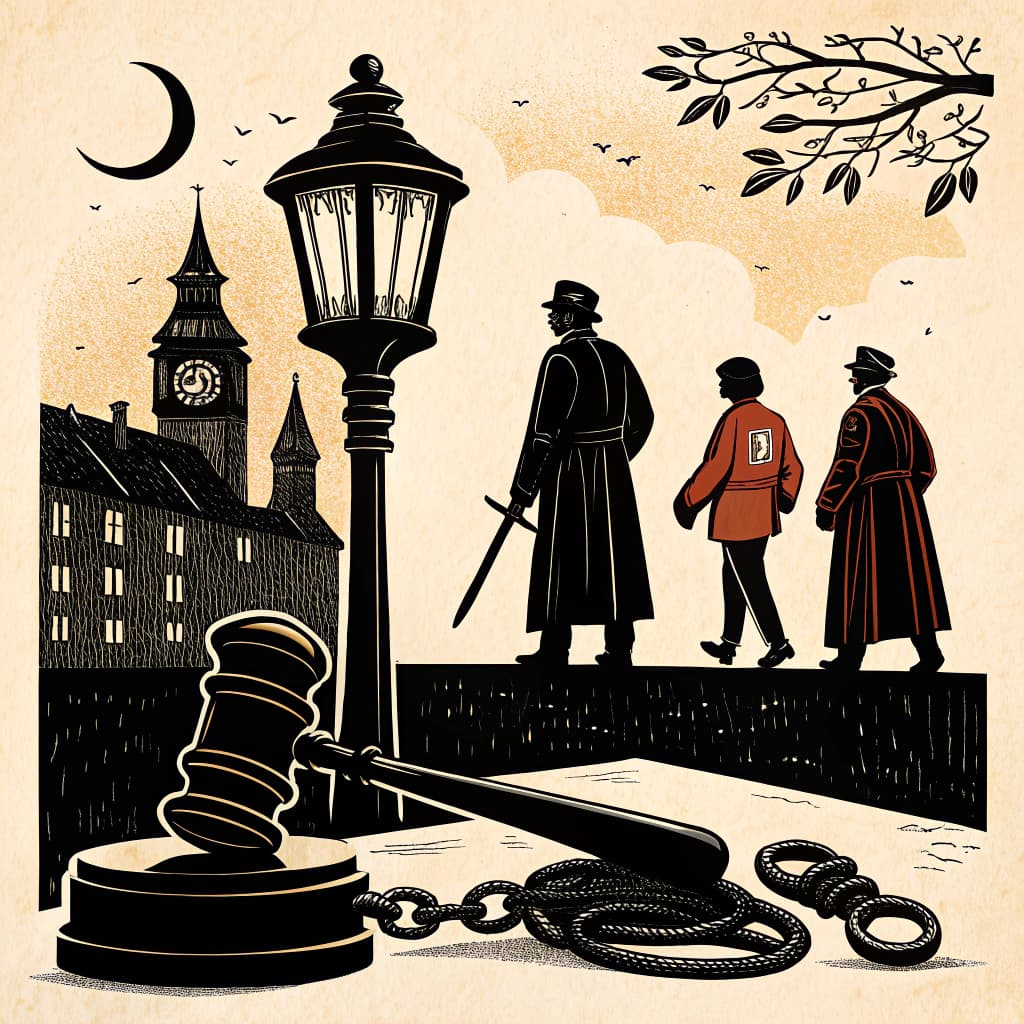
The Tolpuddle Martyrs: Trade Union Suppression
A case study in the use of the law to suppress early trade unions.
TL;DR:Active learning helps students grasp the complexities of the Tolpuddle Martyrs by letting them step into roles, weigh arguments, and analyze sources firsthand. The emotional weight of the case—transportation for seeking fair wages—demands more than lectures. Movement, debate, and source work bring this history to life in ways that passive reading cannot.
About This Topic
The Tolpuddle Martyrs case examines how six Dorset farm labourers in 1834 formed a friendly society to protest falling wages, swearing a secret oath that led to their conviction under the 1797 Unlawful Oaths Act. Sentenced to seven years transportation to Australia, their story highlights tensions between workers' rights and state control during early industrialisation. Students explore why the oath was deemed criminal, despite unions not being illegal, and how mass petitions and London marches pressured the government for their pardon in 1836.
This topic fits GCSE History themes in Crime and Punishment Through Time by showing selective law enforcement against the working class, and Industrial Britain by revealing power struggles in rural economies transitioning to capitalism. It prompts analysis of law as a political tool, with sources like trial transcripts and protest handbills building skills in causation, significance, and perspective.
Active learning suits this topic well. Role-plays of the trial recreate biases in legal proceedings, debates on the pardon evaluate protest's role, and collaborative source sorts reveal multiple viewpoints. These methods make abstract power dynamics concrete, foster empathy for historical actors, and sharpen evaluation skills through peer interaction.
Key Questions
- Explain why the secret oath of the Tolpuddle Martyrs was considered a crime.
- Analyze how public protest led to their pardon.
- Evaluate what this case reveals about the relationship between law and politics.
Learning Objectives
- Explain the specific legal grounds under the 1797 Unlawful Oaths Act used to prosecute the Tolpuddle Martyrs.
- Analyze the methods of protest, such as petitions and marches, employed by supporters of the Tolpuddle Martyrs.
- Evaluate the extent to which public opinion and organized protest influenced the government's decision to pardon the Martyrs.
- Critique the role of law in suppressing early working-class organization in 19th-century Britain.
Before You Start
Why: Understanding the economic pressures on rural laborers, such as falling wages, provides context for why the Martyrs formed their society.
Why: Students need to grasp the broader societal shifts occurring during the Industrial Revolution to understand the emergence of new forms of worker organization and state response.
Key Vocabulary
| Friendly Society | A group formed for mutual support, often providing financial aid to members. The Tolpuddle Martyrs formed one as a cover for their union activities. |
| Unlawful Oaths Act 1797 | Legislation used to prosecute the Tolpuddle Martyrs, making it illegal to administer secret oaths, particularly those associated with seditious societies. |
| Transportation | A form of punishment where convicted criminals were sent to penal colonies, such as Australia, for a set period or life. |
| Pardon | An official act of forgiveness by a government, releasing a convicted person from the remainder of their sentence. |
| Trade Union | An organized association of workers formed to protect and further their rights and interests, such as fair wages and working conditions. |
Watch Out for These Misconceptions
Common MisconceptionThe Tolpuddle Martyrs were violent criminals who broke the law by forming a union.
What to Teach Instead
Forming unions was legal; the secret oath violated the 1797 Act from anti-revolutionary fears. Role-plays help students act out both sides, revealing class bias in courts and building nuanced views through defending the 'criminals'.
Common MisconceptionTheir pardon came quickly after arrest due to public sympathy alone.
What to Teach Instead
It took two years of 800,000-signature petitions and marches. Timeline activities expose the delay, while debates let students weigh protest against government shifts, correcting over-simplification via evidence comparison.
Common MisconceptionThe case shows law always protected workers from employers.
What to Teach Instead
Law suppressed workers to maintain order. Source analysis stations clarify selective enforcement, with group discussions helping students spot political motives in legal texts and adjust initial assumptions.
Active Learning Ideas
See all activities→Mock Trial
Role-Play: The Tolpuddle Trial
Assign roles as judge, prosecutor, defence, martyrs, and witnesses. Groups prepare arguments using simplified trial extracts: prosecution stresses oath dangers, defence highlights wage cuts. Hold a 20-minute mock trial with cross-examination, then class votes on verdict. Debrief on biases shown.
Formal Debate
Protest or Politics?
Divide class into two teams: one argues public protest forced the pardon, the other claims government politics decided it. Provide petition data and Whig government letters. Teams prepare 5-minute openings, rebuttals, and closing statements. Vote and discuss evidence weight.
Mock Trial
Source Stations: Law vs Workers
Set up stations with trial report, oath text, wage tables, and protest poster. Pairs rotate every 10 minutes, annotating usefulness for key questions. Regroup to share findings and build a class causation flowchart. End with evaluation of source reliability.
Real-World Connections
- Modern trade unions, like Unite or the GMB in the UK, continue to advocate for workers' rights through collective bargaining and industrial action, demonstrating the long legacy of early labor movements.
- The concept of a fair trial and the right to assemble peacefully are fundamental legal principles today, stemming from historical struggles where these rights were often challenged, as seen with the Tolpuddle Martyrs.
- The Australian justice system, while vastly different now, has historical roots in its penal colony past, a direct consequence of policies like the transportation of convicts, including the Martyrs.
Assessment Ideas
Pose the question: 'Was the conviction of the Tolpuddle Martyrs primarily about the secret oath, or was it about suppressing the idea of organized labor?' Have students discuss in small groups, citing evidence from the case, and then share key arguments with the class.
Present students with three short primary source excerpts: one from the Unlawful Oaths Act, one from a newspaper reporting on the Martyrs' trial, and one from a petition for their pardon. Ask students to identify which source relates to the 'crime,' the 'protest,' and the 'political pressure,' justifying their choices.
On an index card, ask students to write one sentence explaining why the secret oath was a crime in 1834, and one sentence explaining how the Martyrs eventually gained their freedom.
Frequently Asked Questions
Why was the secret oath of the Tolpuddle Martyrs a crime?
How did public protest lead to the Tolpuddle Martyrs' pardon?
What does the Tolpuddle case reveal about law and politics?
How can active learning help teach the Tolpuddle Martyrs?
Planning templates for History
5E Model
The 5E Model structures lessons through five phases (Engage, Explore, Explain, Elaborate, and Evaluate), guiding students from curiosity to deep understanding through inquiry-based learning.
Unit PlannerThematic Unit
Organize a multi-week unit around a central theme or essential question that cuts across topics, texts, and disciplines, helping students see connections and build deeper understanding.
RubricSingle-Point Rubric
Build a single-point rubric that defines only the "meets standard" level, leaving space for teachers to document what exceeded and what fell short. Simple to create, easy for students to understand.
More in Early Modern Challenges: 1500–1700
Heresy and Treason: Tudor Religious Changes
How religious changes under the Tudors made belief a criminal offence.
8 methodologies
The Vagrancy Crisis: Criminalising the Poor
The criminalisation of the 'unworthy poor' and the 1547 Vagrancy Act.
8 methodologies
Smuggling: A Social Crime
Why crimes like smuggling were supported by local communities despite being illegal.
8 methodologies
The Witchcraft Craze: Matthew Hopkins
Investigating the peak of witch trials and the role of Matthew Hopkins.
8 methodologies
The Bloody Code: Expansion of Capital Crimes
The expansion of the death penalty to over 200 offences.
8 methodologies
Gunpowder Plot: Political Crime & Response
A case study of the 1605 plot and the harsh response to Catholic dissent.
8 methodologies