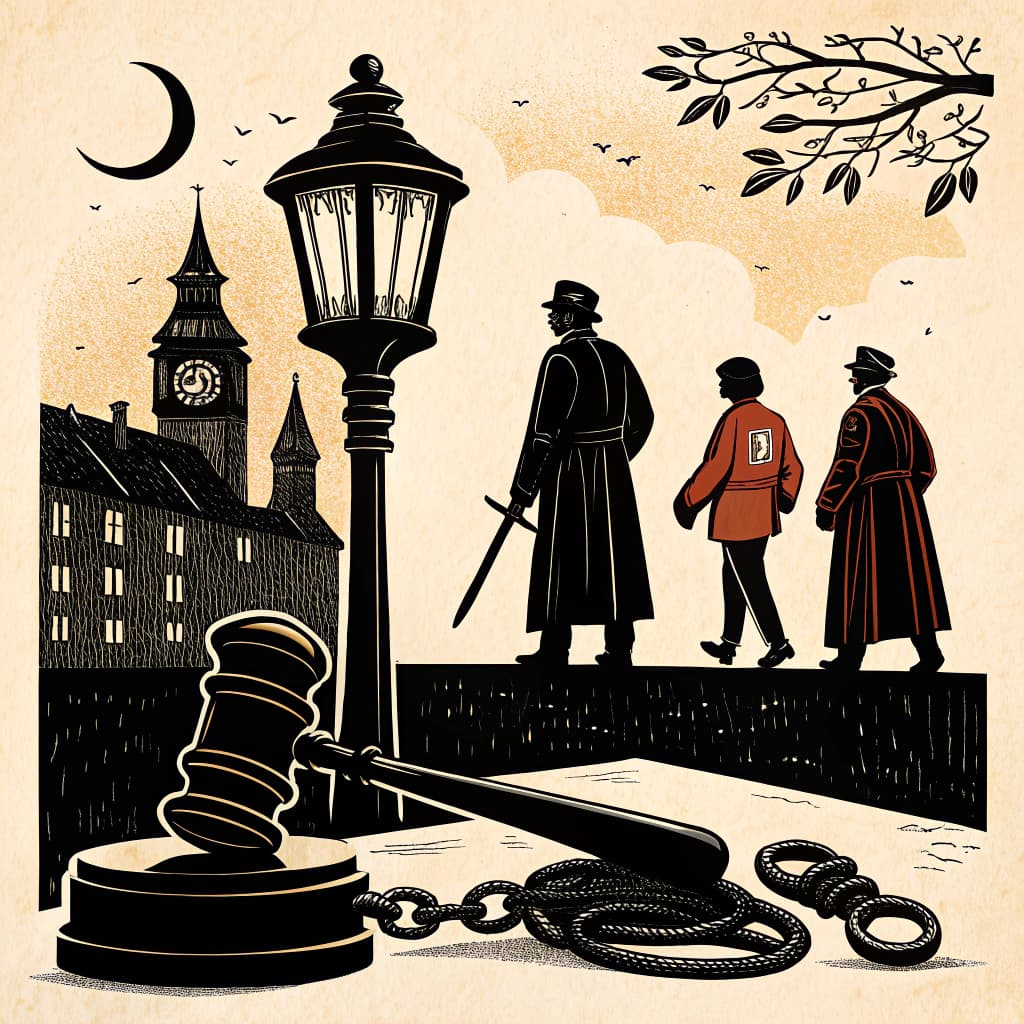
Youth Justice System Evolution
Tracing the changes in how young offenders have been treated, from Borstals to youth detention centres.
TL;DR:Active learning fits this topic because it challenges students to move beyond textbook dates and confront the tension between punishment and reform that shaped Britain’s youth justice system. By physically constructing timelines, debating policy choices, and simulating hearings, students grapple with values and consequences in ways that static reading cannot.
About This Topic
The evolution of the youth justice system in Britain covers treatment of young offenders from the Borstal system of 1908 to modern youth detention centres and community alternatives. Borstals targeted 16- to 21-year-olds with regimes of discipline, physical training, education, and work skills to build character and deter crime. Post-1940s shifts introduced welfare-focused policies, influenced by reports like Ingleby (1960) and Crime and Disorder Act (1998), prioritizing rehabilitation, diversion from court, and addressing root causes such as family issues or poverty.
This topic supports GCSE History in Crime and Punishment through Time and Modern Britain, where students compare Borstal aims of deterrence and reform with today's emphasis on rights and prevention. They analyze policy changes driven by social attitudes, youth crime spikes, and human rights laws, then evaluate effectiveness using recidivism rates and case studies like the 1990s secure training centres.
Active learning suits this topic well. Students grasp shifts through timeline builds, policy debates, and role-plays of offender panels, which make historical contexts vivid, build empathy, and sharpen skills in evidence-based judgement.
Key Questions
- Compare the aims of the Borstal system with modern youth justice approaches.
- Analyze the reasons for shifts in policy regarding juvenile delinquency.
- Evaluate the effectiveness of different approaches to rehabilitating young offenders.
Learning Objectives
- Compare the stated aims of the Borstal system with the stated aims of contemporary youth justice interventions.
- Analyze the social, political, and economic factors that influenced changes in juvenile offender policy from 1908 to the present.
- Evaluate the effectiveness of different approaches to youth rehabilitation, using evidence such as recidivism rates and case studies.
- Explain the legal and philosophical shifts in the treatment of young offenders, from punishment to welfare and rehabilitation.
Before You Start
Why: Understanding the context of early prisons and reform movements provides a foundation for grasping the origins of the Borstal system.
Why: Familiarity with historical campaigns for social improvement helps students analyze the motivations behind changes in welfare and justice policies.
Key Vocabulary
| Borstal | A type of residential institution for the training and discipline of young offenders, primarily males aged 16-21, established in the UK in 1908. |
| Youth Detention Centre | Secure facilities for young people convicted of serious crimes, focusing on custody, education, and rehabilitation programs. |
| Diversion | Strategies aimed at preventing young offenders from entering the formal criminal justice system, often through community-based programs or warnings. |
| Rehabilitation | The process of helping offenders to re-enter society and avoid reoffending, through education, therapy, and skills training. |
| Recidivism | The rate at which convicted offenders re-offend after their release from custody or completion of a sentence. |
Watch Out for These Misconceptions
Common MisconceptionBorstals were just harsh prisons with no reform intent.
What to Teach Instead
Borstals combined punishment with education and training to reshape character. Source comparison activities help students identify reform elements and question simplistic views through peer discussion.
Common MisconceptionModern youth justice ignores serious crimes and is too soft.
What to Teach Instead
Custody remains for grave offences, balanced with community options. Data analysis tasks reveal nuanced effectiveness, where groups chart recidivism to challenge assumptions.
Common MisconceptionChanges happened randomly without clear causes.
What to Teach Instead
Shifts linked to events like post-war welfare and 1990s crime fears. Timeline constructions clarify causation, as students connect sources to drivers.
Active Learning Ideas
See all activities→Decision Matrix
Timeline Build: Key Policy Shifts
Provide sources on Borstals, 1960s reforms, and 21st-century changes. Small groups sequence events on shared timelines, add cause-effect arrows, and quotes. Groups present one milestone to the class.
Decision Matrix
Debate Pairs: Borstal vs Modern Aims
Assign pairs one side: Borstal discipline or modern rehab. They prepare three arguments with evidence, then debate in a structured format with class voting on persuasiveness.
Decision Matrix
Role-Play: Youth Offender Hearings
Small groups reenact a 1920s Borstal sentencing and a modern YOT panel. Rotate roles, use scripted sources, then debrief on aims and outcomes.
Real-World Connections
- Youth Offending Teams (YOTs) operate across local authorities in England and Wales, employing social workers, probation officers, and health professionals to support young people at risk of offending or in the justice system.
- The Howard League for Penal Reform is a national charity campaigning for less crime, fewer prisons, and a fairer justice system, often referencing historical approaches to youth justice in their advocacy.
- Magistrates in Youth Courts make decisions about sentencing and welfare for young people, considering factors like age, offense severity, and the need for rehabilitation, reflecting evolving societal views on juvenile delinquency.
Assessment Ideas
Pose the question: 'If you were a policymaker in 1920 and again in 2020, what would be your primary goals for dealing with a 15-year-old who committed theft, and why?' Students should consider the prevailing social attitudes and available interventions for each era.
Provide students with short case study summaries of two different youth justice interventions (e.g., a Borstal regime description and a modern YOT support plan). Ask them to identify one key difference in their aims and one similarity in their intended outcomes.
On a slip of paper, ask students to write down one reason why policies towards young offenders have changed over time and one specific example of a modern approach they believe is more effective than Borstals, explaining why in one sentence.
Frequently Asked Questions
What were the main aims of the Borstal system?
How has youth justice policy shifted since Borstals?
How can active learning help teach youth justice evolution?
How to evaluate effectiveness of youth justice approaches?
Planning templates for History
5E Model
The 5E Model structures lessons through five phases (Engage, Explore, Explain, Elaborate, and Evaluate), guiding students from curiosity to deep understanding through inquiry-based learning.
Unit PlannerThematic Unit
Organize a multi-week unit around a central theme or essential question that cuts across topics, texts, and disciplines, helping students see connections and build deeper understanding.
RubricSingle-Point Rubric
Build a single-point rubric that defines only the "meets standard" level, leaving space for teachers to document what exceeded and what fell short. Simple to create, easy for students to understand.
More in Modern Britain: The 20th and 21st Centuries
Conscientious Objection in World Wars
The criminalisation of those who refused to fight in the World Wars.
8 methodologies
Abolition of Death Penalty: Key Cases
The cases of Derek Bentley, Ruth Ellis, and Timothy Evans.
8 methodologies
Modern Policing: Technology & Specialisation
The move from the 'walking beat' to forensics, DNA, and cyber-policing.
8 methodologies
New Crimes: Hate Crime & Terrorism
How social changes and global politics have created new legal definitions.
8 methodologies
Prison System Development: Borstals to Overcrowding
From Borstals to Open Prisons and the challenges of overcrowding.
8 methodologies
1960s Decriminalisation: Sexual Offences & Abortion
The impact of the Sexual Offences Act and the Abortion Act.
8 methodologies