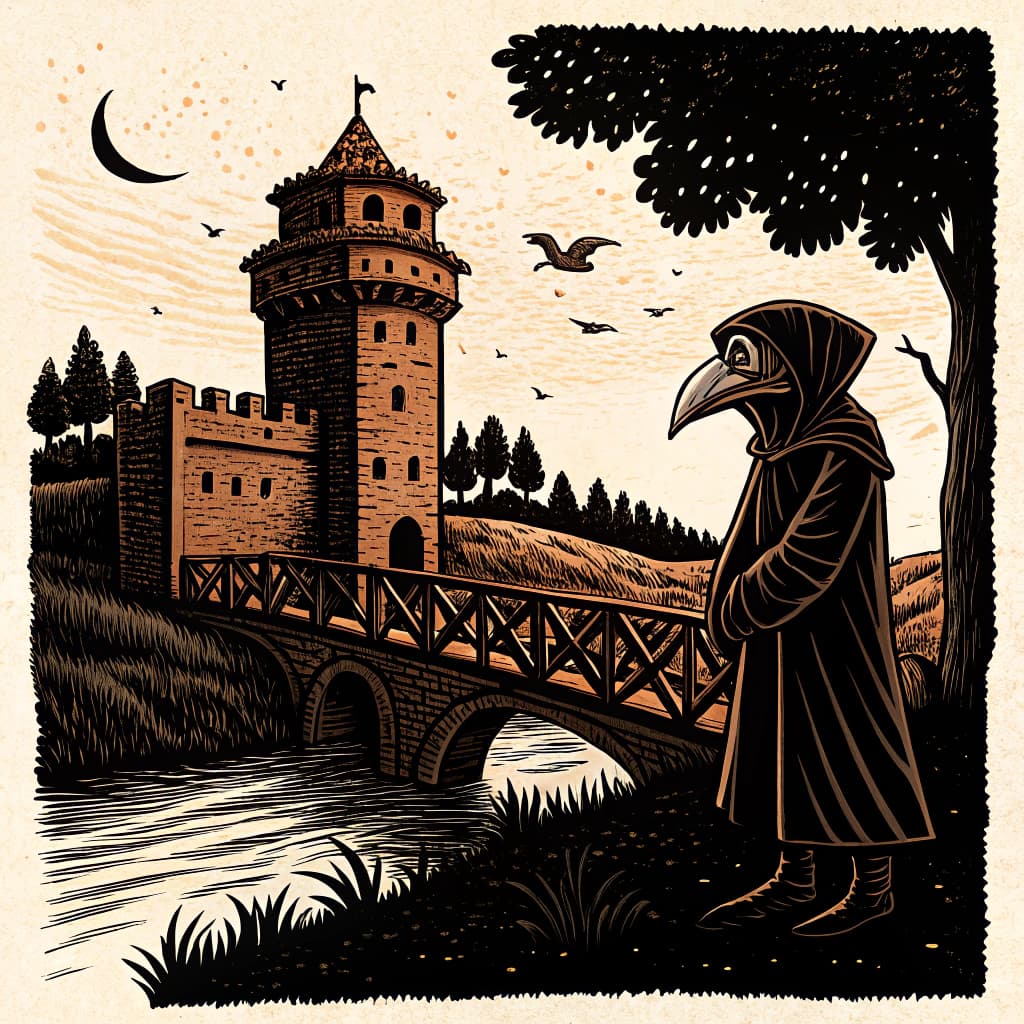
The Black Death: Religious and Social Impact
How the plague changed people's relationship with the Church, increased superstition, and challenged social norms.
TL;DR:Active learning helps students grasp the Black Death’s impact because abstract concepts like religious doubt and social upheaval become tangible when students analyze primary sources, debate perspectives, and role-play historical scenarios. The emotional weight of the topic requires more than lecture; students need to process loss, fear, and change through discussion and movement to build genuine understanding.
About This Topic
The Black Death arrived in England in 1348, killing between a third and half of the population in just two years. This catastrophe transformed religious life as people questioned the Church's power when prayers and sacraments failed to halt the plague. Students analyze how faith crumbled for some, sparking superstition, self-flagellation by wandering groups, and criticism of corrupt clergy who profited from indulgences amid the crisis.
Socially, the massive death toll created labor shortages that upended feudal norms. Survivors, especially peasants, gained bargaining power for higher wages and mobility, challenging lords' authority and setting the stage for later revolts. This topic supports KS3 History standards on the Black Death and social-economic changes, using key questions to evaluate faith challenges, extreme responses, and shifts in hierarchies during the 14th century's crises.
Active learning excels for this topic. Role-plays of flagellant processions or peasant-lord negotiations let students embody perspectives, while group source analysis reveals nuanced impacts. These methods make remote events vivid, build empathy, and sharpen skills in evidence-based arguments.
Key Questions
- Analyze how the Black Death challenged people's faith and relationship with the Church.
- Explain the rise of flagellants and other extreme religious responses to the plague.
- Evaluate the social changes that resulted from the massive loss of life.
Learning Objectives
- Analyze primary source accounts to identify specific examples of challenged faith during the Black Death.
- Explain the motivations behind the flagellant movement as a response to the plague.
- Evaluate the extent to which the Black Death altered social hierarchies and peasant-lord relationships.
- Compare and contrast the religious and social impacts of the Black Death on different social classes in 14th-century England.
Before You Start
Why: Students need a foundational understanding of the feudal system and the role of the Church in daily life before examining how the Black Death disrupted these structures.
Why: While the specific causes were unknown then, a basic understanding of how diseases spread helps students contextualize the fear and societal reactions to the plague.
Key Vocabulary
| Flagellant | A member of a medieval religious movement who practiced self-mortification, whipping themselves as a form of penance during times of crisis like the Black Death. |
| Indulgence | A remission of the temporal punishment in purgatory still due to sin, the guilt of which has been forgiven. During the Black Death, some clergy were accused of selling these. |
| Peasant Revolt | While the major revolt was in 1381, the conditions created by the Black Death, including labor shortages and demands for higher wages, laid the groundwork for increased social unrest. |
| Feudalism | The dominant social system in medieval Europe, in which the nobility held lands from the king in exchange for military service, and peasants worked the land in return for protection and sustenance. |
Watch Out for These Misconceptions
Common MisconceptionThe Black Death ended the Church's authority completely.
What to Teach Instead
The Church faced challenges but adapted through reforms and retained influence. Group debates on sources help students weigh evidence of criticism against continuity, revealing gradual shifts rather than instant collapse.
Common MisconceptionSocial changes after the plague were minor and temporary.
What to Teach Instead
Labor shortages led to lasting shifts like higher wages and Statute of Labourers conflicts. Role-plays of negotiations clarify cause-effect links, as students experience power dynamics firsthand.
Common MisconceptionFlagellants represented most people's response to the plague.
What to Teach Instead
They were a fringe extreme; most turned to local priests or superstition. Jigsaw activities expose varied responses through peer teaching, helping students differentiate mainstream from radical views.
Active Learning Ideas
See all activities→Jigsaw
Religious Responses
Divide class into expert groups, each studying one response: flagellants, superstition, or Church criticism using short extracts. Experts then regroup to teach peers and create a class summary poster. End with whole-class share-out.
Document Mystery
Debate Carousel: Faith Challenged
Pairs prepare arguments for and against the statement 'The Black Death destroyed faith in the Church.' Rotate to debate new partners three times, noting strongest points. Conclude with vote and reflection.
Document Mystery
Source Stations: Social Shifts
Set up stations with primary sources on wage demands, manor records, and peasant freedoms. Small groups rotate, annotate evidence of changes, then report back to class on patterns.
Real-World Connections
- Public health officials today track disease outbreaks, similar to how medieval communities grappled with the unknown causes and spread of the plague, though modern responses are based on scientific understanding rather than superstition.
- Discussions about wealth inequality and the power of institutions, particularly religious ones, continue today. The Black Death's impact on the Church's authority and the rise of criticism echo in contemporary debates about institutional accountability.
Assessment Ideas
Pose the question: 'If you lived in 14th-century England during the Black Death, would you join the flagellants, criticize the Church, or try to negotiate for better wages? Explain your choice using evidence from the lesson.' Facilitate a class debate, encouraging students to support their arguments with historical details.
Present students with three short, anonymous quotes from the period (e.g., one expressing despair in God, one describing flagellant actions, one complaining about wages). Ask students to identify which quote best reflects a religious impact, a social impact, or a challenge to authority, and to briefly justify their answer.
On an index card, ask students to write one sentence explaining how the Black Death changed the relationship between peasants and lords, and one sentence explaining how it affected people's views of the Church.
Frequently Asked Questions
What religious impacts did the Black Death have in medieval England?
How did the Black Death cause social changes in 14th century Britain?
Who were flagellants and why did they appear during the Black Death?
How can active learning teach Black Death impacts in Year 7 History?
Planning templates for History
5E Model
The 5E Model structures lessons through five phases (Engage, Explore, Explain, Elaborate, and Evaluate), guiding students from curiosity to deep understanding through inquiry-based learning.
Unit PlannerThematic Unit
Organize a multi-week unit around a central theme or essential question that cuts across topics, texts, and disciplines, helping students see connections and build deeper understanding.
RubricSingle-Point Rubric
Build a single-point rubric that defines only the "meets standard" level, leaving space for teachers to document what exceeded and what fell short. Simple to create, easy for students to understand.
More in Crisis and Change: The 14th Century
The Great Famine of 1315-1317: Causes
Understanding how climate change and crop failure brought Europe to the brink of collapse before the plague.
8 methodologies
The Great Famine: Social and Demographic Impact
Exploring the social consequences of widespread starvation and how it weakened the population before the Black Death.
8 methodologies
Hundred Years' War: Causes and Early Battles
The dynastic struggle for the French throne and the early English victories, including Crécy and Poitiers.
8 methodologies
Hundred Years' War: Agincourt and Joan of Arc
Examining the Battle of Agincourt, the resurgence of French fortunes, and the role of Joan of Arc.
8 methodologies
The Black Death: Origins and Spread
Tracing the path of the Yersinia pestis bacteria from the Silk Road to Europe and its rapid dissemination.
8 methodologies
The Black Death: Symptoms and Medieval Responses
Exploring the horrific symptoms of the plague, common (and ineffective) medieval cures, and public health measures.
8 methodologies