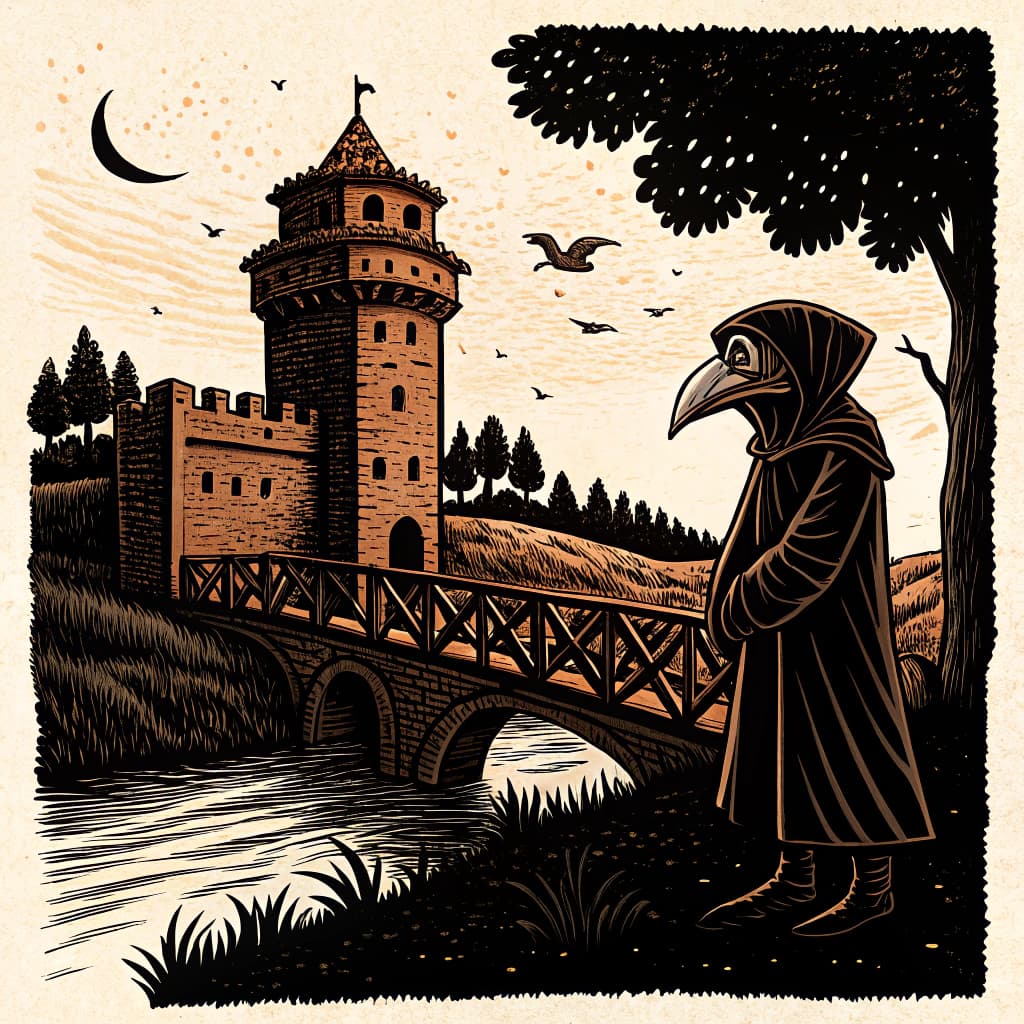
The Black Death: Symptoms and Medieval Responses
Exploring the horrific symptoms of the plague, common (and ineffective) medieval cures, and public health measures.
TL;DR:Active learning helps students grasp the human experience of the Black Death by moving beyond dates and names to tangible actions and emotions. When students role-play a medieval doctor’s surgery or debate plague cures, they connect symptoms and responses to real people, making the disease’s impact immediate and memorable.
About This Topic
The Black Death arrived in England in 1348, causing agony through symptoms such as painful swellings called buboes in the groin or armpits, high fever, chills, vomiting blood, and blackened skin from gangrene. Year 7 students study these effects on the body alongside medieval responses: drastic measures like lancing buboes, drinking potions mixed with urine and herbs, flagellation to atone for sins, or fumigating homes with incense. Public health efforts included isolating victims, boarding up houses, and burying bodies quickly, yet poor understanding of transmission limited success.
This topic supports KS3 History standards on the Black Death and medieval medicine in the 'Crisis and Change: The 14th Century' unit. Students address key questions by describing symptoms and their bodily impact, analyzing diverse cure attempts, and critiquing public health measures using primary sources like physician accounts and town records. These activities build skills in evidence evaluation, causation, and historical empathy.
Active learning suits this topic well. Role-plays of doctor-patient encounters or group simulations of quarantine decisions make the terror tangible, encourage source-based debates, and help students grasp why responses failed without modern science. Such approaches deepen retention and critical analysis of past beliefs.
Key Questions
- Describe the symptoms of the Black Death and its impact on the human body.
- Analyze the various medieval attempts to cure or prevent the plague.
- Critique the effectiveness of medieval public health measures in controlling the epidemic.
Learning Objectives
- Describe the primary symptoms of the Black Death and their physiological effects on the human body.
- Analyze the rationale behind at least three distinct medieval treatments for the plague.
- Evaluate the effectiveness of specific medieval public health measures, such as quarantine and burial practices, in limiting disease spread.
- Compare the scientific understanding of disease transmission in the 14th century with modern germ theory.
- Critique the limitations of medieval medical knowledge in addressing the Black Death.
Before You Start
Why: Students need a basic understanding of medieval society, including its social structure and daily life, to contextualize the impact of the Black Death.
Why: Familiarity with analyzing different types of historical sources, such as written accounts and visual representations, will support their work with primary source materials related to the plague.
Key Vocabulary
| Buboes | Painful, swollen lymph nodes, typically in the groin, armpit, or neck, that were a hallmark symptom of the bubonic plague. |
| Flagellation | The practice of whipping oneself as a form of penance or atonement for sins, believed by some to appease God and end the plague. |
| Quarantine | A period of isolation imposed on ships, travelers, or individuals suspected of carrying a contagious disease to prevent its spread. |
| Miasma Theory | The prevailing medieval belief that diseases were caused by 'bad air' or poisonous vapors emanating from decaying organic matter. |
| Physician | A medical practitioner, often trained in universities, who diagnosed illnesses and prescribed treatments based on the medical knowledge of the time. |
Watch Out for These Misconceptions
Common MisconceptionThe Black Death was caused by bad air or sin alone.
What to Teach Instead
Medieval people blamed miasma theory or divine punishment, ignoring Yersinia pestis bacteria spread by fleas. Role-plays and source analysis activities help students contrast these views with modern explanations, building skills in separating contemporary beliefs from scientific facts.
Common MisconceptionAll medieval cures were equally useless with no partial successes.
What to Teach Instead
While most like bloodletting failed, quarantine sometimes slowed spread. Group debates on source evidence reveal nuances, encouraging students to evaluate effectiveness critically rather than dismiss all efforts outright.
Common MisconceptionThe plague only killed poor peasants, sparing the wealthy.
What to Teach Instead
It struck all social classes, as seen in noble deaths. Timeline activities mapping spread across society correct this, fostering empathy through discussions of universal human vulnerability.
Active Learning Ideas
See all activities→Mystery Object
Role-Play: Medieval Doctor's Surgery
Provide symptom cards and cure recipe cards. In pairs, one student acts as a patient describing Black Death symptoms, the other as a doctor prescribing a treatment and explaining it. Pairs switch roles, then share in a class debrief on cure logic and flaws.
Stations Rotation
Plague Responses
Set up stations for symptoms (body diagrams to label), cures (handle replica herbs and tools), and public health (read quarantine edicts). Small groups spend 10 minutes per station recording evidence, then gallery walk to compare notes.
Formal Debate
Cure or Curse?
Divide class into teams to debate if medieval cures helped or worsened the plague, using prepared source excerpts. Each side presents evidence for 3 minutes, rebuts, and votes on most convincing argument.
Real-World Connections
- Public health officials in modern cities, like the Centers for Disease Control and Prevention (CDC), still implement quarantine measures and track disease outbreaks, drawing on lessons learned from historical pandemics.
- Epidemiologists use historical data from events like the Black Death to model the spread of infectious diseases and develop strategies for containment and prevention.
- Medical historians analyze ancient and medieval medical texts to understand the evolution of medical practices and the challenges faced by doctors before the advent of germ theory.
Assessment Ideas
Provide students with three index cards. On the first, ask them to list two key symptoms of the Black Death. On the second, name one medieval cure and explain why it was thought to work. On the third, identify one public health measure and explain why it was ultimately ineffective.
Pose the question: 'If you were a town mayor in 1348, what two actions would you prioritize to protect your citizens from the plague, and why?' Encourage students to justify their choices based on medieval beliefs and available resources.
Present students with a short primary source excerpt describing a medieval treatment. Ask them to identify the underlying belief about disease transmission that informed this treatment. For example, 'This potion contains herbs and wine to purify the blood, which is thought to be corrupted.' Students should identify the 'bad air' or 'humoral imbalance' theory.
Frequently Asked Questions
What were the main symptoms of the Black Death?
How did people in medieval England try to cure the Black Death?
How effective were medieval public health measures against the plague?
How can active learning help Year 7 students understand the Black Death?
Planning templates for History
5E Model
The 5E Model structures lessons through five phases (Engage, Explore, Explain, Elaborate, and Evaluate), guiding students from curiosity to deep understanding through inquiry-based learning.
Unit PlannerThematic Unit
Organize a multi-week unit around a central theme or essential question that cuts across topics, texts, and disciplines, helping students see connections and build deeper understanding.
RubricSingle-Point Rubric
Build a single-point rubric that defines only the "meets standard" level, leaving space for teachers to document what exceeded and what fell short. Simple to create, easy for students to understand.
More in Crisis and Change: The 14th Century
The Great Famine of 1315-1317: Causes
Understanding how climate change and crop failure brought Europe to the brink of collapse before the plague.
8 methodologies
The Great Famine: Social and Demographic Impact
Exploring the social consequences of widespread starvation and how it weakened the population before the Black Death.
8 methodologies
Hundred Years' War: Causes and Early Battles
The dynastic struggle for the French throne and the early English victories, including Crécy and Poitiers.
8 methodologies
Hundred Years' War: Agincourt and Joan of Arc
Examining the Battle of Agincourt, the resurgence of French fortunes, and the role of Joan of Arc.
8 methodologies
The Black Death: Origins and Spread
Tracing the path of the Yersinia pestis bacteria from the Silk Road to Europe and its rapid dissemination.
8 methodologies
The Black Death: Religious and Social Impact
How the plague changed people's relationship with the Church, increased superstition, and challenged social norms.
8 methodologies