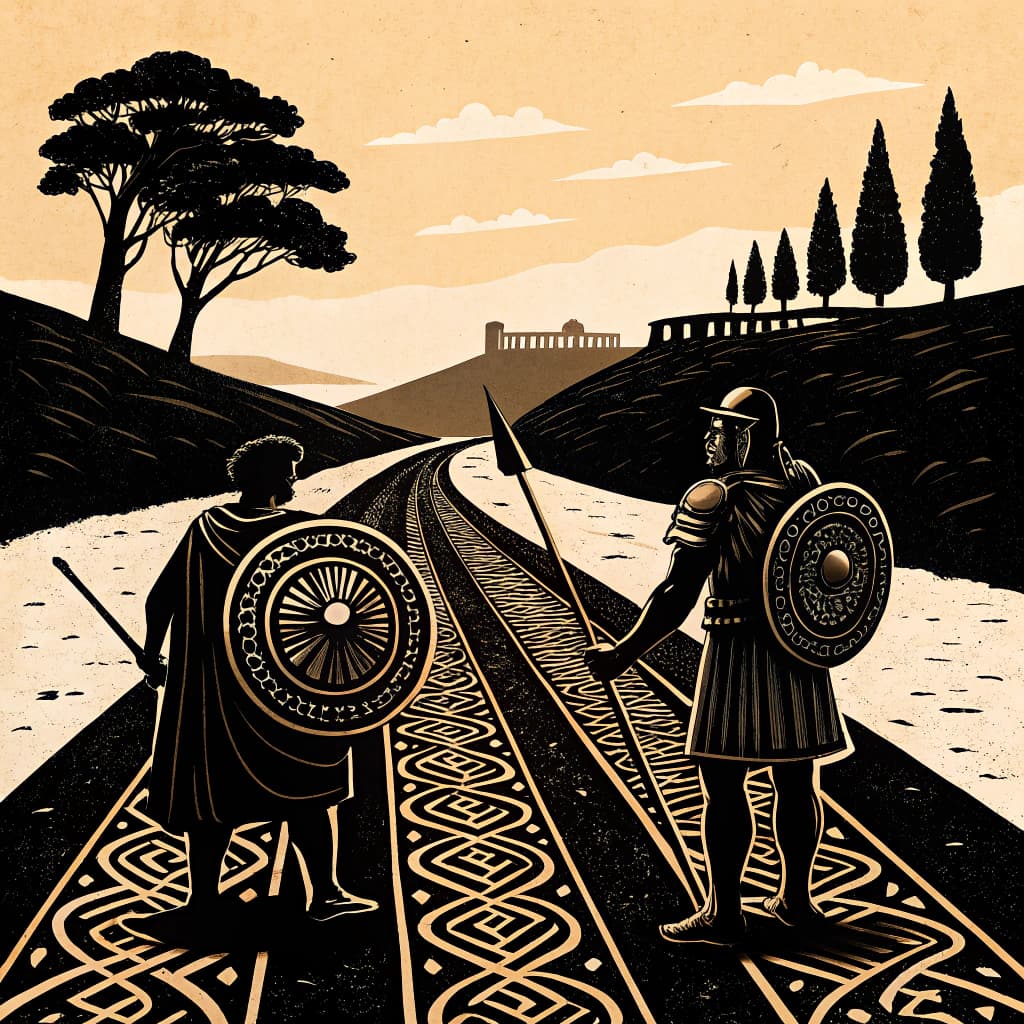
Roman Gods and Goddesses
Learning about the main Roman deities, their myths, and their importance in daily Roman life.
TL;DR:Active learning turns abstract myths into tangible experiences, helping students understand gods not as distant figures but as daily forces in Roman life. By stepping into roles and examining rituals, students grasp how religion shaped decisions from warfare to family life.
About This Topic
Roman gods and goddesses anchored the religious life of the Roman Empire, with major deities such as Jupiter, the king of gods; Juno, protector of marriage; Mars, god of war; and Vesta, guardian of the hearth. Students examine key myths, like Romulus and Remus suckled by a wolf, to see how these stories explained Rome's origins and reinforced moral values. This content aligns with KS2 History standards on the Roman Empire's impact on Britain, showing religion's role in unifying diverse territories.
Students compare Roman gods to Greek equivalents, noting similarities like Jupiter and Zeus, alongside Roman emphases on civic duty and state rituals. They investigate daily influences, from household offerings at lararia shrines to grand festivals like Lupercalia, and the use of omens and augurs in decisions on war or politics. These explorations build skills in analysis and cultural empathy.
Active learning suits this topic well. Role-playing deities, staging myths, or simulating festivals brings ancient beliefs to life, helps students internalize influences on Roman behaviour, and makes connections to modern customs tangible through collaboration and creativity.
Key Questions
- Compare Roman gods to Greek gods, identifying similarities and differences.
- Explain how Roman religious beliefs influenced their daily rituals and festivals.
- Analyze the role of omens and prophecies in Roman decision-making.
Learning Objectives
- Compare and contrast the roles and domains of at least three major Roman gods with their Greek counterparts.
- Explain how specific Roman religious beliefs, such as the worship of household deities, influenced daily rituals.
- Analyze the significance of omens and prophecies in Roman military and political decision-making.
- Classify Roman gods and goddesses based on their primary responsibilities (e.g., war, home, sky).
Before You Start
Why: Students need a basic understanding of what ancient civilizations are before learning about a specific one like Rome.
Why: Familiarity with Greek mythology provides a foundation for understanding the parallels and differences with Roman deities.
Key Vocabulary
| Jupiter | The king of the Roman gods, equivalent to the Greek god Zeus. He ruled the sky and thunder. |
| Juno | The queen of the Roman gods, wife of Jupiter, and protector of women and marriage. She is equivalent to the Greek goddess Hera. |
| Mars | The Roman god of war, father of Romulus and Remus. He is equivalent to the Greek god Ares. |
| Vesta | The Roman goddess of the hearth, home, and family. Her sacred fire was tended by the Vestal Virgins. |
| Augur | A religious official who interpreted omens, especially the flight of birds, to determine the will of the gods. |
Watch Out for These Misconceptions
Common MisconceptionRoman gods were exactly the same as Greek gods.
What to Teach Instead
Romans adapted Greek myths to fit their practical, state-focused society, emphasising discipline over heroism. Pair debates encourage evidence comparison, helping students spot nuances like Mars's military primacy over Ares.
Common MisconceptionRomans viewed gods and myths as just stories for fun.
What to Teach Instead
Gods were real forces shaping life, from personal rituals to public policy. Role-play activities immerse students in believer perspectives, revealing religion's serious daily integration.
Common MisconceptionAll Romans worshipped gods the same way.
What to Teach Instead
Practices varied by household, class, and state needs. Station rotations expose diverse rituals, prompting discussions on context that clarify variations.
Active Learning Ideas
See all activities→Trading Cards
Role-Play: Council of the Gods
Assign students roles as major gods and goddesses. Groups prepare speeches on a decision, like whether to aid Rome in battle, using myths for evidence. Perform for the class, with peers voting based on arguments.
Stations Rotation
Daily Rituals
Set up stations for household shrine (offerings with clay models), festival prep (design invitations), omen reading (interpret 'bird flights' with cards), and myth mapping (draw family trees). Groups rotate, noting influences on life.
Trading Cards
Pairs Debate: Roman vs Greek
Pairs research one paired deity, list similarities and differences on charts. Debate which version better suited empire needs, using evidence from myths and roles. Share key points class-wide.
Real-World Connections
- Museum curators specializing in classical antiquity, such as those at the British Museum, use their knowledge of Roman mythology to interpret artifacts and explain their cultural significance to visitors.
- Writers and filmmakers creating historical dramas set in ancient Rome often research Roman religious practices and myths to ensure accurate portrayals of characters' beliefs and motivations.
- Architects designing public buildings sometimes incorporate classical motifs and symbols inspired by Roman gods and goddesses to evoke a sense of history and grandeur.
Assessment Ideas
Provide students with a list of three Roman gods and three Greek gods. Ask them to draw lines connecting the gods that are most similar and write one sentence explaining their choice for one pair.
Pose the question: 'Imagine you are a Roman citizen in Year 4. Which Roman god or goddess would you pray to for help with your schoolwork, and why?' Encourage students to justify their choice based on the god's domain.
Show students images of common Roman artifacts, like a hearth or a shield. Ask them to identify which god or goddess is most closely associated with the object and briefly explain the connection.
Frequently Asked Questions
How do Roman gods compare to Greek gods for Year 4?
What Roman festivals show gods' daily importance?
How did omens influence Roman decisions?
What active learning strategies work for Roman gods and goddesses?
Planning templates for History
5E Model
The 5E Model structures lessons through five phases (Engage, Explore, Explain, Elaborate, and Evaluate), guiding students from curiosity to deep understanding through inquiry-based learning.
Unit PlannerThematic Unit
Organize a multi-week unit around a central theme or essential question that cuts across topics, texts, and disciplines, helping students see connections and build deeper understanding.
RubricSingle-Point Rubric
Build a single-point rubric that defines only the "meets standard" level, leaving space for teachers to document what exceeded and what fell short. Simple to create, easy for students to understand.
More in The Rise of the Roman Empire
The Legend of Romulus and Remus
Investigating the mythical origins of Rome and what the story tells us about Roman values.
8 methodologies
Early Roman Republic: Citizens and Government
Understanding the structure of the early Roman Republic, including the roles of citizens, consuls, and the Senate.
8 methodologies
The Might of the Roman Army
Examining the equipment, training, and tactics of the Roman Legionaries.
8 methodologies
Julius Caesar: General and Politician
Exploring the life and campaigns of Julius Caesar, focusing on his rise to power and impact on the Republic.
8 methodologies
From Republic to Empire: Augustus
Understanding the shift from Republic to Empire and how emperors like Augustus maintained control.
8 methodologies
Roman Engineering Marvels
Discovering how aqueducts, arches, and concrete allowed Rome to grow into a megacity.
8 methodologies