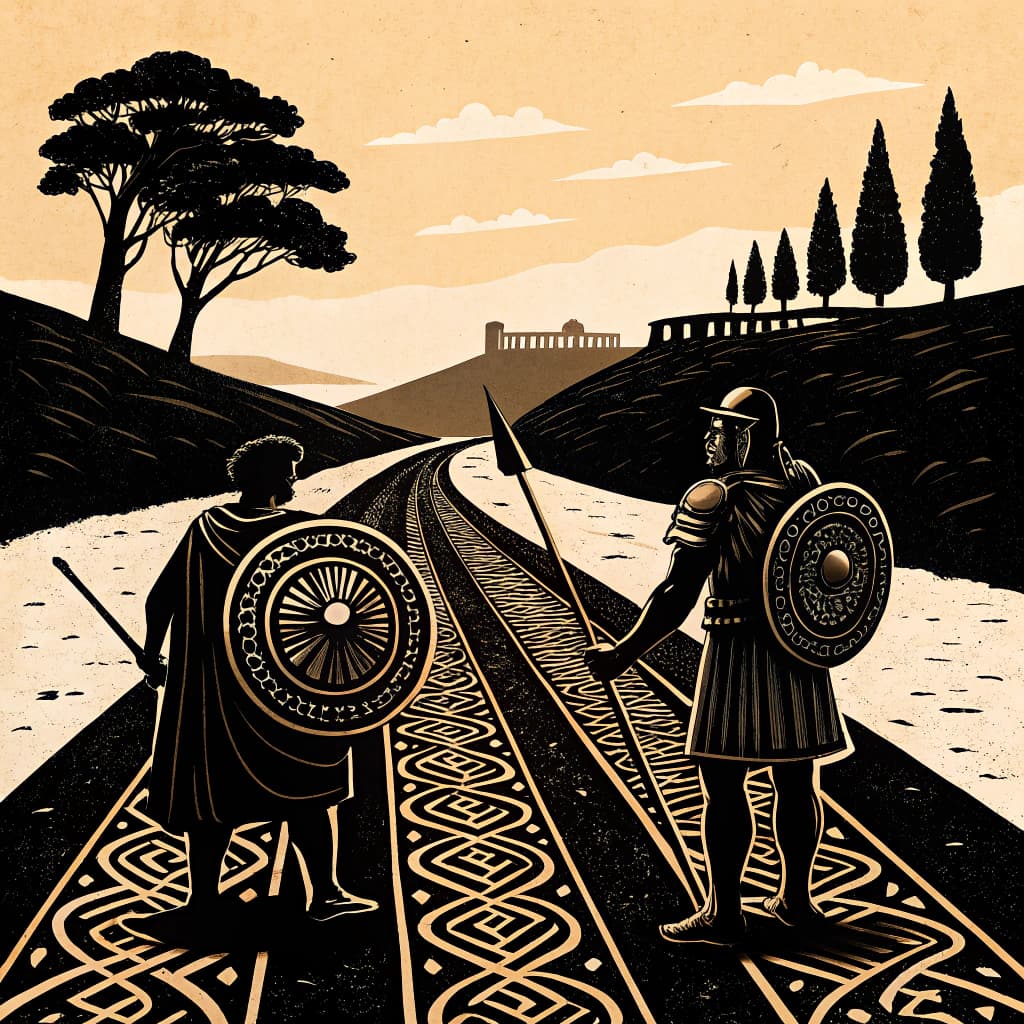
Gladiators and Roman Entertainment
Investigating the purpose and spectacle of gladiatorial games and other forms of Roman entertainment.
TL;DR:Active learning turns the charged topic of gladiatorial combat into safe, structured inquiry. Year 4 students absorb Roman social values most deeply when they step into roles, handle artefacts, and build models rather than passively read text. Movement, talk, and creative production help them process complex feelings about power, spectacle, and human cost.
About This Topic
Gladiators and Roman entertainment offer Year 4 students a window into the social fabric of the Roman Empire. These spectacles, centered on gladiatorial combats in venues like the Colosseum, combined thrilling violence with public pageantry. Fighters, often enslaved people or prisoners, battled each other or wild beasts to entertain vast crowds. Students investigate how emperors used these games to boost popularity, foster unity, and showcase engineering feats such as floodable arenas for mock sea battles.
This topic aligns with KS2 History standards on the Roman Empire's impact on Britain. Children analyze the Colosseum's cultural role, question the ethics of human exploitation for sport, and connect events to Roman governance. They build skills in source evaluation through artifacts, mosaics, and accounts by writers like Suetonius, while considering parallels in modern entertainment.
Active learning suits this unit perfectly. Role-plays of gladiator training or citizen debates make abstract power structures tangible. Group source analysis reveals biases, and ethical discussions encourage empathy, turning passive facts into personal insights that stick.
Key Questions
- Explain why gladiatorial games were so popular with Roman citizens.
- Analyze the role of the Colosseum in Roman society and culture.
- Critique the ethical implications of using enslaved people and prisoners for entertainment.
Learning Objectives
- Explain the primary reasons for the popularity of gladiatorial games among Roman citizens.
- Analyze the function of the Colosseum as a central element of Roman society and culture.
- Critique the ethical considerations surrounding the use of enslaved people and prisoners for public entertainment.
- Compare and contrast different forms of Roman entertainment, such as chariot races and theatrical performances, with gladiatorial combat.
Before You Start
Why: Students need a basic understanding of Roman society, including social classes and common activities, to contextualize entertainment.
Why: Prior knowledge of the Roman Empire's existence and its general influence provides the necessary historical backdrop for studying its entertainment.
Key Vocabulary
| Gladiator | A person, typically a slave or prisoner, trained to fight in public spectacles for the entertainment of crowds. |
| Colosseum | A large amphitheater in Rome, famous for hosting gladiatorial contests, mock sea battles, and other public spectacles. |
| Spectacle | A public show or display, especially one that is exciting, impressive, or dramatic. |
| Chariot Race | A competitive race between chariots, pulled by horses, which was a popular form of entertainment in ancient Rome. |
Watch Out for These Misconceptions
Common MisconceptionAll gladiators were unwilling slaves.
What to Teach Instead
Many volunteered for fame and prize money, as shown in gravestones honoring free gladiators. Role-play activities let students explore motivations, shifting views from victim-only narratives to complex choices.
Common MisconceptionGames were just brutal fights with no purpose.
What to Teach Instead
They served political ends, like distracting from taxes or celebrating victories. Group debates on emperor strategies reveal social functions, helping students see beyond surface violence.
Common MisconceptionThe Colosseum hosted only gladiator fights.
What to Teach Instead
It featured beast hunts, executions, and recreations too. Station rotations with visual sources clarify variety, building accurate mental models through hands-on comparison.
Active Learning Ideas
See all activities→Socratic Seminar
Role-Play: Gladiator Arena Day
Assign roles as gladiators, emperors, and spectators. Students rehearse simple combats with foam swords, then perform for the class while narrating purposes. Follow with a whole-class vote on an emperor's popularity tactics.
Socratic Seminar
Source Stations: Entertainment Evidence
Set up stations with replica mosaics, inscriptions, and eyewitness texts. Groups rotate, sketching key details and noting biases. Conclude with shared findings on a class chart.
Formal Debate
Ethical Games
Divide class into teams to argue for or against gladiatorial games from Roman and modern views. Provide prompts on slavery and spectacle. Vote and reflect on ethical trade-offs.
Real-World Connections
- Modern sports stadiums like Wembley Stadium in London or the AT&T Stadium in Dallas host large crowds for events, similar to how the Colosseum served as a central gathering place for Romans.
- The ethical debates surrounding modern combat sports or the treatment of individuals in reality television shows echo the concerns raised by the use of gladiators for entertainment.
Assessment Ideas
Pose the question: 'Imagine you are a Roman citizen attending the games. What aspects would you find most exciting, and what aspects might make you uncomfortable?' Encourage students to reference specific elements of Roman entertainment discussed in class.
On a small card, ask students to write two reasons why gladiatorial games were popular and one question they still have about Roman entertainment. Collect these as students leave the lesson.
Show images of different Roman entertainment venues or activities (e.g., Colosseum, Circus Maximus, a mosaic depicting a fight). Ask students to identify each and state one fact about its purpose or the people involved.
Frequently Asked Questions
Why were gladiatorial games so popular with Romans?
What was the role of the Colosseum in Roman society?
How to teach ethical implications of Roman entertainment?
What active learning strategies work for gladiators topic?
Planning templates for History
5E Model
The 5E Model structures lessons through five phases (Engage, Explore, Explain, Elaborate, and Evaluate), guiding students from curiosity to deep understanding through inquiry-based learning.
Unit PlannerThematic Unit
Organize a multi-week unit around a central theme or essential question that cuts across topics, texts, and disciplines, helping students see connections and build deeper understanding.
RubricSingle-Point Rubric
Build a single-point rubric that defines only the "meets standard" level, leaving space for teachers to document what exceeded and what fell short. Simple to create, easy for students to understand.
More in The Rise of the Roman Empire
The Legend of Romulus and Remus
Investigating the mythical origins of Rome and what the story tells us about Roman values.
8 methodologies
Early Roman Republic: Citizens and Government
Understanding the structure of the early Roman Republic, including the roles of citizens, consuls, and the Senate.
8 methodologies
The Might of the Roman Army
Examining the equipment, training, and tactics of the Roman Legionaries.
8 methodologies
Julius Caesar: General and Politician
Exploring the life and campaigns of Julius Caesar, focusing on his rise to power and impact on the Republic.
8 methodologies
From Republic to Empire: Augustus
Understanding the shift from Republic to Empire and how emperors like Augustus maintained control.
8 methodologies
Roman Engineering Marvels
Discovering how aqueducts, arches, and concrete allowed Rome to grow into a megacity.
8 methodologies