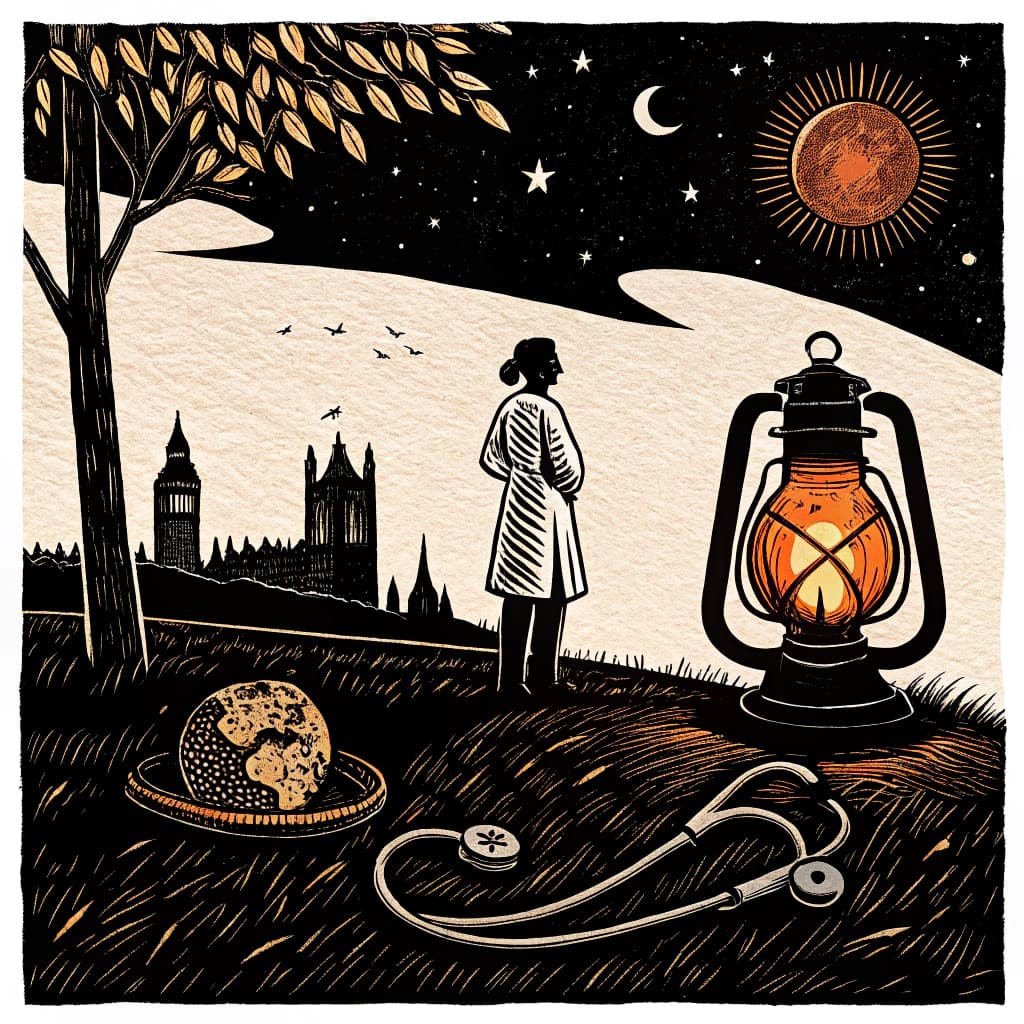
Hospitals: Victorian Era vs. Today
Comparing medical care from the Victorian era to modern-day National Health Service practices.
TL;DR:Active learning helps students grasp the stark contrasts between Victorian and modern hospitals by making historical differences tangible rather than abstract. Handling replica tools and role-playing scenarios immerses them in the daily realities of each era, strengthening memory and critical thinking about progress in healthcare.
About This Topic
This topic compares hospital care in the Victorian era with modern National Health Service practices, highlighting significant changes within living memory. Victorian hospitals were often dark, overcrowded wards with poor hygiene, where patients faced high infection risks from unsterilised tools and no antibiotics. Basic surgeries occurred without reliable anaesthetics, and nurses followed routines improved by pioneers like Florence Nightingale, who championed cleanliness and patient observation. Today, NHS hospitals feature bright spaces, advanced scanners, vaccines, and teams of specialists ensuring safe, effective treatment.
Aligned with KS1 History standards, the unit fosters historical enquiry through comparing primary sources like old photographs, diaries, and modern hospital tours. Children explore key questions about past conditions, present differences, and reasons for change, such as germ theory discoveries and public health laws. This develops skills in chronology, evidence analysis, and understanding societal progress.
Active learning benefits this topic greatly because children engage directly with contrasts through role play and artefacts. Handling replica bedpans or stethoscopes, then visiting a local hospital or viewing videos, makes abstract history concrete. These experiences build empathy for Victorian patients and excitement about medical advances, deepening retention and discussion.
Key Questions
- What was a hospital like in Victorian times?
- How is a hospital today different from a Victorian hospital?
- Why do you think hospitals have changed so much over time?
Learning Objectives
- Compare and contrast the typical conditions and treatments found in Victorian hospitals with those in modern NHS hospitals.
- Explain the key reasons for the significant changes in hospital care from the Victorian era to today, referencing at least two specific advancements.
- Identify at least three roles of medical professionals working in hospitals today.
- Classify common hospital items or procedures as belonging to the Victorian era or the present day.
Before You Start
Why: Students need a basic understanding of Victorian society and living conditions to contextualize hospital care of that era.
Why: This topic builds on the concept of families and communities, extending it to the broader community service of hospitals.
Key Vocabulary
| Victorian hospital | A hospital from the time of Queen Victoria (1837-1901), often characterized by crowded wards, limited hygiene, and basic medical practices. |
| NHS (National Health Service) | The publicly funded healthcare system in the UK, established after World War II, providing medical care to all residents. |
| Hygiene | Practices and conditions that help maintain health and prevent disease, especially through cleanliness. |
| Anaesthetic | A substance, typically inhaled or injected, that causes a temporary loss of sensation or consciousness, used to prevent pain during medical procedures. |
| Germ theory | The scientific theory that microorganisms known as pathogens cause many diseases, a key development that improved hospital hygiene. |
Watch Out for These Misconceptions
Common MisconceptionVictorian hospitals were just like today's but older and smaller.
What to Teach Instead
They lacked hygiene standards and antibiotics, leading to frequent deaths from infection. Comparing replica tools and photos in sorting activities reveals these gaps, while role play lets children experience patient discomfort, correcting views through direct comparison.
Common MisconceptionHospitals have not changed much over time.
What to Teach Instead
Major advances in germ theory, anaesthetics, and technology transformed care. Timeline-building activities highlight specific milestones, and discussions during role play help students articulate reasons for progress, shifting focus from sameness to evolution.
Common MisconceptionFlorence Nightingale invented modern hospitals single-handedly.
What to Teach Instead
She improved nursing practices, but changes built on many discoveries like pasteurisation. Enquiry stations with sources clarify her role alongside others, encouraging evidence-based talk that active group rotations reinforce through peer challenge.
Active Learning Ideas
See all activities→Stations Rotation
Sorting Activity: Victorian vs Modern Tools
Provide labelled images or replica models of medical equipment from both eras, such as bedpans, leeches, and MRI scanners. In small groups, children sort items onto a class timeline and note one difference per item. Groups share findings in a whole-class discussion.
Role Play
Hospital Visits Then and Now
Pairs prepare scripts for a Victorian hospital scene with dirt floors and basic care, then switch to a modern NHS visit with clean rooms and doctors. Perform for the class and vote on preferred era with reasons. Debrief on changes.
Stations Rotation
Timeline Wall: Hospital Evolution
As a whole class, draw a large timeline on wall paper. Add dated drawings, labels, and facts about key changes like Nightingale's reforms and antibiotics. Children contribute personal family stories of hospital visits.
Real-World Connections
- Visiting a local NHS hospital or a museum exhibit featuring historical medical tools can provide concrete examples of past and present healthcare environments.
- Discussing the roles of nurses, doctors, and surgeons in a modern hospital helps children understand the specialized teams that provide care today.
- Learning about pioneers like Florence Nightingale connects the historical context to the ongoing development of nursing as a profession.
Assessment Ideas
Provide students with two simple drawings: one of a Victorian hospital ward and one of a modern hospital room. Ask them to write one sentence describing a key difference they observe on each drawing.
Ask students: 'Imagine you are feeling unwell. Would you rather be treated in a Victorian hospital or a modern NHS hospital? Explain your choice using at least two reasons we have discussed.'
Show images of different medical items (e.g., a stethoscope, a bedpan, a syringe, a thermometer). Ask students to hold up a green card if they think it was common in Victorian hospitals and a blue card if it is more common today.
Frequently Asked Questions
What were main features of Victorian hospitals?
Key differences between Victorian and modern hospitals?
How can active learning help teach hospital changes?
How to assess Year 2 understanding of hospital history?
Planning templates for History
5E Model
The 5E Model structures lessons through five phases (Engage, Explore, Explain, Elaborate, and Evaluate), guiding students from curiosity to deep understanding through inquiry-based learning.
Unit PlannerThematic Unit
Organize a multi-week unit around a central theme or essential question that cuts across topics, texts, and disciplines, helping students see connections and build deeper understanding.
RubricSingle-Point Rubric
Build a single-point rubric that defines only the "meets standard" level, leaving space for teachers to document what exceeded and what fell short. Simple to create, easy for students to understand.
More in Nursing and Medical Pioneers
Florence Nightingale: Early Life and Calling
Investigating Florence Nightingale's childhood and the societal expectations she defied to pursue nursing.
8 methodologies
Nightingale's Crimean War Reforms
Discovering how Florence Nightingale transformed hospital hygiene and patient care during the Crimean War.
8 methodologies
Mary Seacole: Jamaican Healer to Crimean Nurse
Learning about Mary Seacole's journey from Jamaica to the Crimea and her unique contributions to soldier care.
8 methodologies
Edith Cavell: Bravery in WWI
Examining the life of Edith Cavell and her courage in helping soldiers from all sides during the First World War.
8 methodologies
The Role of Doctors and Nurses
Exploring the evolving roles of medical professionals from the 19th century to the present day.
8 methodologies
Introduction to the NHS
Understanding the origins and importance of the National Health Service in providing healthcare for all.
8 methodologies