Koncentriska cirklar som roterar för snabba samtal
Inre och yttre cirkeln
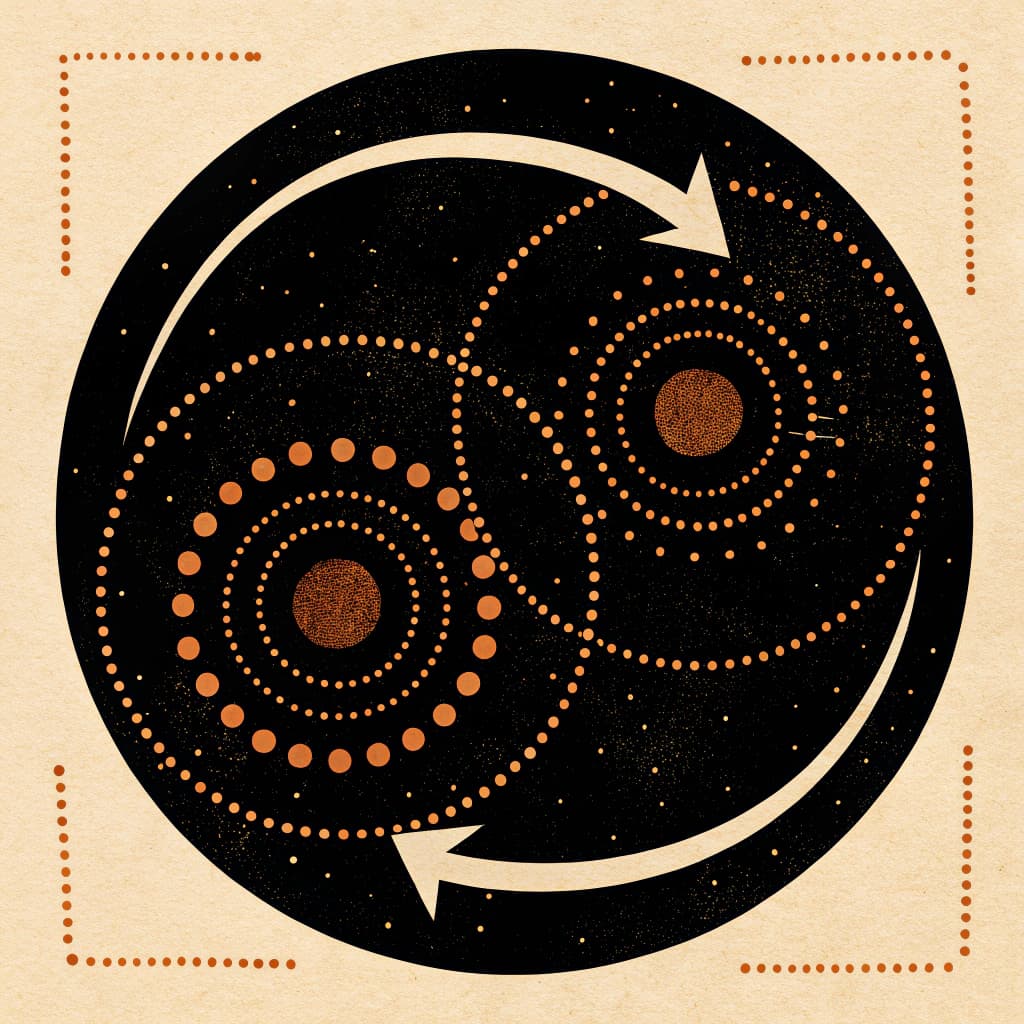
Eleverna bildar två cirklar, en inre och en yttre, vända mot varandra. Du ställer en fråga, paren diskuterar kort, och sedan roterar den yttre cirkeln ett steg så att nya par bildas. Processen upprepas med nya frågor eller samma fråga för att få nya perspektiv. Metoden är snabb, rörelsebaserad och ser till att alla får prata med många olika klasskamrater.
Vad är Inre och yttre cirkeln?
Den inre-yttre-cirkeln är en strukturerad utbytesstruktur uppfunnen av Spencer Kagan på 1980- och 1990-talen. Eleverna bildar två koncentriska cirklar, ställs vis-à-vis parvis, utbyter under en bestämd tid, sedan roterar den yttre, eller inre, cirkeln ett steg och skapar nya par. På tio till femton minuter kan varje elev ha haft substantiella utbyten med fyra till sex olika kamrater.
Strukturen löser ett klassiskt problem med helklassdiskussioner: bara ett fåtal elever deltar aktivt. I den inre-yttre-cirkeln talar alla elever simultant med en partner. Det finns ingen talartid att vänta på, ingen risk att ignoreras. Det aktiva engagemanget garanteras strukturellt av formatet.
Det extra pedagogiska värdet kommer från mångfalden av samtalspartners. Att förklara samma sak för flera olika personer, eller att få flera olika perspektiv på en och samma fråga, producerar en mer solid och nyanserad förståelse än ett enda fördjupat utbyte. Varje utbyte är ett tillfälle att testa, förfina och berika sin förståelse.
Aktivt lyssnande behöver struktureras. Bygg in ett aktivt lyssnandemoment: sammanfatta partnerns svar innan du delar ditt eget. 'Vad du verkar säga är X, och jag tänker lite annorlunda: Y.' Den rörelsen, från att höra till att parafrasera till att komplettera, är det som gör utbytet till genuint lärande snarare än parallella monologer.
I Lgr22:s kommunikativa förmågor och i Skolverkets allmänna råd om formativ bedömning ryms den inre-yttre-cirkeln som ett format som gör allt elevers tänkande simultant synligt, vilket möjliggör för läraren att cirkulera och lyssna formativt under aktiviteten.
Metoden fungerar i många konfigurationer: innehållsrepetition inför ett prov, delning av forskning om olika delmaterial, diskussion av skilda tolkningar av en text eller muntliga övningar i ett främmande språk. Logistiken är enklare än vid andra rotationsformat och den kan sättas igång spontant med minimalt förberedelsearbete.
Så genomför du Inre och yttre cirkeln
Förbered frågorna
3 min
Ta fram en serie öppna frågor eller problem som eleverna ska diskutera eller lösa tillsammans med sina partners.
Forma cirklarna
3 min
Dela klassen på hälften och låt ena gruppen forma en cirkel vänd utåt, medan den andra gruppen bildar en cirkel runt dem vänd inåt.
Para ihop eleverna
2 min
Se till att varje elev i den inre cirkeln står mitt emot en partner i den yttre cirkeln.
Ställ frågan
3 min
Formulera diskussionsfrågan tydligt och ge en specifik tidsram (t.ex. 30–60 sekunder) för parens interaktion.
Led utbytet
3 min
Gå runt i rummet medan eleverna pratar och se till att båda parter får tid att både tala och lyssna.
Rotera cirkeln
3 min
Ge signal till den yttre cirkeln att flytta ett visst antal steg (t.ex. 'två steg till höger') för att möta en ny partner.
Gemensam reflektion
3 min
Avsluta aktiviteten genom att samla klassen och dela med er av viktiga insikter eller teman som dök upp under rotationerna.
INNAN LEKTIONEN
Läs lärarguiden först.
Flip Educations lärarguide visar hur du leder en lektion med aktivt lärande: pedagogisk hållning, checklista före lektionen, fasvis handledning och ett snabbreferenskort som du kan skriva ut och ta med till klassrummet.
Läs lärarguiden →När ska Inre och yttre cirkeln användas i klassrummet
- Repetera ordförråd eller nyckelbegrepp
- Dela forskningsresultat med kamrater
- Snabba åsiktsutbyten
- Få fart på en seg klass
Vetenskapligt stöd för Inre och yttre cirkeln
Kagan, S. (1994, Kagan Publishing, San Clemente, CA (Book))
Strukturen säkerställer likvärdigt deltagande och individuellt ansvarstagande genom att kräva att varje elev svarar på en fråga vid varje rotation.
Johnson, D. W., Johnson, R. T. (2009, Educational Researcher, 38(5), 365-379)
Interaktion ansikte mot ansikte ökar prestationer och tänkande på högre nivå avsevärt jämfört med tävlingsinriktade eller individuella insatser.
Gillies, R. M. (2016, Australian Journal of Teacher Education, 41(3), 39-54)
Strukturerade modeller för kamratinteraktion som inre-yttre cirkeln stärker elevernas engagemang och sociala färdigheter genom medierad dialog.
Vanliga misstag med Inre och yttre cirkeln och hur du undviker dem
Inte tillräckligt med olika frågor
Att rotera runt med samma fråga flera gånger blir snabbt trist. Förbered en ny fråga eller instruktion för varje rotation, eller låt eleverna skapa en egen fråga att ta med sig runt cirkeln. Variation upprätthåller engagemanget under flera rundor.
Rotationen är fysiskt svår att genomföra
I ett trångt klassrum blir cirkeln ohållbar. Anpassa formatet till utrymmet: rader som möts och en rad som skiftar är ett alternativ.
Ytliga utbyten på grund av tidsbrist
Par som känner sig stressade ger ytliga svar. Ge tillräckligt med tid per rotation för att båda partners ska kunna svara fullständigt – minst 2–3 minuter. Korta, stressade utbyten skapar inte den förståelse som metoden är utformad för.
Aktiviteten saknar uppföljning
Vad lärde eleverna sig av tio korta samtal? Utan reflektion vet de inte. Avsluta med en skrivuppgift: 'Skriv den viktigaste insikten du hörde idag.'
Använd det inte bara för repetition
Inre-yttre-cirkeln används ofta bara i slutet av ett arbetsområde för repetition. Det är lika kraftfullt mitt i ett arbetsområde när eleverna håller på att forma sina idéer. Att höra en kamrats tolkning av ett begrepp innan din egen är fullt formad kan forma förståelsen avsevärt.
Så hjälper Flip Education dig
Samtalskort och samtalsstöd för utskrift
Få en uppsättning kort för både den inre och yttre cirkeln, med mallar som vägleder elevernas interaktion. Materialet ger struktur för flera ronder av samtal mellan elever. Allt är formaterat för snabb utskrift och utdelning.
Kunskapsbaserade frågor för snabba byten
Flip skapar frågor som är direkt kopplade till din läroplan och ditt ämne. Varje rond utforskar en ny del av ämnet, vilket gör att eleverna bearbetar innehållet flera gånger under ett pass. AI:n anpassar frågorna efter din årskurs.
Manus för handledning och rotationssteg
Materialet innehåller ett manus för att sätta scenen och numrerade steg med tips för att styra cirkelrotationerna. Du får råd för att säkra produktiva samtal och hjälpa elever som tycker att tempot är högt. Strukturen håller aktiviteten levande.
Reflektion och individuella exit-tickets
Avsluta passet med frågor som hjälper eleverna att sammanfatta de olika perspektiv de hört. En exit-ticket ger ett sätt att bedöma lärandet från samtalen. En sista notering länkar aktiviteten till nästa mål i läroplanen.
Checklista för verktyg och material för Inre och yttre cirkeln
- Timer (fysisk eller digital)
- Visselpipa eller klockspel för rotationssignal
- Lista med diskussionsfrågor/uppgifter
- Whiteboard eller projektor för att visa frågor
- Kartongkort eller små whiteboards för individuella svar (valfritt)
- Musik för övergångar (valfritt, för att bibehålla energi) (valfritt)
Vanliga frågor om Inre och yttre cirkeln
Vad är strategin Inre-yttre cirkeln?
Det är en samarbetsstruktur där elever bildar två koncentriska cirklar för att diskutera med varandra. Metoden möjliggör snabba och frekventa interaktioner genom att eleverna möter en partner och sedan roterar vidare till nästa på lärarens signal. Metoden säkerställer att varje elev aktivt talar och lyssnar samtidigt.
Hur använder jag Inre-yttre cirkeln i mitt klassrum?
Dela klassen i två grupper: en inre cirkel vänd utåt och en yttre cirkel vänd inåt. Ge en instruktion eller fråga som paren diskuterar under en bestämd tid, och ge sedan signal till den yttre cirkeln att rotera ett visst antal steg åt höger för att möta en ny partner. Upprepa denna process under flera rundor för att ge eleverna möjlighet att höra olika perspektiv på samma ämne.
Vilka är fördelarna för eleverna?
Strategin ökar engagemanget och bygger självförtroende genom att erbjuda en trygg miljö för att öva på skolspråket. Det uppmuntrar till rörelse och säkerställer att ingen elev förblir passiv under lektionen. Det hjälper dessutom att utveckla sociala färdigheter genom upprepade enskilda interaktioner med olika klasskamrater.
Hur gör jag om vi är ett udda antal elever?
Låt en elev ingå i en triad, alltså en grupp om tre, istället för ett par. Alternativt kan läraren gå in som partner för att jämna ut cirklarna och samtidigt visa hur ett högkvalitativt svar kan se ut. Se till att triaden roterar tillsammans så att gruppens dynamik förblir konsekvent under hela aktiviteten.
Vilka är de vanligaste utmaningarna med metoden?
Ljudnivå och platsbrist är de vanligaste hindren. För att hantera detta bör tydliga icke-verbala signaler användas för övergångar, och möblerna bör flyttas för att skapa tillräckligt med utrymme.
Klassrumsmaterial for Inre och yttre cirkeln
Gratis utskrivbart material for Inre och yttre cirkeln. Ladda ner, skriv ut och anvand i ditt klassrum.
Inre-yttre cirkel: Samtalsmall
Eleverna dokumenterar nyckelinsikter från varje kort samtal med en ny partner i cirkelformatet.
Ladda ner PDFReflektion efter inre-yttre cirkel
Eleverna reflekterar över hur korta samtal med flera partners berikade deras förståelse.
Ladda ner PDFRollkort för inre-yttre cirkel
Tilldela roller som maximerar engagemanget i varje kort utbyte.
Ladda ner PDFFrågor för inre-yttre cirkel
Frågor som fördjupar snabba utbyten och hjälper eleverna syntetisera insikter från flera samtal.
Ladda ner PDFSEL-fokus: Relationsförmåga
Ett kort fokuserat på snabb kommunikation och respektfullt lyssnande med varierande partners.
Ladda ner PDFRedo att prova?
- Läs lärarguiden →
- Skapa en mission med Inre och yttre cirkeln →
- Skriv ut materialet efter skapandet
Skapa ett uppdrag med Inre och yttre cirkeln
En komplett lektionsplanering, anpassad till din kursplan.