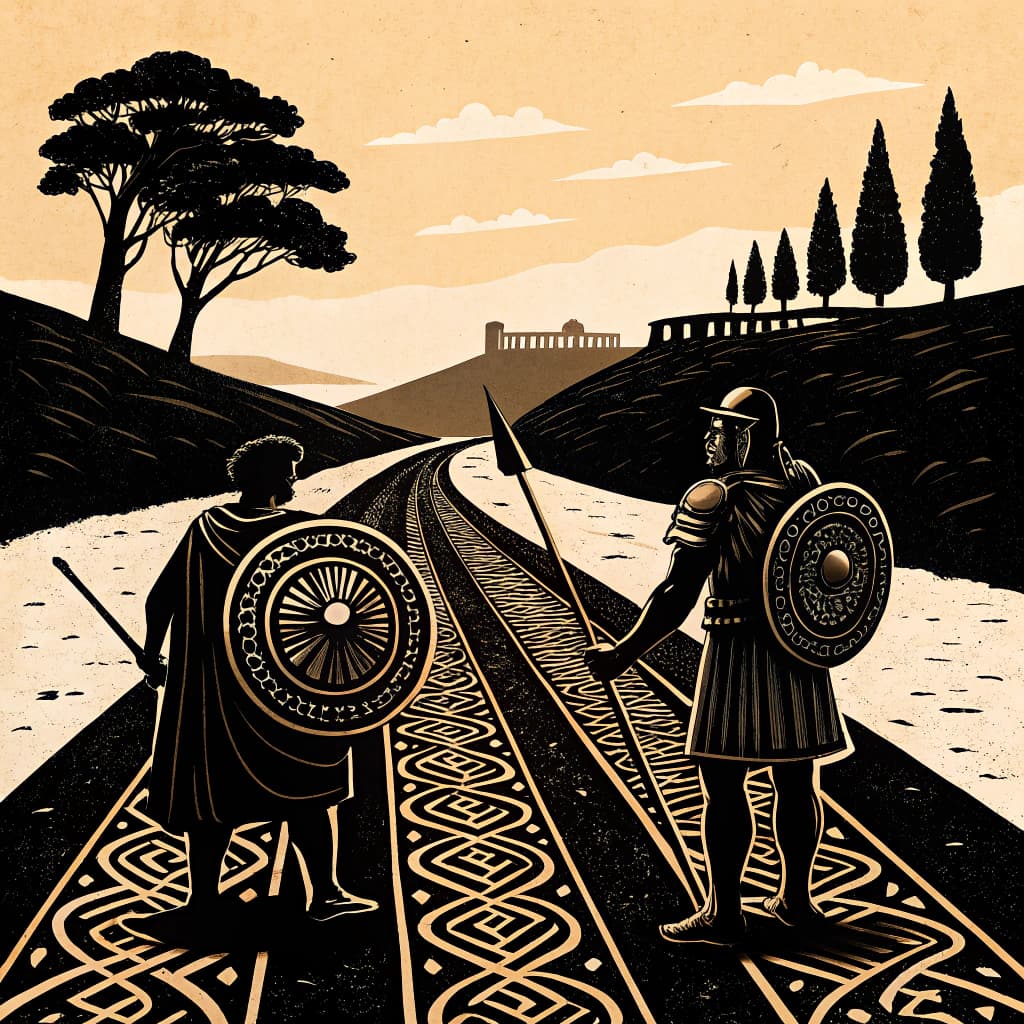
The Claudian Invasion of AD 43
How Emperor Claudius succeeded where Caesar failed and the establishment of the province of Britannia.
About This Topic
The Claudian Invasion of AD 43 marks a pivotal moment in British history, establishing Roman rule where Julius Caesar's earlier expeditions had not. Emperor Claudius, seeking to bolster his authority and legacy, launched a large-scale military campaign. This event transitioned Britain from a collection of independent tribes to a Roman province, profoundly influencing its culture, infrastructure, and governance for centuries. Students will explore the motivations behind Claudius's decision, contrasting it with Caesar's more exploratory forays, and understand the strategic importance of Britannia to the Roman Empire.
Examining this invasion allows students to consider the perspectives of both the Romans and the native British tribes. They will investigate the military tactics employed, including the psychological impact of Roman legions and their formidable war elephants, which were a novelty to the Britons. Understanding the varied responses of different tribes, some surrendering readily while others fiercely resisted, provides insight into the complex political landscape of Iron Age Britain and the diverse reasons for cooperation or conflict with an invading power.
Active learning is particularly beneficial for this topic as it allows students to step into the shoes of historical actors. Through role-playing scenarios, debating tribal alliances, or creating battle maps, abstract historical events become more concrete and engaging. This experiential approach helps students grasp the strategic decisions, the human impact of invasion, and the differing motivations that shaped this significant historical period.
Key Questions
- Explain why Claudius needed a military victory to strengthen his rule.
- Analyze how the Roman elephants affected the British tribes in battle.
- Predict which tribes might have surrendered quickly and explain why.
Watch Out for These Misconceptions
Common MisconceptionAll British tribes fought the Romans together.
What to Teach Instead
Students can explore primary and secondary sources to discover that alliances were fluid and some tribes actually aided the Romans. Creating a class chart of tribal allegiances during the invasion helps visualize this complexity.
Common MisconceptionRoman elephants were the main reason for Roman victory.
What to Teach Instead
While elephants were intimidating, students can research other Roman military advantages like disciplined legions and superior siege technology. Analyzing battle accounts and discussing the psychological impact versus tactical advantage helps refine understanding.
Active Learning Ideas
See all activities→Role Play
Tribal Council Debate
Divide students into groups representing different British tribes. Present them with the news of the Roman invasion and have them debate whether to surrender, resist, or attempt negotiation, justifying their decisions based on potential Roman strengths and tribal weaknesses.
Jigsaw
Map Analysis: Roman Advance
Provide students with a map of Roman Britain and key tribal locations. Have them trace the likely routes of the Claudian invasion, identifying potential strategic points and areas of strong resistance, using information about terrain and tribal strengths.
Jigsaw
Persuasive Writing: Letter to Claudius
Students write a letter from the perspective of a British chieftain to Emperor Claudius, either pledging allegiance and offering tribute or defiantly warning of resistance. This encourages empathy and understanding of different viewpoints.
Frequently Asked Questions
Why was the Claudian invasion successful when Caesar's wasn't?
What impact did the Claudian invasion have on Britain?
How can role-playing activities help students understand the Claudian Invasion?
What was the significance of Roman elephants in the invasion?
Planning templates for History
5E Model
The 5E Model structures lessons through five phases (Engage, Explore, Explain, Elaborate, and Evaluate), guiding students from curiosity to deep understanding through inquiry-based learning.
Unit PlannerThematic Unit
Organize a multi-week unit around a central theme or essential question that cuts across topics, texts, and disciplines, helping students see connections and build deeper understanding.
RubricSingle-Point Rubric
Build a single-point rubric that defines only the "meets standard" level, leaving space for teachers to document what exceeded and what fell short. Simple to create, easy for students to understand.
More in Roman Britain: Invasion and Resistance
Iron Age Britain: Celtic Tribes
Understanding the society, culture, and daily life of the Celtic tribes in Britain before the Roman arrival.
3 methodologies
Caesar's First Contact
The story of Julius Caesar's early expeditions to Britain and the British reaction.
3 methodologies
Boudicca: The Warrior Queen
A deep dive into the Iceni revolt and the destruction of Roman Londinium, Camulodunum, and Verulamium.
3 methodologies
Caractacus: The Fugitive King
The long resistance of the Catuvellauni and the Silures against the Roman advance into Wales.
3 methodologies
The Druids and the Massacre at Mona
Understanding the religious leaders of the Celts and why the Romans feared and targeted them.
3 methodologies
Hadrian's Wall: A Frontier of Empire
Studying the construction and purpose of Hadrian's Wall as a defensive barrier and cultural boundary.
3 methodologies