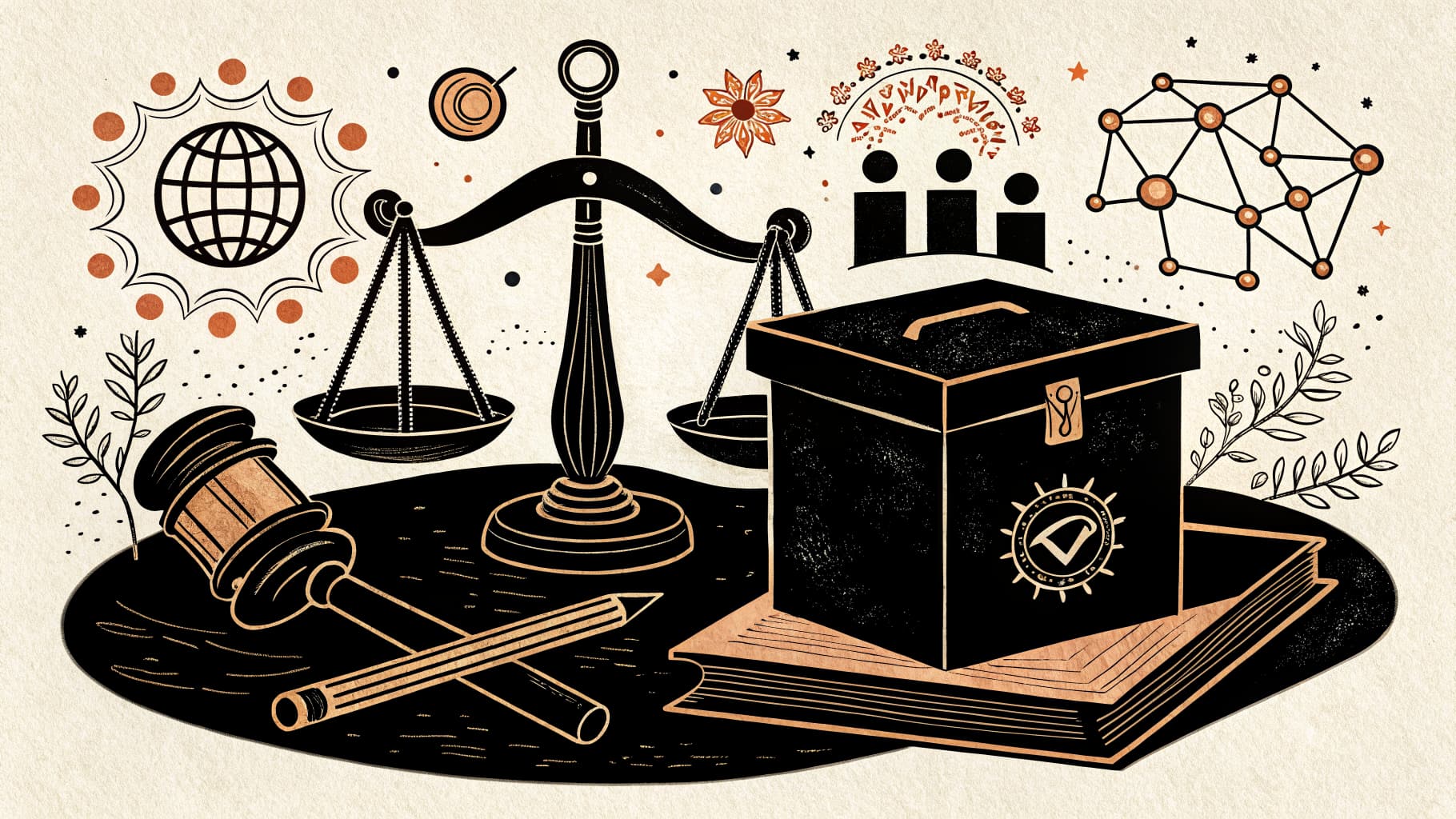
Influence of Lobby Groups and Special Interests
Students will evaluate how interest groups and lobbyists shape the development of national policy.
TL;DR:Active learning lets students experience the real dynamics of policy influence firsthand. By role-playing lobbyists, dissecting real campaigns, and mapping power networks, they move beyond abstract definitions to see how arguments, evidence, and relationships shape laws.
About This Topic
Lobby groups and special interest organisations influence Australia's national policy by advocating for specific causes through targeted strategies. Year 7 students evaluate methods like direct consultations with parliamentarians, submissions to inquiries, media campaigns, and funding political events. They connect these tactics to the legislative pathway, from bill introduction to enactment, and consider how groups supply data or amplify public voices.
This content aligns with the Australian Curriculum's focus on government processes and civic participation under AC9C7K02 and AC9C7K03. Students critique ethical dimensions, such as whether privileged access creates imbalances in representation or if advocacy strengthens democracy. They practice distinguishing legitimate efforts, like environmental groups on climate policy, from potential undue sway via undisclosed donations.
Active learning excels here because abstract power dynamics become concrete through simulations. When students role-play lobbyists pitching to mock committees or debate real cases like mining reforms, they grasp nuances of influence firsthand. Collaborative mapping of stakeholder networks builds analytical skills and promotes nuanced views on democratic fairness.
Key Questions
- Analyze the methods employed by lobby groups to influence legislation.
- Critique the ethical implications of special interest groups having privileged access to politicians.
- Differentiate between legitimate advocacy and undue influence in the legislative process.
Learning Objectives
- Analyze the specific methods used by lobby groups to influence Australian federal legislation.
- Evaluate the ethical implications of special interest groups having privileged access to politicians.
- Differentiate between legitimate advocacy and undue influence in the legislative process.
- Synthesize information to construct an argument about the role of lobby groups in a democracy.
Before You Start
Why: Students need a foundational understanding of how the Australian Parliament operates and the legislative process before analyzing external influences on it.
Why: Understanding the different branches and roles within government helps students comprehend where and how lobby groups attempt to exert influence.
Key Vocabulary
| Lobby group | An organization that actively tries to influence government decisions, especially legislation, on behalf of a particular cause or interest. |
| Special interest group | A group of people united by a common interest or concern who seek to influence public policy and government decisions. |
| Advocacy | The act of publicly supporting or recommending a particular cause or policy, often through direct engagement with lawmakers. |
| Undue influence | Influence that is excessive or improper, potentially leading to unfair advantages or decisions that do not serve the public good. |
| Stakeholder | A person, group, or organization with an interest or concern in a particular issue, project, or policy. |
Watch Out for These Misconceptions
Common MisconceptionAll lobbying is corrupt or illegal.
What to Teach Instead
Lobbying is a legal part of democracy that channels diverse views to policymakers. Role-plays help students see benefits, like community input on education bills, while discussions reveal transparency rules that curb abuse.
Common MisconceptionLobby groups fully control what politicians decide.
What to Teach Instead
Politicians weigh multiple inputs, including public opinion and party platforms. Simulations of committee deliberations show competing influences and checks like electoral accountability, fostering realistic views of power balance.
Common MisconceptionOnly big businesses or wealthy donors lobby effectively.
What to Teach Instead
Unions, charities, and grassroots groups also succeed through mobilisation. Research tasks on cases like marriage equality campaigns highlight diverse actors, building students' awareness of broad participation.
Active Learning Ideas
See all activities→Case Study Analysis
Role-Play: Lobbying a Bill Committee
Divide class into lobby groups, parliamentarians, and citizens. Lobby teams prepare 3-minute pitches with evidence for or against a sample bill on plastic bans. Parliamentarians question and vote; debrief on methods and ethics. Rotate roles for second round.
Case Study Analysis
Case Study Dissection: Real Campaigns
Provide sources on Australian cases like tobacco lobby or renewable energy advocates. Groups identify three influence tactics, rate legitimacy on a scale, and present findings. Class votes on most effective method and discusses ethics.
Case Study Analysis
Debate Pairs: Advocacy vs Influence
Pairs research one pro and one con example of special interests. They argue in a structured debate: opening statements, rebuttals, audience questions. Conclude with class synthesis on boundaries of fair lobbying.
Real-World Connections
- Environmental organizations like the Australian Conservation Foundation lobby Parliament House in Canberra, submitting reports on climate change policies and meeting with senators and members of Parliament.
- Industry bodies, such as the Minerals Council of Australia, engage in public relations campaigns and provide data to government committees considering new mining regulations.
- Consumer advocacy groups, like Choice, research and report on product safety standards, influencing legislation aimed at protecting consumers from unsafe goods.
Assessment Ideas
Pose the question: 'Should all groups have equal access to politicians, or is it acceptable for some groups to have more influence due to their resources?' Facilitate a class debate, encouraging students to use vocabulary terms and refer to specific examples discussed.
Provide students with short case studies of different lobby group actions, such as a submission to a parliamentary inquiry or a public advertisement. Ask them to identify the method used and classify it as either legitimate advocacy or potential undue influence, justifying their choice.
Ask students to write down one specific method a lobby group might use to influence a new law. Then, have them briefly explain one potential ethical concern related to that method.
Frequently Asked Questions
What methods do lobby groups use to influence Australian legislation?
What are the ethical issues with special interest groups in policy?
How to differentiate legitimate advocacy from undue influence?
How can active learning help students understand lobby group influence?
More in The Path to Legislation
From Idea to Bill: Policy Development
Students will explore how policy ideas are generated and developed into proposed legislation before entering parliament.
8 methodologies
How a Bill Becomes a Law: Parliamentary Stages
Students will follow the stages of debate and voting in the House of Representatives and the Senate.
8 methodologies
The Role of the Opposition
Students will understand the critical function of the Opposition in scrutinizing government actions and policies.
8 methodologies
The Role of the Public in Law-Making
Students will investigate how citizens can participate in and influence the legislative process beyond voting.
8 methodologies
Electoral Systems: Preferential Voting
Students will investigate how preferential voting determines who speaks for the people in the House of Representatives.
8 methodologies
Electoral Systems: Proportional Representation
Students will understand how proportional representation is used for the Senate and its impact on diversity.
8 methodologies