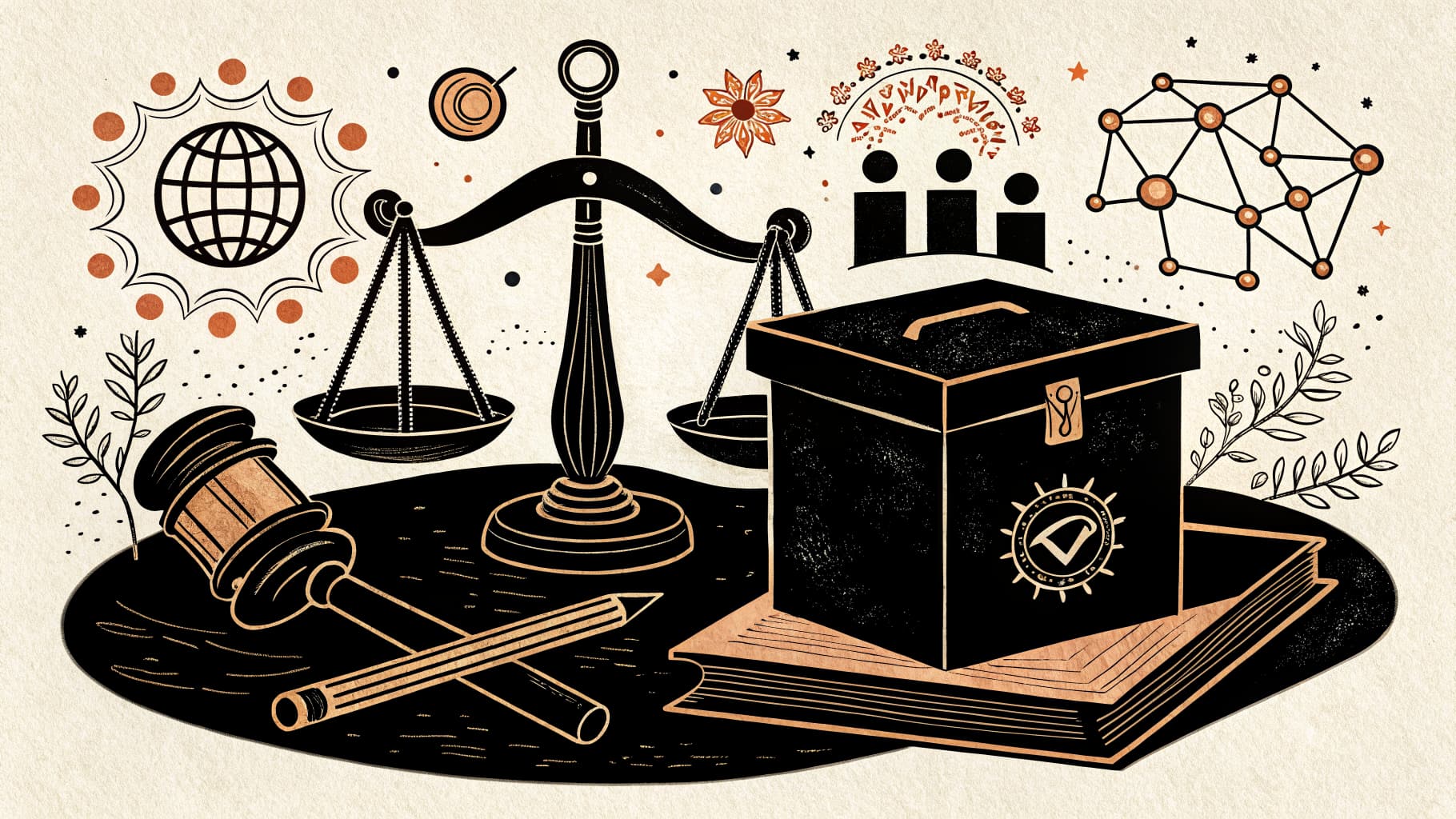
The Role of the Public in Law-Making
Students will investigate how citizens can participate in and influence the legislative process beyond voting.
TL;DR:Active learning works because students need to experience the real-world impact of public involvement in law-making. When they role-play committee hearings or draft petitions, they see how their actions connect to political decision-making. This hands-on approach builds both civic knowledge and critical engagement with democratic processes.
About This Topic
In Australia's parliamentary democracy, citizens influence law-making through multiple channels beyond voting. They submit petitions to the House of Representatives or Senate, provide written or oral submissions to parliamentary committees reviewing bills, contact local members of parliament, and join public consultations. Year 7 students examine these processes, learning how public voices can amend or block legislation before it passes both houses and receives royal assent.
This topic supports AC9C7K02 on laws and citizens' roles and AC9C7S04 on analysing primary and secondary sources. Students address key questions by identifying input avenues, evaluating petitions and submissions' impact through real examples like marriage equality reforms, and designing advocacy plans for community issues such as environmental protections.
Active learning excels with this topic because the legislative process feels distant and abstract. Role-plays of committee hearings, drafting mock petitions, and pitching advocacy strategies make participation tangible. Students build persuasion skills, collaborate on realistic scenarios, and connect civic actions to outcomes, fostering lifelong engagement.
Key Questions
- Analyze various avenues for public input into the law-making process.
- Evaluate the effectiveness of petitions and public submissions in influencing legislation.
- Design a strategy for a community group to advocate for a new law.
Learning Objectives
- Analyze at least three distinct methods citizens use to influence Australian legislation beyond voting.
- Evaluate the impact of a specific petition or public submission on a past piece of Australian legislation.
- Design a persuasive advocacy strategy for a hypothetical community group seeking a new local law.
- Compare the potential effectiveness of different public participation methods in influencing law-making.
Before You Start
Why: Students need a foundational understanding of federal and state parliaments to comprehend where and how laws are made.
Why: Understanding the basic rights and responsibilities of citizens is essential before exploring specific participation methods in law-making.
Key Vocabulary
| Petition | A formal written request, signed by many people, appealing to an authority, such as Parliament, for a particular cause or action. |
| Public Submission | Written or oral feedback provided by individuals or groups to a parliamentary committee when they are reviewing a proposed law (bill). |
| Lobbying | The act of attempting to influence decisions made by officials in a government, most often legislators or members of regulatory agencies. |
| Bill | A proposed law that has been introduced into Parliament and is under consideration for passage. |
| Advocacy | The act of publicly supporting or recommending a particular cause or policy, often through organized efforts. |
Watch Out for These Misconceptions
Common MisconceptionLaws are made only by politicians, with no real public role.
What to Teach Instead
Citizens shape laws via formal channels like petitions and submissions, as seen in reforms like voluntary euthanasia debates. Role-plays let students experience influence firsthand, challenging this view through simulated decision-making.
Common MisconceptionPetitions need thousands of signatures to matter.
What to Teach Instead
Even modest petitions raise awareness and prompt inquiries, per parliamentary records. Group drafting activities show how clear arguments amplify small voices, helping students value persistent advocacy.
Common MisconceptionPublic submissions are just formalities without effect.
What to Teach Instead
Submissions have led to bill changes, like in data privacy laws. Analysing real examples in debates reveals their power, with peer presentations building critical evaluation skills.
Active Learning Ideas
See all activities→Project-Based Learning
Role-Play: Committee Submission Hearing
Divide class into stakeholder groups who prepare 2-minute submissions on a sample bill, such as a plastic bag ban. A central 'committee' group questions presenters and votes on amendments. Debrief on what swayed decisions.
Project-Based Learning
Petition Drafting Challenge
Present a community issue like school uniform changes. Pairs draft a petition with clear demands and justifications, then pitch to the class for 'signatures' via quick votes. Discuss formatting and success factors.
Project-Based Learning
Advocacy Campaign Design
Small groups select a real issue, like youth mental health funding. Brainstorm strategies including submissions, MP letters, and social media. Create posters outlining steps and present to class for feedback.
Real-World Connections
- Citizens' groups in Western Australia successfully lobbied the state government to introduce stricter regulations on single-use plastics after years of public campaigns and petitions.
- The Australian Marriage Law Postal Survey in 2017 demonstrated a large-scale public engagement with a significant legislative issue, illustrating the power of public opinion, though not a formal law-making process itself.
- Local councils in Queensland often hold public consultations on proposed developments, allowing residents to submit feedback that can directly influence planning decisions and by-laws.
Assessment Ideas
Provide students with a scenario: 'A local park is proposed to be sold for development.' Ask them to list two different ways citizens could influence this decision and briefly explain which method they think would be most effective and why.
Present students with a headline about a recent bill debated in Australian Parliament. Ask them to write down one question they would ask a Member of Parliament about how the public could have influenced this bill's development.
Facilitate a class discussion using the prompt: 'Imagine your school wants to change a rule about mobile phone use. What steps would you take, as a student group, to persuade the school principal and board to consider your proposal?' Encourage students to use key vocabulary like petition, submission, and advocacy.
Frequently Asked Questions
What are the main ways Australian citizens influence law-making beyond voting?
How effective are petitions in the Australian Parliament?
How do public submissions work in parliamentary committees?
How can active learning help students grasp the public's role in law-making?
More in The Path to Legislation
From Idea to Bill: Policy Development
Students will explore how policy ideas are generated and developed into proposed legislation before entering parliament.
8 methodologies
How a Bill Becomes a Law: Parliamentary Stages
Students will follow the stages of debate and voting in the House of Representatives and the Senate.
8 methodologies
The Role of the Opposition
Students will understand the critical function of the Opposition in scrutinizing government actions and policies.
8 methodologies
Influence of Lobby Groups and Special Interests
Students will evaluate how interest groups and lobbyists shape the development of national policy.
8 methodologies
Electoral Systems: Preferential Voting
Students will investigate how preferential voting determines who speaks for the people in the House of Representatives.
8 methodologies
Electoral Systems: Proportional Representation
Students will understand how proportional representation is used for the Senate and its impact on diversity.
8 methodologies