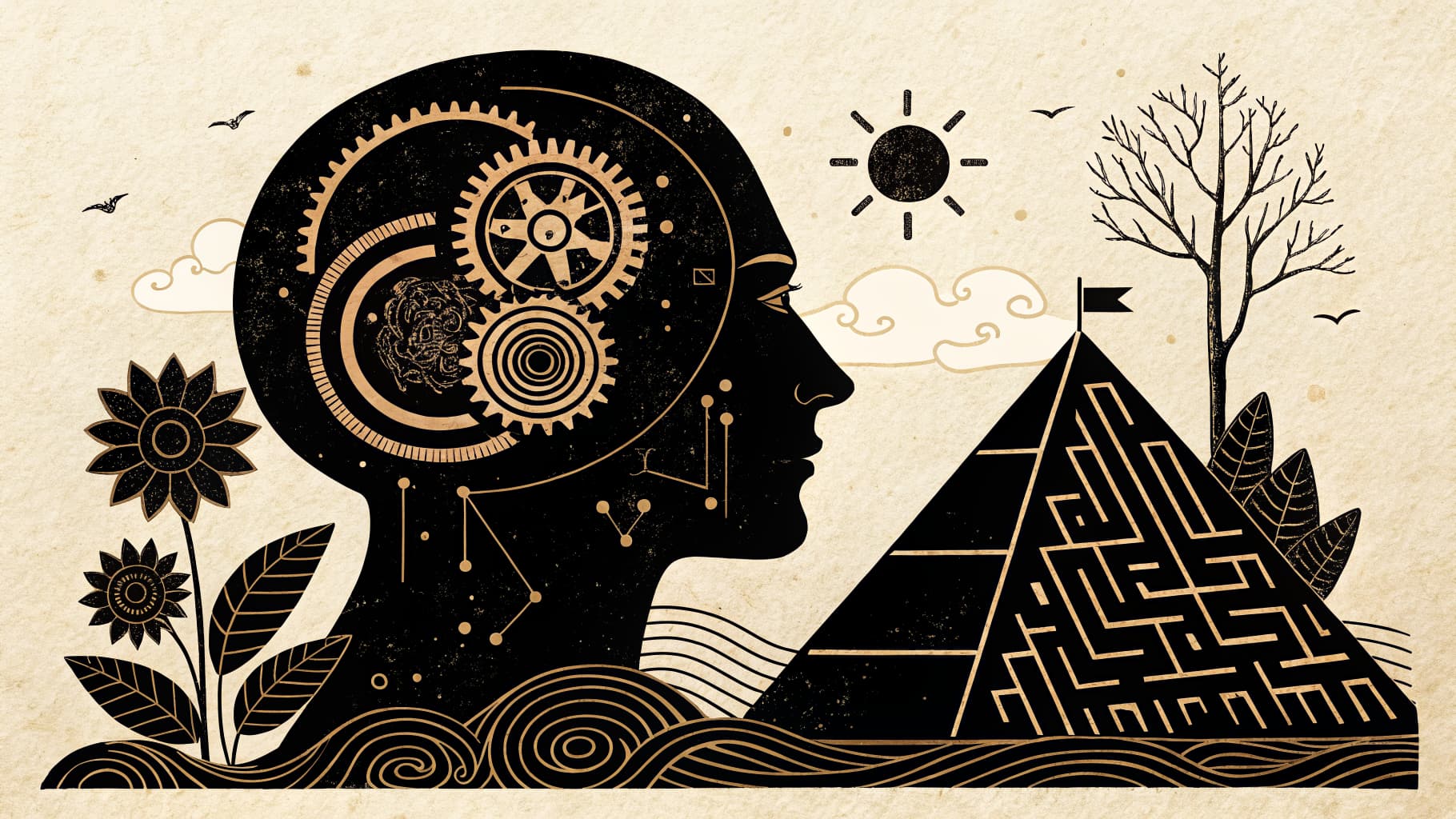
Impression Formation and Attribution
Discover how we form impressions of other people and how we assign causes to their behaviour, a process known as attribution.
TL;DR:Ever wondered why we form a strong opinion about someone within seconds of meeting them? This topic explores the fascinating psychology behind our social judgements and the hidden biases that shape our understanding of others.
About This Topic
This topic delves into the core of social cognition, exploring the mental processes we use to understand our social world. As per the NCERT framework for Class 12 Psychology, understanding Impression Formation and Attribution is fundamental to grasping how social perception shapes our interactions. In the diverse social fabric of India, students are constantly navigating interactions with people from various backgrounds. This module equips them to understand the automatic, often unconscious, processes that lead to forming first impressions, and the cognitive biases, like the primacy effect and stereotypes, that can influence these judgements.
Furthermore, the topic of Attribution provides a crucial framework for students to analyse how they and others explain behaviour. By distinguishing between internal (dispositional) and external (situational) causes, students can begin to see the complexity behind human actions. Critically examining biases like the Fundamental Attribution Error and the Actor-Observer Effect helps them develop more nuanced and empathetic perspectives. This is not just theoretical knowledge; it is a practical tool for improving interpersonal relationships, reducing prejudice, and becoming more mindful consumers of information in an age of social media.
Key Questions
- Explain the difference between internal and external attributions.
- Analyse the fundamental attribution error and the actor-observer effect.
- Evaluate the factors that influence impression formation.
Learning Objectives
- Define impression formation and attribution, identifying key influencing factors.
- Differentiate between internal (dispositional) and external (situational) attributions using examples.
- Analyse common cognitive biases, including the fundamental attribution error and the actor-observer effect.
- Evaluate how schemas and stereotypes contribute to the process of impression formation.
- Apply attribution theories to explain behaviours observed in real-life social scenarios.
Key Vocabulary
| Impression Formation | The process through which we form opinions and attitudes about other people. |
| Attribution | The mental process of assigning a cause to an event or behaviour, either our own or that of others. |
| Fundamental Attribution Error | The tendency to overestimate the role of personal, dispositional factors and underestimate situational factors in explaining others' behaviour. |
| Actor-Observer Effect | The tendency to attribute our own behaviour to external, situational causes, but others' behaviour to internal, dispositional causes. |
| Primacy Effect | The tendency for information received first to have a stronger influence on our overall impression than information received later. |
| Schema | A mental structure or framework of preconceived ideas that helps us organise and interpret information from the social world. |
Watch Out for These Misconceptions
Common MisconceptionFirst impressions are always correct and reflect a person's true nature.
What to Teach Instead
First impressions are mental shortcuts, or heuristics, that are often based on limited information, stereotypes, and biases like the primacy effect. While sometimes useful, they are frequently inaccurate and can be revised with more information.
Common MisconceptionA person's behaviour is always a direct result of their personality.
What to Teach Instead
This belief is the core of the fundamental attribution error. We often underestimate the powerful influence of situational or external factors (like social pressure or a bad day) on a person's behaviour.
Common MisconceptionAttribution is simply about blaming someone when something goes wrong.
What to Teach Instead
Attribution is a much broader cognitive process of explaining the causes for any event or behaviour, whether positive, negative, or neutral. We make attributions for our own successes and failures, not just for others' mistakes.
Active Learning Ideas
See all activities→Role Play
First Impressions Role-Play
Students are given secret, simple character prompts (e.g., 'confident and friendly', 'nervous but intelligent'). In pairs, they interact for two minutes and then jot down their first impressions of their partner, later discussing the accuracy of these impressions.
Role Play
Attribution Detectives
Present the class with short, relatable scenarios (e.g., 'A friend failed their exam', 'A politician made a controversial statement'). In small groups, students must decide if the most likely public explanation would be an internal or external attribution and why.
Role Play
Spot the Bias in Bollywood
Show short clips from popular Indian films or TV shows where a character makes a snap judgement about another. The class has to identify the specific bias at play, such as the fundamental attribution error or a stereotype.
Real-World Connections
- Analysing how first impressions in a job interview can impact hiring decisions, regardless of a candidate's qualifications.
- Recognising attributional biases in social media comments, where people quickly blame individuals for complex systemic problems.
- Improving personal relationships by consciously considering situational factors before judging a friend's or family member's actions.
- Understanding why fans might attribute their favourite cricket team's win to skill (internal) but their loss to bad luck or poor umpiring (external).
- Critically evaluating how news reports frame events, either by focusing on the individuals involved (dispositional) or the circumstances (situational).
Assessment Ideas
Use an 'exit slip' where students are given a one-paragraph scenario and must identify an example of the actor-observer effect and suggest a less biased interpretation.
A short answer test with questions requiring students to define key terms and apply concepts of impression formation and attribution to novel, India-specific case studies.
Students maintain a reflection journal for a week, noting one instance where they made a quick judgement about someone and then re-evaluating it using the principles of attribution.
Frequently Asked Questions
What is the main difference between the fundamental attribution error and the actor-observer effect?
Can we ever stop forming biased first impressions?
Why is it important to study attribution in a country like India?
More in Attitude and Social Cognition
Explaining Social Behaviour
Learn about the fundamental concepts of social psychology, including how we think about and make sense of the social world around us.
8 methodologies
Nature and Components of Attitudes
Understand what attitudes are and break them down into their core components: affective, behavioural, and cognitive (the A-B-C model).
8 methodologies
Attitude Formation and Change
Explore the processes through which our attitudes are formed and the factors that can lead to a change in our existing attitudes.
8 methodologies
Prejudice and Discrimination
Differentiate between the concepts of prejudice (a negative attitude) and discrimination (a negative behaviour) and investigate their psychological sources.
8 methodologies
Pro-social Behaviour
Examine the nature of helping behaviour, exploring why people help others and the factors that influence altruism and empathy.
8 methodologies