Explaining Social Behaviour
Learn about the fundamental concepts of social psychology, including how we think about and make sense of the social world around us.
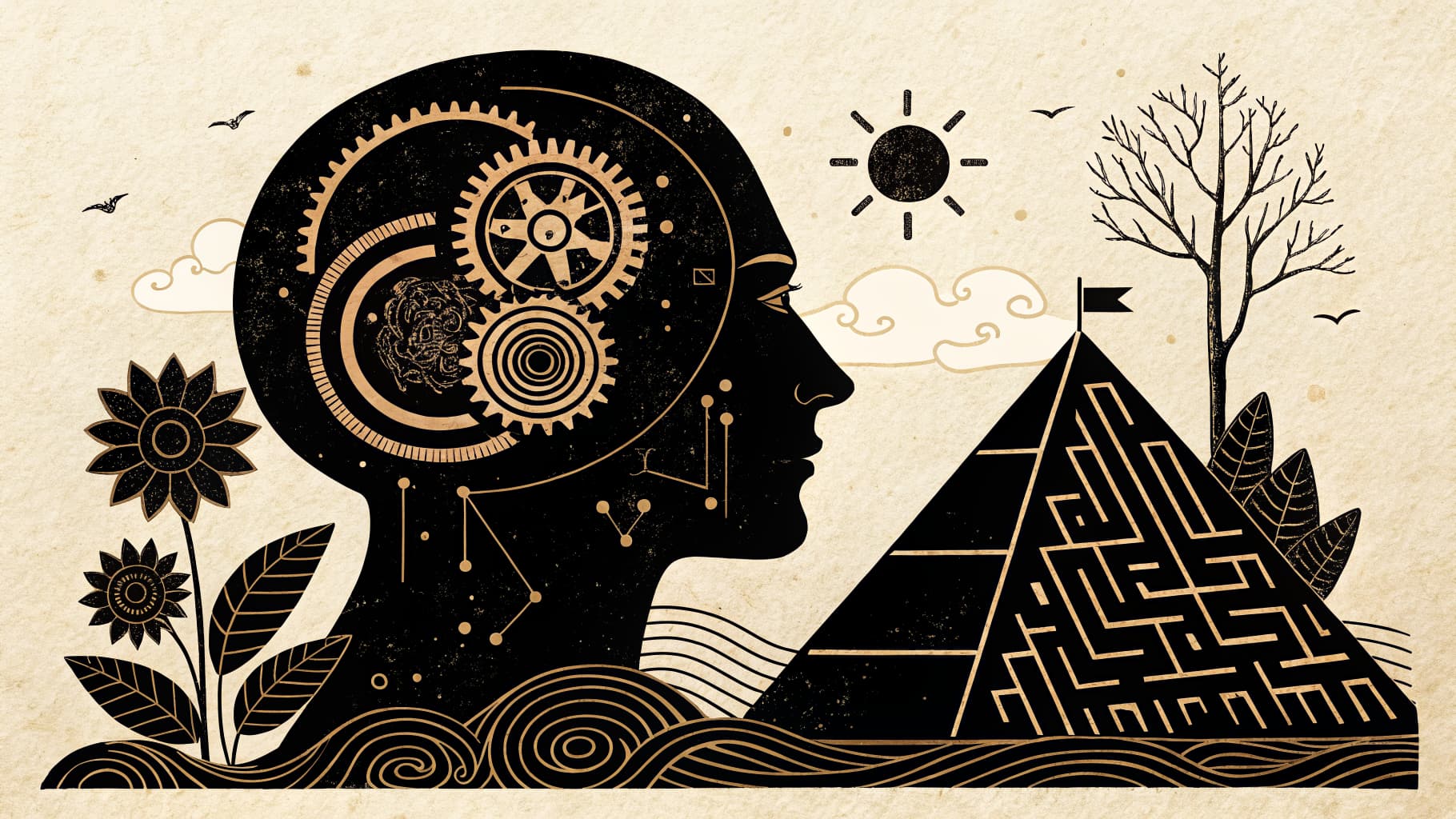
TL;DR:This topic explores the invisible mental machinery that drives our social lives. We will investigate how our brains create shortcuts to understand people and why we sometimes make mistakes in judging others.
About This Topic
This topic, 'Explaining Social Behaviour', is a cornerstone of the Class 12 Psychology curriculum, aligning with the NCERT framework's focus on understanding self and society. It introduces students to Social Psychology, the scientific study of how individuals' thoughts, feelings, and behaviours are influenced by the actual, imagined, or implied presence of others. The core of this unit is Social Cognition, exploring the mental processes we use to make sense of the social world. You will guide students through concepts like schemas, which act as mental blueprints for social situations, and stereotypes, which are generalised beliefs about groups. The topic also delves into attribution theory, explaining how we infer the causes of behaviour, both our own and others'.
For the Indian context, this topic is particularly relevant. In a country with immense diversity, understanding the cognitive roots of stereotyping, prejudice, and inter-group relations is crucial for fostering social harmony. The lessons on attribution can help students critically analyse social events, from neighbourhood gossip to media narratives about different communities. By contrasting social psychology with sociology, you will help students appreciate its unique focus on the individual within the group, providing them with a powerful lens to understand their own social reality and interactions.
Key Questions
- Explain the role of schemas in social cognition.
- Analyse how stereotypes can influence our perception of others.
- Identify the key differences between social psychology and other social sciences.
Learning Objectives
- Define social cognition and explain the function of schemas in processing social information.
- Differentiate between stereotypes, prejudice, and discrimination with relevant examples.
- Analyse the process of attribution and identify common biases like the fundamental attribution error.
- Compare the scope and focus of social psychology with other social sciences like sociology.
- Apply concepts of social perception to analyse everyday social interactions.
Key Vocabulary
| Social Cognition | The mental processes through which we notice, interpret, remember, and use information about the social world. |
| Schema | A mental structure or framework that helps us organise and interpret social information. |
| Stereotype | A generalised and often oversimplified belief or expectation about a particular group of people. |
| Attribution | The process of explaining the causes of behaviour and events, either our own or those of others. |
| Prejudice | A preconceived negative attitude or feeling towards a person based on their membership in a particular group. |
Watch Out for These Misconceptions
Common MisconceptionSocial psychology is just common sense and doesn't require scientific study.
What to Teach Instead
While some findings may seem obvious in hindsight, social psychology uses rigorous scientific methods to test hypotheses. Many phenomena, like the bystander effect or cognitive dissonance, are counter-intuitive and were discovered through systematic research.
Common MisconceptionStereotypes are always negative and are the same as prejudice.
What to Teach Instead
Stereotypes are mental shortcuts or generalisations about groups that can be positive, negative, or neutral. Prejudice is the negative attitude or feeling derived from a stereotype, while discrimination is the resulting negative action or behaviour.
Common MisconceptionOur first impressions of people are usually very accurate.
What to Teach Instead
First impressions are heavily influenced by existing schemas and stereotypes, which can lead to significant biases. They are often formed rapidly with incomplete information and can be resistant to change even when we get contradictory evidence.
Active Learning Ideas
See all activities→Carousel Brainstorm
Schema Mapping
Give students a concept like 'leader', 'village fair', or 'exam hall'. They individually brainstorm and write down all associated words, ideas, and images that come to mind, visually mapping their schema for that concept.
Carousel Brainstorm
Attribution Detectives
Present short scenarios (e.g., 'A student failed a test', 'A person did not give up their seat on the bus'). In small groups, students must list possible dispositional (internal) and situational (external) attributions for the behaviour.
Carousel Brainstorm
Deconstructing Stereotypes in Media
Show students clips from popular Indian films, TV shows, or advertisements. Ask them to identify stereotypes related to gender, region, or profession and discuss their potential impact on viewers' perceptions.
Real-World Connections
- Understanding how stereotypes in news reporting can influence public opinion about different communities or social issues.
- Analysing how first impressions (primacy effect) play a crucial role in job interviews and forming new friendships.
- Recognising the fundamental attribution error in daily life, such as blaming a poor person for their poverty without considering systemic factors.
- Examining how political advertisements use schemas to create simple, memorable, and often biased portraits of candidates.
- Applying knowledge of social cognition to become more aware of one's own biases in everyday judgments.
Assessment Ideas
Use an exit slip where students have to write down one example of a stereotype they have encountered and one example of an attribution they have made today.
Assign a short essay analysing a social conflict reported in the news, using the concepts of schemas, stereotypes, and attribution to explain the perspectives of the different parties involved.
Provide students with a checklist of the key concepts. They can rate their confidence level (e.g., 'Can define', 'Can explain with an example', 'Can apply to a new situation') for each concept.
Frequently Asked Questions
What is the main difference between social psychology and sociology?
If schemas are mental shortcuts, are they a good or a bad thing?
What is the 'fundamental attribution error'?
More in Attitude and Social Cognition
Nature and Components of Attitudes
Understand what attitudes are and break them down into their core components: affective, behavioural, and cognitive (the A-B-C model).
8 methodologies
Attitude Formation and Change
Explore the processes through which our attitudes are formed and the factors that can lead to a change in our existing attitudes.
8 methodologies
Prejudice and Discrimination
Differentiate between the concepts of prejudice (a negative attitude) and discrimination (a negative behaviour) and investigate their psychological sources.
8 methodologies
Impression Formation and Attribution
Discover how we form impressions of other people and how we assign causes to their behaviour, a process known as attribution.
8 methodologies
Pro-social Behaviour
Examine the nature of helping behaviour, exploring why people help others and the factors that influence altruism and empathy.
8 methodologies