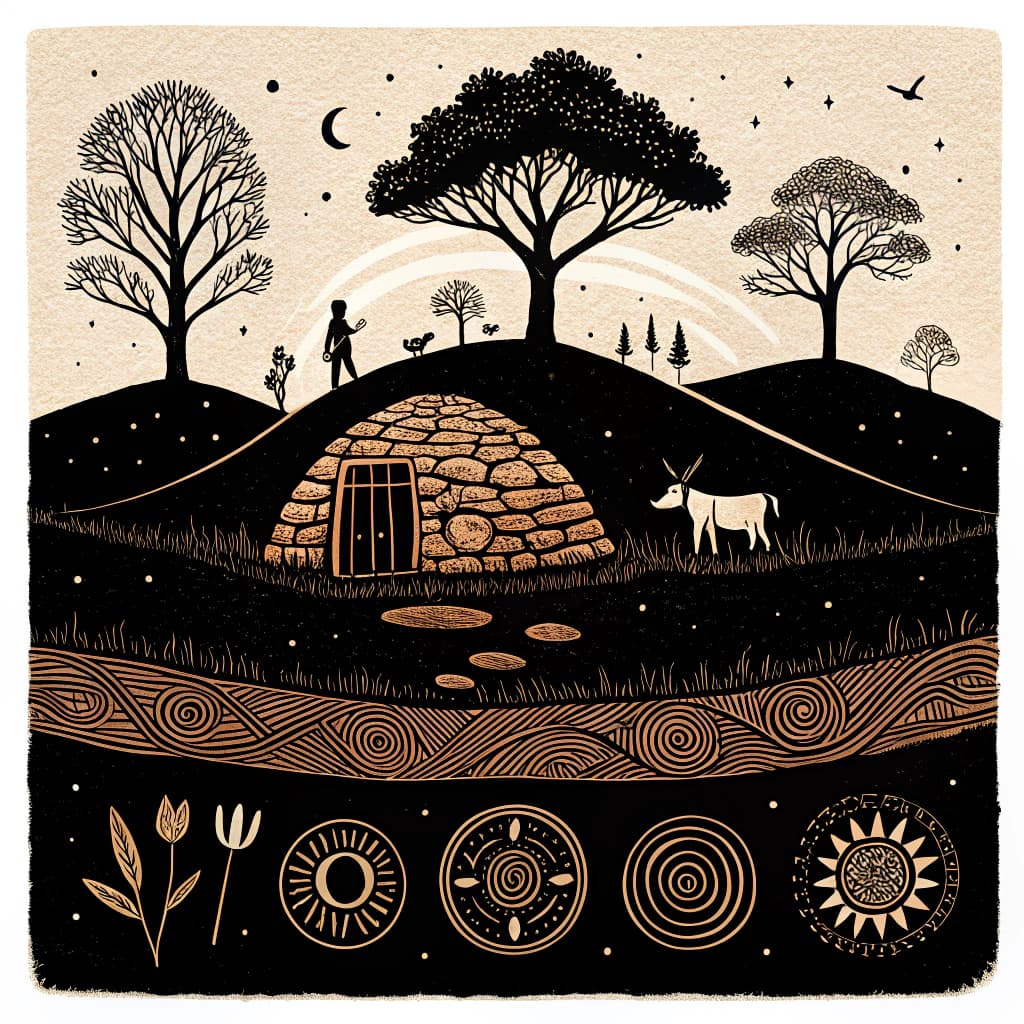
Skara Brae: A Stone Age Village
Investigating the remarkably preserved stone houses of Orkney, focusing on their unique architecture and what they reveal about Neolithic daily life.
TL;DR:Active learning transforms Stonehenge from a static image into a living puzzle students can solve. Moving stones, aligning solstices, and debating purposes put students in the role of prehistoric builders and thinkers, making abstract concepts concrete and memorable.
About This Topic
Stonehenge is the ultimate symbol of prehistoric Britain. This topic explores the massive effort required to build this monument over several stages, from a simple earthwork to the iconic stone circle. Students investigate the 'how' (moving 25-tonne stones from miles away) and the 'why' (alignment with the sun, a place for the dead, or a site for healing). It is a key part of the National Curriculum's focus on religious and ritual monuments.
This topic encourages students to think about Neolithic people as master engineers and astronomers. It also introduces the idea of historical theories, since there are no written records, we must use evidence to guess the purpose of the site. This topic comes alive when students can physically model the engineering challenges and the movement of the sun.
Key Questions
- Analyze how the design of Skara Brae's houses provided warmth and protection.
- Evaluate what the preserved furniture tells us about the daily lives of its inhabitants.
- Hypothesize reasons for Skara Brae's abandonment and subsequent preservation.
Learning Objectives
- Analyze the structural features of Skara Brae houses that provided insulation and protection from the elements.
- Evaluate the evidence from preserved artifacts, such as stone furniture, to infer daily activities and social structures of Skara Brae inhabitants.
- Hypothesize the environmental or social factors that may have led to the abandonment of Skara Brae.
- Compare the construction methods and materials used at Skara Brae with those of other Neolithic settlements.
Before You Start
Why: Students need a basic understanding of how early humans transitioned from nomadic lifestyles to settled communities before exploring specific settlement types like Skara Brae.
Why: Understanding basic properties of materials like stone helps students grasp the construction challenges and choices made by Neolithic builders.
Key Vocabulary
| Neolithic | A period in prehistory, also known as the New Stone Age, characterized by the development of farming and settled communities. |
| Corbel vaulting | A construction technique where stones are layered progressively inward, creating a self-supporting arch or roof without the use of mortar. |
| Hearth | The floor of a fireplace, often a central feature in ancient homes used for heating and cooking. |
| Midden | A refuse heap or dump site, often containing discarded tools, animal bones, and pottery, which provides clues about diet and daily life. |
Watch Out for These Misconceptions
Common MisconceptionStonehenge was built by the Druids.
What to Teach Instead
Stonehenge was finished nearly 1,000 years before the Druids (Iron Age) existed. While Druids use it today, the original builders were Neolithic farmers. A simple timeline activity helps students separate these two distinct periods of history.
Common MisconceptionThe stones were moved by magic or aliens.
What to Teach Instead
While it seems impossible, experimental archaeology has shown that humans can move these stones using only wood, rope, and a lot of people. Hands-on 'roller' experiments prove that physics, not magic, was the key.
Active Learning Ideas
See all activities→Simulation Game
The Great Move
Students try to move a heavy 'stone' (a stack of books or a heavy box) across the floor using different methods: dragging, using 'rollers' (pencils), or a 'sledge'. They record which method is easiest and how many 'people' it takes.
Think-Pair-Share
The Purpose of the Stones
Present three theories: Stonehenge was a calendar, a graveyard, or a hospital. Students think about which one makes the most sense, discuss with a partner using one piece of evidence (like the bones found there), and share with the class.
Inquiry Circle
Solstice Alignment
Using a torch as the 'sun' and a model of the stones, students must find the exact spot where the light shines through the 'Heel Stone' on the longest day of the year. They discuss why the sun was so important to farmers.
Real-World Connections
- Archaeologists, like those working at Historic Environment Scotland, use excavation and analysis techniques to uncover and interpret ancient sites such as Skara Brae, helping us understand past human societies.
- Architectural historians study ancient building methods, including stone construction and insulation techniques seen at Skara Brae, to understand how early humans adapted to their environment and innovated with available materials.
- Museum curators at the National Museum of Scotland display and preserve artifacts found at Neolithic sites, making them accessible for public education and further research into prehistoric life.
Assessment Ideas
Students draw a cross-section of a Skara Brae house. They label at least three features that helped keep the house warm and protected, and write one sentence explaining the purpose of the hearth.
Pose the question: 'If you were an archaeologist discovering Skara Brae today, what one object would you most want to find and why?' Encourage students to justify their choice based on what it might reveal about daily life.
Present students with images of different stone furniture items found at Skara Brae (e.g., bed, dresser, seat). Ask them to match each item to its likely function and explain their reasoning.
Frequently Asked Questions
Where did the stones come from?
How did they get the top stones to stay on?
What are the best hands-on strategies for teaching Stonehenge?
Was Stonehenge the only stone circle?
Planning templates for History
5E Model
The 5E Model structures lessons through five phases (Engage, Explore, Explain, Elaborate, and Evaluate), guiding students from curiosity to deep understanding through inquiry-based learning.
Unit PlannerThematic Unit
Organize a multi-week unit around a central theme or essential question that cuts across topics, texts, and disciplines, helping students see connections and build deeper understanding.
RubricSingle-Point Rubric
Build a single-point rubric that defines only the "meets standard" level, leaving space for teachers to document what exceeded and what fell short. Simple to create, easy for students to understand.
More in The Neolithic Revolution: First Farmers
Origins of Farming: Domestication
Exploring how people began to domesticate animals and cultivate crops like wheat and barley, marking the start of the Neolithic Revolution.
8 methodologies
Neolithic Settlements: Village Life
Investigating the emergence of permanent settlements and the structure of early farming villages in Neolithic Britain.
8 methodologies
Neolithic Pottery: Storage & Cooking
Looking at how the need to store surplus food and cook new ingredients led to the creation of the first pottery and containers.
8 methodologies
Stonehenge: Building a Mystery
Analysing the engineering mystery of how and why huge stones were moved across Britain to construct monumental sites like Stonehenge.
8 methodologies
Neolithic Burial Practices
Investigating the construction of long barrows and other burial sites, exploring Neolithic beliefs about death and the afterlife.
8 methodologies
Neolithic Tools for Farming
Examining the new types of tools developed for agriculture, such as polished axes and sickles, and their impact on efficiency.
8 methodologies