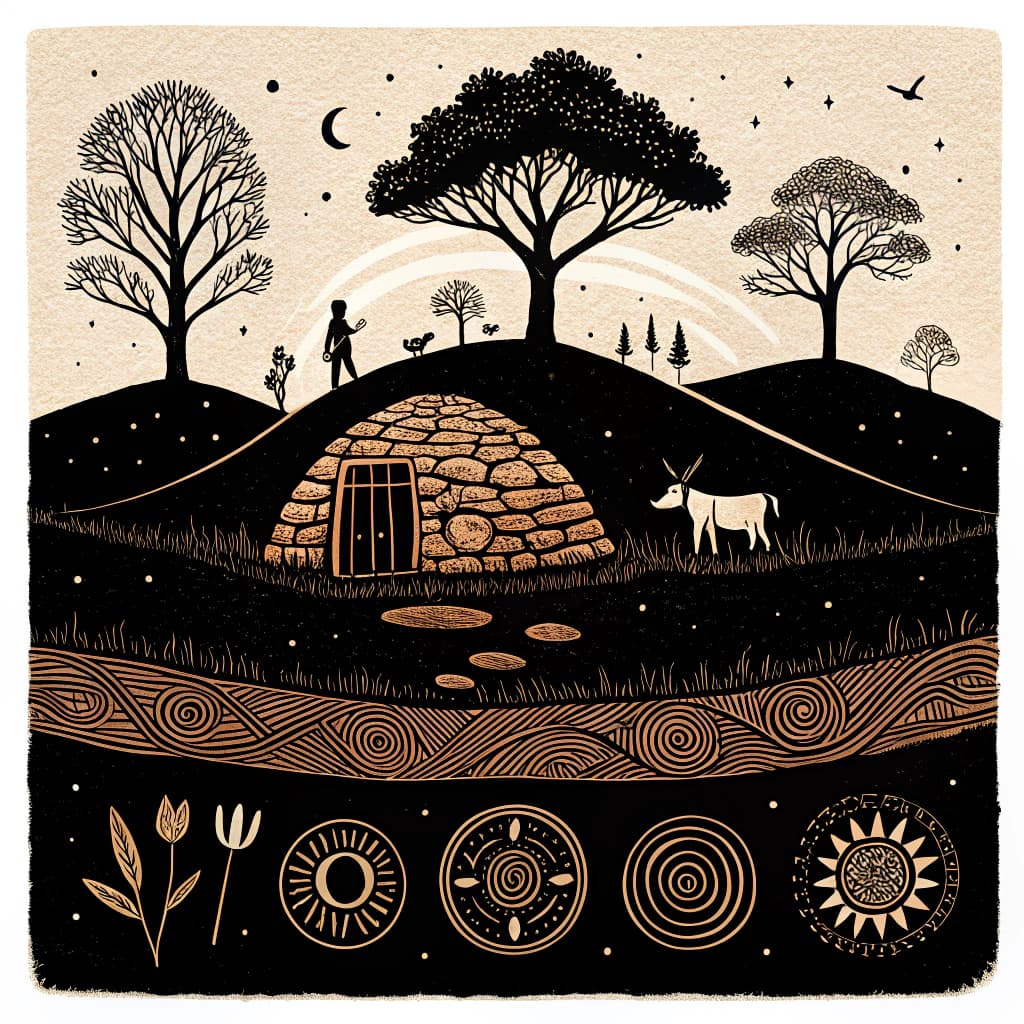
Neolithic Settlements: Village Life
Investigating the emergence of permanent settlements and the structure of early farming villages in Neolithic Britain.
TL;DR:Active learning works for Neolithic Settlements because students need to visualize and interact with the past, not just hear about it. When Year 3 learners step inside a 5,000-year-old home or role-play a village gathering, they connect with human choices and challenges in a tangible way.
About This Topic
Skara Brae, located on the Bay of Skaill in Orkney, is Europe's most complete Neolithic village. Older than the Pyramids, these eight stone houses were preserved by a sandstorm for thousands of years. This topic allows Year 3 students to step inside a prehistoric home and see stone beds, dressers, and even indoor drains. It provides a tangible link to the past, making 'prehistory' feel human and relatable.
Students investigate the layout of the village, which was connected by covered low passages, suggesting a very close-knit community. They look at the artefacts found there, such as bone needles and stone bowls, to reconstruct daily life. This topic comes alive when students can physically model the layout of a Skara Brae house and discuss the 'rules' of living in such a small space.
Key Questions
- Explain how farming led to the development of permanent villages.
- Compare the daily routines of a nomadic hunter-gatherer with a settled farmer.
- Design a simple layout for a Neolithic village, considering essential needs.
Learning Objectives
- Compare the daily routines of a nomadic hunter-gatherer with a settled farmer.
- Explain how the development of farming led to the creation of permanent villages.
- Design a simple layout for a Neolithic village, identifying essential structures for survival and community.
- Identify key features of Neolithic houses at Skara Brae based on archaeological evidence.
Before You Start
Why: Students need a basic understanding of nomadic lifestyles to effectively compare them with settled farming life.
Why: Understanding fundamental human needs like food, shelter, and safety provides a foundation for designing a village layout.
Key Vocabulary
| Neolithic | The later part of the Stone Age when people learned to farm, make pottery, and build villages. It means 'new stone'. |
| Settlement | A place where people establish a permanent home, like a village or town. This was a big change from moving around to find food. |
| Agriculture | The practice of farming, including growing crops and raising animals. This allowed people to stay in one place. |
| Artefact | An object made by a human being, typically of cultural or historical interest. Examples from Skara Brae include stone tools and pottery. |
Watch Out for These Misconceptions
Common MisconceptionSkara Brae was an underground 'cave' village.
What to Teach Instead
The houses were built into mounds of 'midden' (waste material) for insulation, but they were at ground level. Showing a cross-section diagram and discussing 'insulation' helps students understand the clever engineering used to stay warm in the windy Orkney climate.
Common MisconceptionNeolithic people were 'primitive' and had no furniture.
What to Teach Instead
Skara Brae is famous because it has stone furniture that survived. They had beds, cupboards, and shelves just like us. Comparing a photo of a Skara Brae dresser to a modern IKEA one is a great way to surface this misconception.
Active Learning Ideas
See all activities→Gallery Walk
Inside House 7
Place photos or diagrams of different parts of a Skara Brae house (the hearth, the stone beds, the dresser, the 'tank' in the floor) around the room. Students act as 'estate agents' and write a description for each feature to 'sell' the house to a Neolithic family.
Inquiry Circle
The Mystery Tank
Students are shown a picture of the stone-lined tanks in the floors of the houses. In groups, they brainstorm four possible uses (storing water, keeping fish alive, a bin, a fridge) and present their best theory based on the evidence.
Role Play
The Village Meeting
Students sit in a circle (representing the village layout) and must solve a community problem, such as a leaky roof or a shared grain store. This helps them understand the social cooperation needed in a permanent settlement.
Real-World Connections
- Archaeologists, like those working at Skara Brae, carefully excavate sites to uncover evidence of past lives. Their work helps us understand how early humans lived and built communities.
- Urban planners today design the layout of new towns and cities, considering where homes, public spaces, and essential services should be located. This is similar to how Neolithic people planned their villages for safety and community.
Assessment Ideas
Pose this question to students: 'Imagine you are moving into a new Neolithic village. What three things would you absolutely need to build or have in the village to survive and live together happily? Explain why each is important.'
Show students images of artefacts found at Skara Brae (e.g., stone tools, pottery, bone needles). Ask them to write down what each artefact might have been used for and how it shows people were living in a settled village.
On a small card, ask students to draw one difference between how a hunter-gatherer spent their day and how a farmer in a Neolithic village spent their day. They should write one sentence explaining their drawing.
Frequently Asked Questions
Why is Skara Brae so well preserved?
What did the people of Skara Brae wear?
How can active learning help students understand Skara Brae?
What did they eat in Skara Brae?
Planning templates for History
5E Model
The 5E Model structures lessons through five phases (Engage, Explore, Explain, Elaborate, and Evaluate), guiding students from curiosity to deep understanding through inquiry-based learning.
Unit PlannerThematic Unit
Organize a multi-week unit around a central theme or essential question that cuts across topics, texts, and disciplines, helping students see connections and build deeper understanding.
RubricSingle-Point Rubric
Build a single-point rubric that defines only the "meets standard" level, leaving space for teachers to document what exceeded and what fell short. Simple to create, easy for students to understand.
More in The Neolithic Revolution: First Farmers
Origins of Farming: Domestication
Exploring how people began to domesticate animals and cultivate crops like wheat and barley, marking the start of the Neolithic Revolution.
8 methodologies
Skara Brae: A Stone Age Village
Investigating the remarkably preserved stone houses of Orkney, focusing on their unique architecture and what they reveal about Neolithic daily life.
8 methodologies
Neolithic Pottery: Storage & Cooking
Looking at how the need to store surplus food and cook new ingredients led to the creation of the first pottery and containers.
8 methodologies
Stonehenge: Building a Mystery
Analysing the engineering mystery of how and why huge stones were moved across Britain to construct monumental sites like Stonehenge.
8 methodologies
Neolithic Burial Practices
Investigating the construction of long barrows and other burial sites, exploring Neolithic beliefs about death and the afterlife.
8 methodologies
Neolithic Tools for Farming
Examining the new types of tools developed for agriculture, such as polished axes and sickles, and their impact on efficiency.
8 methodologies