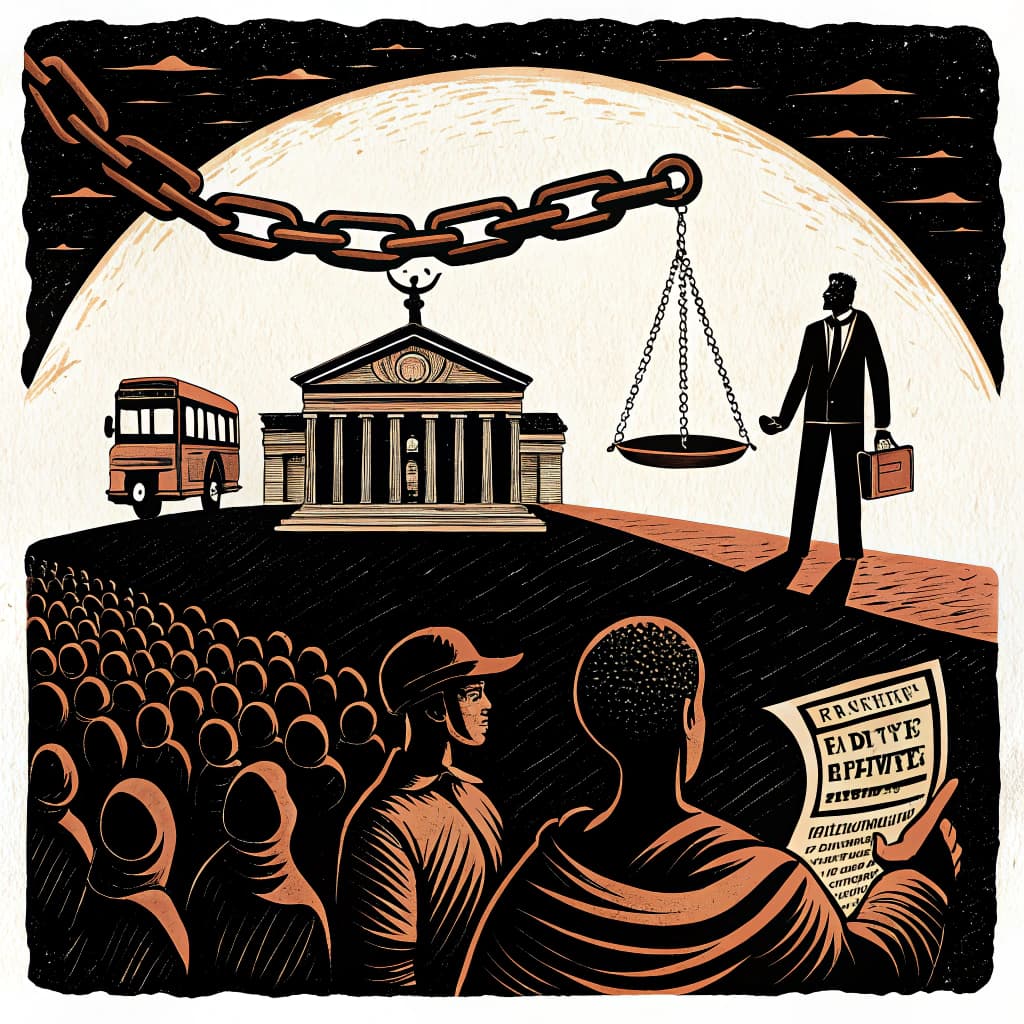
Rise of Environmentalism in Britain
Students will assess the pivotal Birmingham Campaign of 1963, focusing on 'Project C' and the 'Children's Crusade,' and their role in transforming public perception.
TL;DR:Active learning turns the rise of environmentalism into a lived experience for students. By stepping into protest roles or analyzing period media, they see how public outrage and policy debates unfolded in real time, making abstract historical trends concrete and memorable.
About This Topic
The rise of environmentalism in Britain during the 1960s stemmed from post-war industrial growth, urban pollution, and events like the 1967 Torrey Canyon oil spill, which coated beaches in crude oil and galvanized public outrage. Students examine how Rachel Carson's Silent Spring, published in 1962, raised alarms about pesticides, influencing campaigns against chemical use in agriculture. Grassroots groups formed, such as the Conservation Society in 1966, while protests targeted motorway expansions threatening rural landscapes.
This topic aligns with A-Level History specifications for Post-War Britain, 1951-2007, and Environmental History. Students explain the prominence of environmental concerns amid affluence and consumerism, analyze shifts in public awareness through media coverage, and evaluate conservation efforts like green belt protections and the 1968 Countryside Act. These inquiries develop skills in causation, significance, and policy evaluation.
Active learning suits this topic well. When students role-play protests, analyze conflicting primary sources in groups, or map environmental hotspots, they grasp the tension between progress and preservation. Hands-on tasks make abstract public opinion shifts concrete and foster critical debate on historical effectiveness.
Key Questions
- Explain why environmental concerns gained prominence in Britain during the 1960s.
- Analyze how early environmental movements transformed public awareness.
- Evaluate the effectiveness of early conservation efforts in protecting natural habitats.
Learning Objectives
- Analyze the specific grievances and tactics employed during Birmingham's 'Project C' and the 'Children's Crusade'.
- Evaluate the impact of the Birmingham Campaign on transforming public perception of environmental issues in Britain.
- Explain the connection between post-war industrialization and the rise of environmental concerns in the 1960s.
- Critique the effectiveness of early conservation efforts in addressing pollution and habitat loss.
Before You Start
Why: Students need a foundational understanding of the societal context, including industrial growth and consumerism, that created the conditions for environmental concerns to emerge.
Why: Familiarity with the tactics and impact of the US Civil Rights Movement, including Birmingham, provides essential context for understanding the inspiration behind British activism.
Key Vocabulary
| Project C | A civil rights campaign in Birmingham, Alabama, in 1963, which used nonviolent direct action to challenge segregation laws. Its tactics influenced later environmental activism in Britain. |
| Children's Crusade | A component of the Birmingham Campaign where young students marched and protested, facing police brutality, which garnered national and international attention. |
| Public perception | The collective attitudes and beliefs held by the general population towards a particular issue, event, or group. |
| Conservation Society | An early environmental organization founded in Britain in 1966, advocating for the protection of natural resources and landscapes. |
Watch Out for These Misconceptions
Common MisconceptionEnvironmentalism in Britain began abruptly in the 1970s with groups like Greenpeace.
What to Teach Instead
Roots trace to 1950s smog crises and 1960s spills; active source analysis in groups reveals gradual buildup through media and protests, helping students sequence events accurately and appreciate continuity.
Common MisconceptionEarly movements focused only on urban air pollution, ignoring rural threats.
What to Teach Instead
Campaigns targeted pesticides, motorways, and habitat loss too; debates in role-plays expose diverse concerns, allowing students to connect urban-rural links via collaborative mapping.
Common MisconceptionGovernment initiatives alone drove change, with little public role.
What to Teach Instead
Grassroots protests pressured policy; timeline activities highlight public influence, as groups debate causation and refine interpretations through peer discussion.
Active Learning Ideas
See all activities→Inquiry-Based Learning
Role-Play: Torrey Canyon Protest
Divide class into stakeholders: government officials, fishermen, conservationists, and oil company reps. Each group prepares arguments using provided sources, then debates policy responses in a simulated parliamentary hearing. Conclude with a class vote on proposed legislation.
Inquiry-Based Learning
Source Carousel: Media Coverage
Set up stations with 1960s newspaper clippings on pollution events. Pairs rotate, annotating bias, tone, and public reaction for each. Groups then share findings in a whole-class synthesis to trace awareness shifts.
Inquiry-Based Learning
Timeline Build: Key Campaigns
Provide event cards with dates and descriptions. Small groups sequence them on a shared wall timeline, adding causal links and images. Discuss as a class how early actions led to later laws like the 1970 Clean Air Act updates.
Real-World Connections
- Urban planners in cities like Manchester today analyze historical patterns of industrial pollution, similar to those addressed by early environmentalists, to implement strategies for improving air and water quality.
- Environmental lawyers and activists continue to use public awareness campaigns and direct action, inspired by movements like the Birmingham Campaign, to advocate for policy changes regarding climate change and habitat preservation.
Assessment Ideas
Facilitate a class debate using the prompt: 'To what extent was the Birmingham Campaign of 1963 a direct influence on the rise of environmentalism in Britain?' Encourage students to cite specific evidence from primary and secondary sources.
Provide students with a short primary source document (e.g., a newspaper clipping from the 1960s about pollution or a protest). Ask them to identify two key phrases that reveal the public's attitude towards the environment at that time and explain their significance.
Ask students to write down one specific tactic used in the Birmingham Campaign and one way that tactic might have been adapted or used by later environmental movements in Britain. They should also briefly explain why this connection is significant.
Frequently Asked Questions
Why did environmental concerns gain prominence in 1960s Britain?
How did early environmental movements change public awareness in Britain?
How effective were early conservation efforts in Britain?
How can active learning help teach the rise of environmentalism?
Planning templates for History
5E Model
The 5E Model structures lessons through five phases (Engage, Explore, Explain, Elaborate, and Evaluate), guiding students from curiosity to deep understanding through inquiry-based learning.
Unit PlannerThematic Unit
Organize a multi-week unit around a central theme or essential question that cuts across topics, texts, and disciplines, helping students see connections and build deeper understanding.
RubricSingle-Point Rubric
Build a single-point rubric that defines only the "meets standard" level, leaving space for teachers to document what exceeded and what fell short. Simple to create, easy for students to understand.
More in Post-War Social Change 1948–1970
Post-War Immigration to Britain: Causes
Students will investigate the causes of post-war immigration to Britain, particularly from the Commonwealth, and the early experiences of these new communities.
8 methodologies
Early Racial Tensions & Notting Hill Riots
Students will analyze the origins of racial tensions in post-war Britain, focusing on the Notting Hill Riots of 1958 and their impact on public discourse.
8 methodologies
Commonwealth Immigrants Act (1962)
Students will examine the 1962 Commonwealth Immigrants Act, analyzing its causes, impact on immigration patterns, and its role in shaping British immigration policy.
8 methodologies
Rise of Youth Culture: Mods and Rockers
Students will evaluate the impact of emerging youth cultures in the 1960s, such as Mods and Rockers, and their role in challenging traditional social norms.
8 methodologies
The Permissive Society: Liberal Reforms
Students will analyze the 'Permissive Society' and other forms of organized resistance to school desegregation, revealing the limits of state versus federal power.
8 methodologies
The Race Relations Act (1965)
Students will evaluate the impact of the 1965 Race Relations Act, the first anti-discrimination legislation in Britain, and its role in challenging racial prejudice.
8 methodologies