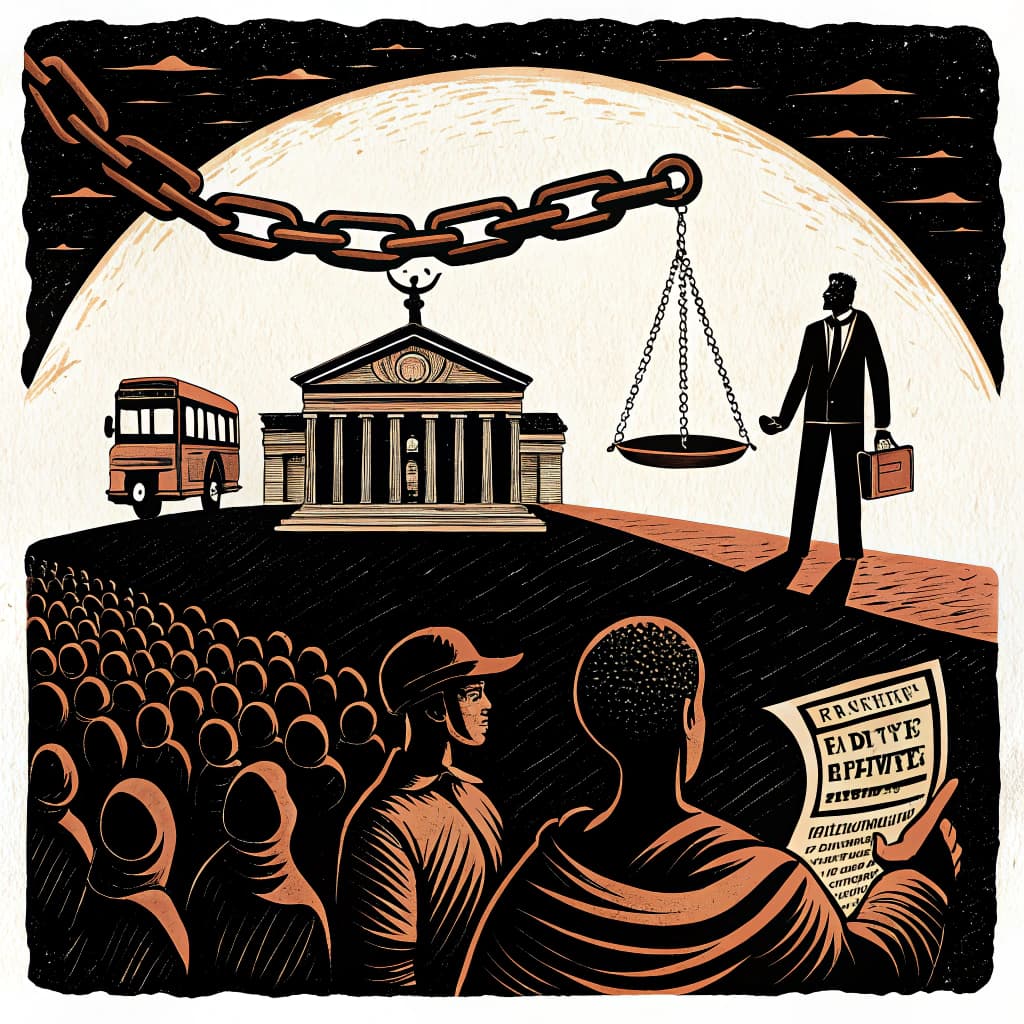
The Permissive Society: Liberal Reforms
Students will analyze the 'Permissive Society' and other forms of organized resistance to school desegregation, revealing the limits of state versus federal power.
TL;DR:Active learning works for this topic because the 1963 civil rights events were shaped by human choices, media exposure, and public reactions. Students need to analyze primary sources, debate moral dilemmas, and interpret events from multiple perspectives to grasp how Birmingham and Washington became turning points.
About This Topic
This topic assesses the pivotal events of 1963, focusing on the Birmingham Campaign ('Project C') and the March on Washington for Jobs and Freedom. Students examine why Birmingham was chosen as the site for a major confrontation and how the use of children in the protests ('The Children's Crusade') transformed the movement's public image. The brutal response of 'Bull' Connor, captured on television, shocked the nation and forced President Kennedy to propose the Civil Rights Act.
At Year 13, students also evaluate the March on Washington, moving beyond King's 'I Have a Dream' speech to the broader economic and political demands of the march. They consider the internal debates about the march's tone and the extent to which it was 'sanitised' to appeal to white liberals. This topic is best taught through collaborative analysis of King's 'Letter from Birmingham Jail' and by debating the revolutionary vs. moderate nature of the 1963 events.
Key Questions
- Analyze how the 'permissive society' of the 1960s challenged traditional moral and social values in Britain.
- Explain the legal and political strategies used by social reformers to enact liberal legislation in areas such as abortion, homosexuality, and divorce.
- Evaluate the extent to which the permissive society was a genuine social revolution or a phenomenon largely confined to a metropolitan, middle-class minority.
Learning Objectives
- Analyze the social and cultural factors that contributed to the rise of the 'permissive society' in Britain during the 1960s.
- Explain the legislative processes and key arguments used by reformers to introduce liberal laws on abortion, homosexuality, and divorce.
- Evaluate the extent to which the 'permissive society' represented a fundamental shift in British values versus a more limited social trend.
- Compare and contrast the strategies employed by different groups resisting or advocating for social change in the 1960s.
- Critique historical interpretations of the 'permissive society' and its impact on post-war British social structures.
Before You Start
Why: Students need to understand the social and economic conditions following World War II to appreciate the context and drivers of the changes in the 1960s.
Why: Understanding the basic principles of how social movements operate and advocate for change is foundational to analyzing the reformers of the 1960s.
Key Vocabulary
| Permissive Society | A term used to describe the social and cultural changes in Britain during the 1960s, characterized by a relaxation of traditional moral standards and increased personal freedom. |
| Liberal Legislation | Laws enacted to expand individual rights and freedoms, particularly in areas concerning personal autonomy, such as abortion, divorce, and sexual behavior. |
| Social Reformers | Individuals or groups who actively campaign for changes in laws and social policies to address perceived injustices or improve societal well-being. |
| Moral Conservatism | A viewpoint that emphasizes the importance of traditional moral values and social norms, often opposing rapid social change or perceived liberalization. |
| Secularization | The process by which religious beliefs, practices, and institutions lose their social significance and influence in a society. |
Watch Out for These Misconceptions
Common MisconceptionThe March on Washington was only about racial harmony and 'the dream'.
What to Teach Instead
The official title was the March on Washington for *Jobs and Freedom*. Peer discussion of the march's 10 demands helps students see that economic justice and a higher minimum wage were central to the movement's goals.
Common MisconceptionBirmingham was an immediate success that desegregated the city overnight.
What to Teach Instead
The agreement reached was limited, and the city remained a site of intense violence, including the 16th Street Baptist Church bombing just weeks later. Using a timeline activity helps students see that 1963 was a year of both great progress and horrific backlash.
Active Learning Ideas
See all activities→Inquiry Circle
Letter from Birmingham Jail
Groups are assigned specific sections of King's letter. They must identify his arguments against 'gradualism' and his critique of the 'white moderate', then present how these ideas justified the shift to more aggressive direct action.
Formal Debate
The Children's Crusade
Divide the class to debate the ethics of using children in dangerous protests. One side argues it was a brilliant strategic move that exposed the heartlessness of Jim Crow, while the other argues it was an irresponsible use of minors.
Think-Pair-Share
The March on Washington, Radical or Moderate?
Students compare the original, more radical speech draft by John Lewis with the final version he delivered. They discuss in pairs why the changes were made and whether the march lost its 'edge' by cooperating with the Kennedy administration.
Real-World Connections
- The work of organizations like the Abortion Law Reform Association, founded in 1960, directly influenced the passage of the Abortion Act 1967, demonstrating the impact of organized advocacy on public policy.
- Contemporary debates surrounding issues like assisted dying or LGBTQ+ rights often echo the arguments and societal divisions seen during the 1960s, highlighting the enduring tension between individual liberty and traditional values.
- Sociologists studying social movements today can analyze the tactics and outcomes of 1960s reform movements to understand how societal attitudes and legal frameworks evolve over time.
Assessment Ideas
Pose the question: 'To what extent was the 'permissive society' a genuine revolution or a limited trend?' Ask students to take a stance and support it with specific examples of legislation, social attitudes, and demographic data from the 1960s. Encourage them to consider regional and class differences.
Provide students with a short primary source quote from either a reformer or a critic of the 1960s social changes. Ask them to identify the author's perspective, the specific social issue being addressed, and one argument used to support their view. This can be a brief written response or a think-pair-share activity.
Students draft a paragraph evaluating the success of social reformers in achieving their goals regarding divorce law reform. They then exchange their paragraphs with a partner. Peers assess the paragraph based on: clarity of argument, use of specific evidence (e.g., the Divorce Reform Act 1969), and whether the evaluation addresses the 'extent' of success.
Frequently Asked Questions
Why was Birmingham called 'Project C'?
What was the significance of the 'Children's Crusade'?
How did the events of 1963 lead to the Civil Rights Act?
How can active learning help students understand the 1963 campaigns?
Planning templates for History
5E Model
The 5E Model structures lessons through five phases (Engage, Explore, Explain, Elaborate, and Evaluate), guiding students from curiosity to deep understanding through inquiry-based learning.
Unit PlannerThematic Unit
Organize a multi-week unit around a central theme or essential question that cuts across topics, texts, and disciplines, helping students see connections and build deeper understanding.
RubricSingle-Point Rubric
Build a single-point rubric that defines only the "meets standard" level, leaving space for teachers to document what exceeded and what fell short. Simple to create, easy for students to understand.
More in Post-War Social Change 1948–1970
Post-War Immigration to Britain: Causes
Students will investigate the causes of post-war immigration to Britain, particularly from the Commonwealth, and the early experiences of these new communities.
8 methodologies
Early Racial Tensions & Notting Hill Riots
Students will analyze the origins of racial tensions in post-war Britain, focusing on the Notting Hill Riots of 1958 and their impact on public discourse.
8 methodologies
Commonwealth Immigrants Act (1962)
Students will examine the 1962 Commonwealth Immigrants Act, analyzing its causes, impact on immigration patterns, and its role in shaping British immigration policy.
8 methodologies
Rise of Youth Culture: Mods and Rockers
Students will evaluate the impact of emerging youth cultures in the 1960s, such as Mods and Rockers, and their role in challenging traditional social norms.
8 methodologies
The Race Relations Act (1965)
Students will evaluate the impact of the 1965 Race Relations Act, the first anti-discrimination legislation in Britain, and its role in challenging racial prejudice.
8 methodologies
Enoch Powell's 'Rivers of Blood' Speech
Students will investigate the impact of Enoch Powell's controversial 'Rivers of Blood' speech, analyzing its political and social consequences for race relations in Britain.
8 methodologies