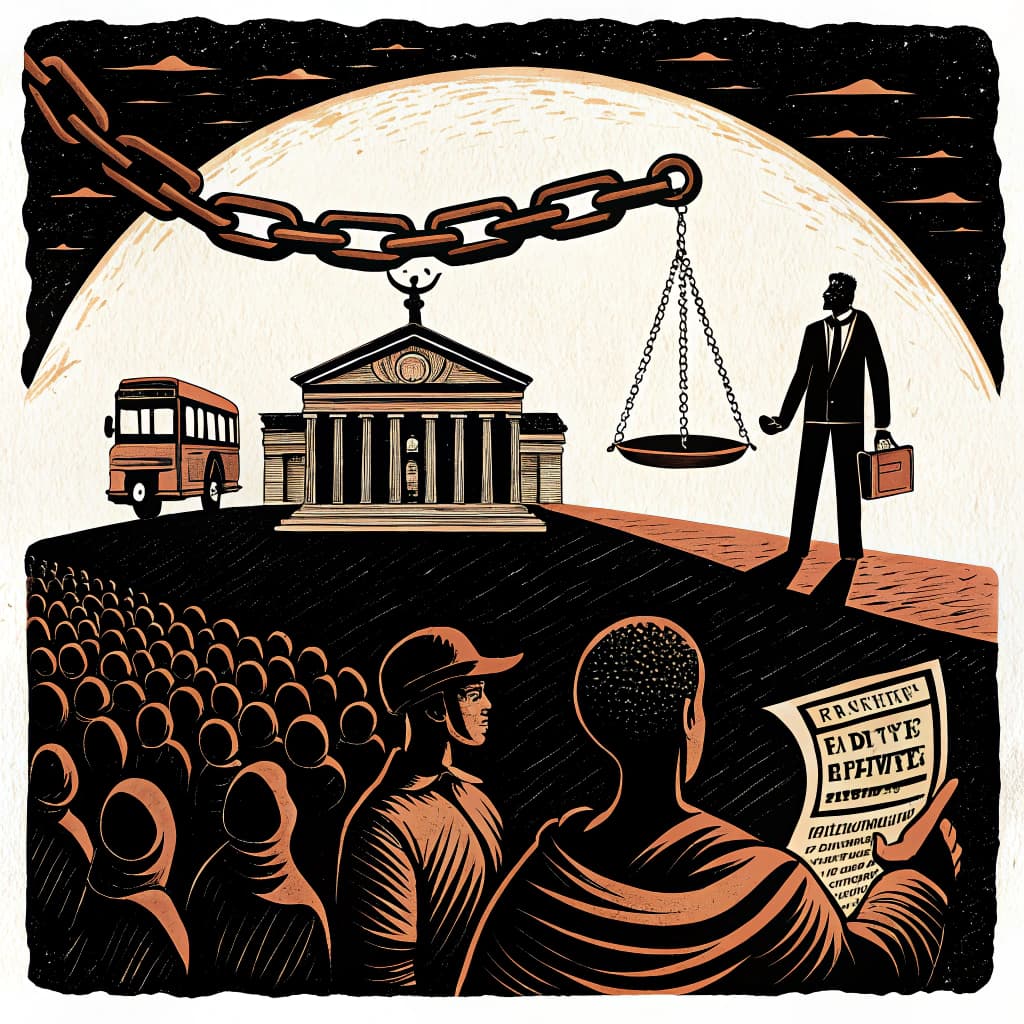
Early Racial Tensions & Notting Hill Riots
Students will analyze the origins of racial tensions in post-war Britain, focusing on the Notting Hill Riots of 1958 and their impact on public discourse.
TL;DR:Active learning transforms this sensitive historical topic into tangible understanding for students. Handling raw evidence and multiple perspectives builds empathy and critical analysis, while collaborative structures prevent reliance on oversimplified narratives.
About This Topic
This topic explores the roots of racial tensions in post-war Britain, centering on the Notting Hill Riots of 1958. Students examine socio-economic pressures such as housing shortages, high unemployment in West London, and the arrival of Caribbean immigrants through the Windrush generation. These factors fueled resentment among some white working-class communities, leading to targeted attacks by Teddy boys on West Indian residents, which erupted into widespread violence over 29-30 August.
Key analysis includes immediate triggers like pub fights and stabbings, alongside broader public discourse shifts. Students evaluate the riots' significance in exposing divisions, influencing media narratives, and catalyzing activism that contributed to the Race Relations Act 1965. This connects to A-Level themes of post-war social change and unrest.
Active learning benefits this sensitive topic by encouraging empathy through structured debates and source-based role plays. Collaborative jigsaws on causation help students weigh multiple perspectives, while group performances of eyewitness accounts make abstract tensions concrete and memorable, building skills in evidence evaluation.
Key Questions
- Analyze the socio-economic factors that contributed to racial tensions in post-war British cities.
- Explain the immediate causes and catalysts of the Notting Hill Riots of 1958.
- Evaluate the significance of the Notting Hill Riots in shaping public attitudes and the subsequent drive for race relations legislation.
Learning Objectives
- Analyze the socio-economic conditions in post-war Britain that created fertile ground for racial tensions.
- Explain the sequence of events and immediate triggers that led to the Notting Hill Riots in August 1958.
- Evaluate the impact of the Notting Hill Riots on British public opinion and the subsequent development of race relations legislation.
- Compare the media's portrayal of the riots with historical accounts to assess bias and influence.
Before You Start
Why: Students need to understand the general conditions of post-war Britain, including issues like housing shortages and economic recovery, to contextualize the specific tensions leading to the riots.
Why: Knowledge of the arrival and initial settlement of Caribbean migrants is essential for understanding the demographic context and the target of the racial tensions.
Key Vocabulary
| Immigration Act 1948 | This act granted British citizenship and the right of entry to all citizens of the British Empire, facilitating the arrival of Caribbean migrants to the UK. |
| Teddy Boys | A subculture of young men in the 1950s known for their distinctive Edwardian-inspired clothing and often associated with violence and racist attitudes. |
| White backlash | A negative reaction from some white people to the increasing presence and visibility of ethnic minority groups, often fueled by social and economic anxieties. |
| Race Relations Act 1965 | The first significant piece of legislation in the UK aimed at outlawing racial discrimination in public places and inciting racial hatred. |
Watch Out for These Misconceptions
Common MisconceptionThe riots stemmed purely from racial prejudice with no economic role.
What to Teach Instead
Socio-economic strains like slum housing and job competition were central. Group jigsaws on evidence help students integrate these factors, challenging simplistic views through peer teaching and visual mapping.
Common MisconceptionWindrush arrivals faced no opposition until 1958.
What to Teach Instead
Tensions simmered from 1948 with 'No Coloureds' signs common. Timeline activities reveal gradual escalation, as students collaboratively sequence events and connect early incidents to the riots.
Common MisconceptionThe riots led directly to immediate laws ending discrimination.
What to Teach Instead
Legislation like the 1965 Act followed years of activism. Debate simulations show causal chains, helping students distinguish short-term unrest from long-term policy shifts via structured argument.
Active Learning Ideas
See all activities→Jigsaw
Socio-Economic Causes
Divide students into four expert groups, each researching one cause: housing, jobs, immigration policy, local culture clashes. After 15 minutes, reform into mixed groups to teach peers and build a shared causation diagram. Conclude with whole-class synthesis.
Case Study Analysis
Source Carousel: Riot Accounts
Set up six stations with primary sources: newspaper clippings, photos, police reports, resident testimonies. Pairs spend 5 minutes per station noting bias and reliability, then report back. Follow with class vote on most credible source.
Formal Debate
Riots' Significance
Assign half the class to argue the riots accelerated legislation, the other that change was gradual. Provide prep time for evidence collection, then debate in rounds with peer scoring. Debrief on balanced evaluation.
Real-World Connections
- Community relations officers working for local councils today often draw on the lessons of the Notting Hill Riots to mediate inter-community disputes and promote social cohesion.
- Historians and journalists studying contemporary social unrest can analyze the patterns of scapegoating and media influence seen in 1958 to understand similar events in other contexts.
- The ongoing debates about immigration policy and integration in the UK are directly informed by the historical tensions and legislative responses that followed events like the Notting Hill Riots.
Assessment Ideas
Pose the question: 'To what extent were the Notting Hill Riots a spontaneous outburst versus a predictable consequence of existing social and economic conditions?' Facilitate a debate where students must cite specific evidence from primary and secondary sources to support their arguments.
Ask students to write down two socio-economic factors that contributed to the riots and one specific piece of legislation that was a direct result of the increased awareness of racial tensions following the riots.
Provide students with short, anonymized quotes from newspaper articles or eyewitness accounts from 1958. Ask them to identify which quote best represents the immediate cause of the riots and which reflects a broader societal tension, justifying their choices.
Frequently Asked Questions
What caused the Notting Hill Riots of 1958?
How significant were the Notting Hill Riots for race relations?
How can active learning help teach the Notting Hill Riots?
What primary sources best illustrate post-war racial tensions?
Planning templates for History
5E Model
The 5E Model structures lessons through five phases (Engage, Explore, Explain, Elaborate, and Evaluate), guiding students from curiosity to deep understanding through inquiry-based learning.
Unit PlannerThematic Unit
Organize a multi-week unit around a central theme or essential question that cuts across topics, texts, and disciplines, helping students see connections and build deeper understanding.
RubricSingle-Point Rubric
Build a single-point rubric that defines only the "meets standard" level, leaving space for teachers to document what exceeded and what fell short. Simple to create, easy for students to understand.
More in Post-War Social Change 1948–1970
Post-War Immigration to Britain: Causes
Students will investigate the causes of post-war immigration to Britain, particularly from the Commonwealth, and the early experiences of these new communities.
8 methodologies
Commonwealth Immigrants Act (1962)
Students will examine the 1962 Commonwealth Immigrants Act, analyzing its causes, impact on immigration patterns, and its role in shaping British immigration policy.
8 methodologies
Rise of Youth Culture: Mods and Rockers
Students will evaluate the impact of emerging youth cultures in the 1960s, such as Mods and Rockers, and their role in challenging traditional social norms.
8 methodologies
The Permissive Society: Liberal Reforms
Students will analyze the 'Permissive Society' and other forms of organized resistance to school desegregation, revealing the limits of state versus federal power.
8 methodologies
The Race Relations Act (1965)
Students will evaluate the impact of the 1965 Race Relations Act, the first anti-discrimination legislation in Britain, and its role in challenging racial prejudice.
8 methodologies
Enoch Powell's 'Rivers of Blood' Speech
Students will investigate the impact of Enoch Powell's controversial 'Rivers of Blood' speech, analyzing its political and social consequences for race relations in Britain.
8 methodologies