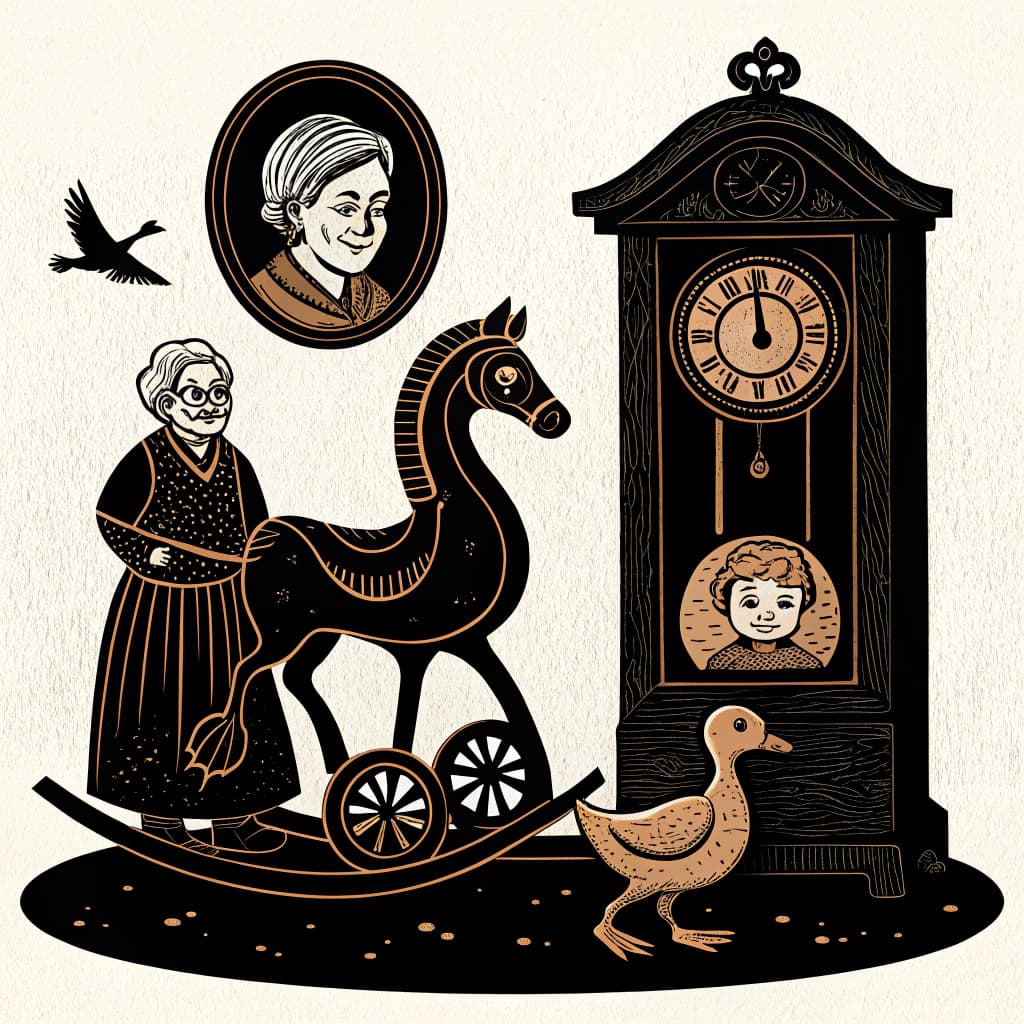
Toy Storytelling: Imagining the Past
Using historical toys as prompts to create short stories or role-play scenarios about children's lives in the past.
TL;DR:Active handling of historical toys grounds abstract past lives in concrete, sensory experiences. When children feel the weight of a wooden top or thread a cup-and-ball string, they form lasting memories that simple images or stories cannot match. This tactile connection makes emotional and historical thinking possible for young learners.
About This Topic
Toy Storytelling invites Year 1 children to handle replicas of historical toys, such as cup-and-ball games, wooden spinning tops, or rag dolls, and imagine the daily lives of children from the past. This activity aligns with KS1 History standards on changes within living memory by using toys as historical sources. Children explore key questions like what it felt like to play with an old toy or what toys reveal about past childhoods. Through simple narratives or role-play, they connect physical objects to emotions and routines from Victorian or wartime eras.
This topic develops historical empathy alongside language and creative skills. Children learn that toys reflect societal changes, such as simpler materials before plastic or games promoting outdoor play. It encourages evidence-based thinking as students infer from toy design, like the durability needed for shared family use.
Active learning shines here because physical interaction with toys makes abstract history concrete. Role-playing scenarios or collaborative storytelling turns passive listening into embodied experiences, boosting retention and enthusiasm as children voice their interpretations in a safe, supportive space.
Key Questions
- What might it have felt like to play with a toy from a long time ago?
- Can you tell a story about a child playing with an old toy?
- What can toys tell us about how children lived in the past?
Learning Objectives
- Create a short story or role-play scenario based on a historical toy.
- Identify at least two ways a historical toy reflects the daily life of a child in the past.
- Compare a historical toy with a modern toy, noting one key difference in materials or play style.
- Explain what a historical toy might suggest about the values or activities of children in a past era.
Before You Start
Why: Students need a basic understanding that things were different 'a long time ago' before comparing specific historical objects.
Why: Children must be able to describe the physical characteristics of toys to infer their use and origins.
Key Vocabulary
| Replica | A copy or model of something, in this case, a toy from the past made to look like the original. |
| Historical Source | An object, like a toy, that gives us information about people and events from the past. |
| Empathy | The ability to understand and share the feelings of another person, imagining how someone else might feel playing with an old toy. |
| Victorian Era | The period of British history when Queen Victoria reigned, from 1837 to 1901, a time when many of the toys we study were common. |
Watch Out for These Misconceptions
Common MisconceptionChildren in the past had no fun because toys were simple.
What to Teach Instead
Toys like hoops or peg dolls offered real joy through imagination and skill. Role-play activities let students try these toys, experiencing the challenge and laughter firsthand, which shifts views from pity to appreciation. Group discussions reinforce that fun transcends materials.
Common MisconceptionToys show everything about life in the past.
What to Teach Instead
Toys provide clues to play and materials but not full diets or homes. Handling toys alongside photos helps students question sources. Collaborative storytelling prompts them to infer gaps, building critical source evaluation.
Common MisconceptionThe past feels too different and unrelated.
What to Teach Instead
Comparing old toys to modern ones highlights continuities like friendship in play. Physical toy exploration bridges the gap, as active trials reveal shared emotions, fostering personal connections through empathy-building role-play.
Active Learning Ideas
See all activities→Hot Seat
Role-Play Corners: Toy Tales
Set up corners with 3-4 historical toys and simple props like aprons or hats. Pairs select a toy, discuss a child's day using it, then act out a 2-minute scene. Rotate toys after 10 minutes and share one highlight with the class.
Hot Seat
Story Chain: Building Narratives
In a circle, start with one child describing a toy and its owner. Each adds a sentence to build a group story about a past playtime. Record the story on chart paper, then illustrate key moments.
Hot Seat
Toy Diary Entries
Children pick a toy, draw it, and dictate or write a short diary entry from the toy's or child's perspective. Pairs share entries, noting similarities in past and present play.
Real-World Connections
- Museum curators, like those at the V&A Museum of Childhood, use historical toys to research and display how children's lives and play have changed over time.
- Toy designers today sometimes draw inspiration from vintage toys, adapting old concepts for new generations, similar to how a modern doll maker might study antique rag dolls.
Assessment Ideas
Provide each child with a picture of a historical toy. Ask them to write or draw one sentence answering: 'What story could this toy tell about a child's day long ago?'
Hold up a historical toy and ask: 'If you could ask the child who played with this toy one question, what would it be and why?' Listen for children considering the child's perspective and experiences.
Observe children during role-play. Note if they are incorporating details about the toy into their dialogue or actions, demonstrating an understanding of how the toy might have been used in the past.
Frequently Asked Questions
How does Toy Storytelling fit KS1 History?
What historical toys work best for Year 1?
How to differentiate for varying abilities?
Why use active learning for Toy Storytelling?
Planning templates for History
5E Model
The 5E Model structures lessons through five phases (Engage, Explore, Explain, Elaborate, and Evaluate), guiding students from curiosity to deep understanding through inquiry-based learning.
Unit PlannerThematic Unit
Organize a multi-week unit around a central theme or essential question that cuts across topics, texts, and disciplines, helping students see connections and build deeper understanding.
RubricSingle-Point Rubric
Build a single-point rubric that defines only the "meets standard" level, leaving space for teachers to document what exceeded and what fell short. Simple to create, easy for students to understand.
More in Toys and Play Through Time
Grandparents' Toys: Materials and Design
Analyzing old toys made from wood, metal, and cloth, and differentiating their construction from modern toys.
8 methodologies
Chronology of Toy Development
Sorting toys into historical categories and constructing a simple timeline to represent their evolution.
8 methodologies
The Impact of Plastic on Toy Manufacturing
Investigating how the introduction of plastic transformed toy production and aesthetic.
8 methodologies
Technological Advancements in Toys
Exploring how batteries and electricity have integrated into modern toy design and function.
8 methodologies
Personal Toy Histories and Comparisons
Discussing individual favourite toys and drawing comparisons with historical examples.
8 methodologies
The Role of Games in Different Eras
Investigating traditional games played indoors and outdoors, comparing them to modern digital games.
8 methodologies