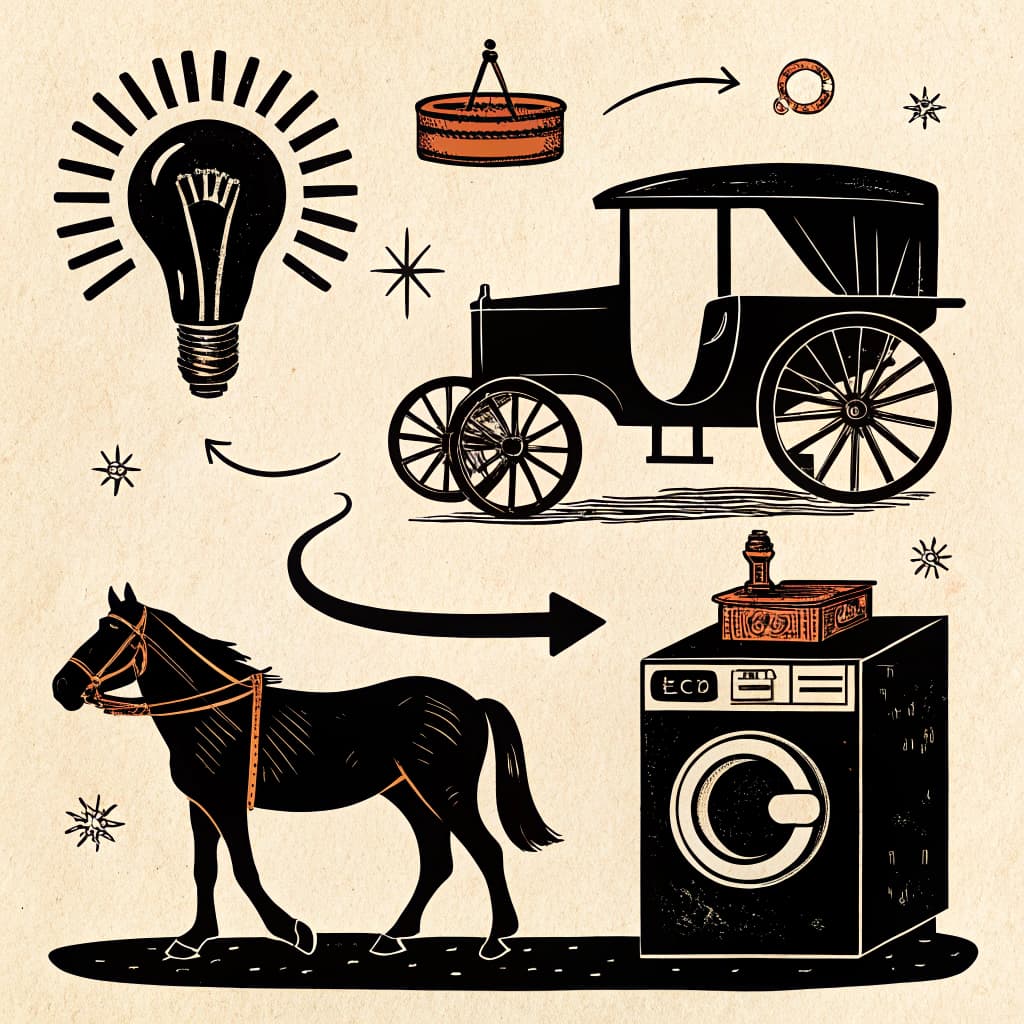
Why Things Change Over Time
Students will explore the reasons behind historical changes, such as new inventions, societal needs, and cultural shifts.
TL;DR:Active learning helps students see cause-and-effect clearly in this topic. When students build timelines or map inventions, they move beyond abstract ideas into concrete evidence. Group work also gives them space to test their own assumptions against peer observations.
About This Topic
Students explore the reasons why daily lives have changed over time, such as new inventions, growing societal needs, and cultural shifts. They examine specific examples, like how the invention of the wheel improved transport and led to changes in trade and farming, or how trains connected communities and altered work patterns. Through key questions, students consider what drove these changes, how one invention sparked many others, and why particular changes happened when they did.
This topic supports AC9HASS2K01 by building skills in recognising causes and effects in history. Students compare past and present practices, developing an understanding of continuity alongside change. They learn to sequence events and identify patterns, which strengthens their historical inquiry and empathy for people in different times.
Active learning benefits this topic greatly because hands-on activities like building timelines or role-playing daily routines make cause-effect relationships visible and personal. Students actively construct meaning through discussion and collaboration, which deepens retention and helps them apply concepts to new contexts.
Key Questions
- What are some of the reasons why the way people live their daily lives has changed over time?
- How did one important invention lead to many other changes in how people lived?
- Why do you think a particular change we have studied happened when it did?
Learning Objectives
- Explain how inventions like the wheel or the printing press caused significant changes in daily life.
- Compare daily routines and tools used by people in the past with those used today.
- Identify societal needs that prompted specific historical changes, such as the need for faster communication.
- Analyze the impact of cultural shifts on the way people lived in different historical periods.
Before You Start
Why: Students need a basic understanding of how people live together in groups to explore changes in daily life.
Why: Familiarity with everyday objects helps students compare past and present tools and technologies.
Key Vocabulary
| Invention | A new device, method, or idea that has been created for the first time. |
| Societal Needs | The requirements or desires of a community or group of people that influence their way of life. |
| Cultural Shifts | Changes in the beliefs, customs, arts, and social institutions of a society over time. |
| Daily Life | The ordinary activities and routines that people do every day. |
Watch Out for These Misconceptions
Common MisconceptionChanges over time happen randomly or by magic.
What to Teach Instead
Changes stem from human inventions, needs, and ideas responding to challenges. Timeline activities in small groups help students trace cause-effect links visually, replacing random ideas with sequenced evidence through peer talk.
Common MisconceptionAll historical changes made life better right away.
What to Teach Instead
Changes bring both improvements and new challenges, like faster transport creating noise or separation from family. Role-plays let students experience these trade-offs firsthand, sparking discussions that build balanced views.
Common MisconceptionInventions appear suddenly without any reason.
What to Teach Instead
Inventions arise from specific societal needs or cultural contexts. Mapping exercises in pairs reveal preconditions, such as crowded cities needing better transport, helping students see changes as purposeful processes.
Active Learning Ideas
See all activities→Think-Pair-Share
Collaborative Timeline: Daily Life Changes
Give small groups cards describing past and present daily activities, inventions, and needs. Students sequence them on a long paper timeline, draw arrows to show causes and effects, and label reasons for changes. Groups present one key change to the class.
Think-Pair-Share
Invention Chain Map: Pairs
Pairs select an invention like the bicycle. They draw a central circle for the invention, then branching lines to show impacts on transport, play, and work. Pairs explain their map to another pair, noting societal needs that prompted it.
Think-Pair-Share
Role-Play Debate: Why Then?
In small groups, students role-play as people from the past facing a problem, invent a solution, then debate why it happened then, not earlier or later. Groups perform short skits and vote on the strongest reason.
Real-World Connections
- Museum curators at the National Museum of Australia use their knowledge of historical changes to explain how objects like early telephones or farming tools were once essential for daily life.
- Urban planners consider how past changes, like the invention of the car and the development of roads, shaped the layout of cities today, influencing where people live and work.
- Toy designers often draw inspiration from historical inventions and societal needs to create products that reflect different eras, such as wooden toys or model trains.
Assessment Ideas
Provide students with images of past and present objects (e.g., a quill pen and a laptop, a horse-drawn cart and a car). Ask them to write one sentence explaining how one of these objects represents a change over time and why that change might have happened.
Pose the question: 'Imagine you could only use tools from 100 years ago for one day. What would be the hardest part of your day and why?' Encourage students to connect their answers to specific inventions or societal needs from the past.
Ask students to name one invention they learned about and explain one way it changed how people lived. Then, have them name one societal need that caused a change and give an example.
Frequently Asked Questions
How to teach Year 2 students why daily lives changed over time?
What activities show how one invention leads to many changes?
How does active learning help teach reasons for historical changes?
Why did particular historical changes happen when they did?
More in The Past Is Different
Comparing Homes: Past vs. Present
Students will compare and contrast homes from different historical periods with modern homes, identifying changes and continuities.
8 methodologies
Clothing and Fashion Through Time
Students will investigate historical clothing styles, comparing them to contemporary practices and discussing reasons for change.
8 methodologies
Food Sources and Preparation: Then & Now
Students will explore how food was sourced, prepared, and eaten in the past, contrasting it with modern food systems.
8 methodologies
Early Communication Methods
Students will explore various historical communication methods, from letters to early telephones, and their impact.
8 methodologies
Digital Communication Today
Students will compare historical communication methods with modern digital communication, evaluating their effectiveness.
8 methodologies
Interpreting Historical Photographs
Students will learn to analyze historical photographs to infer details about past daily life, technology, and social customs.
8 methodologies