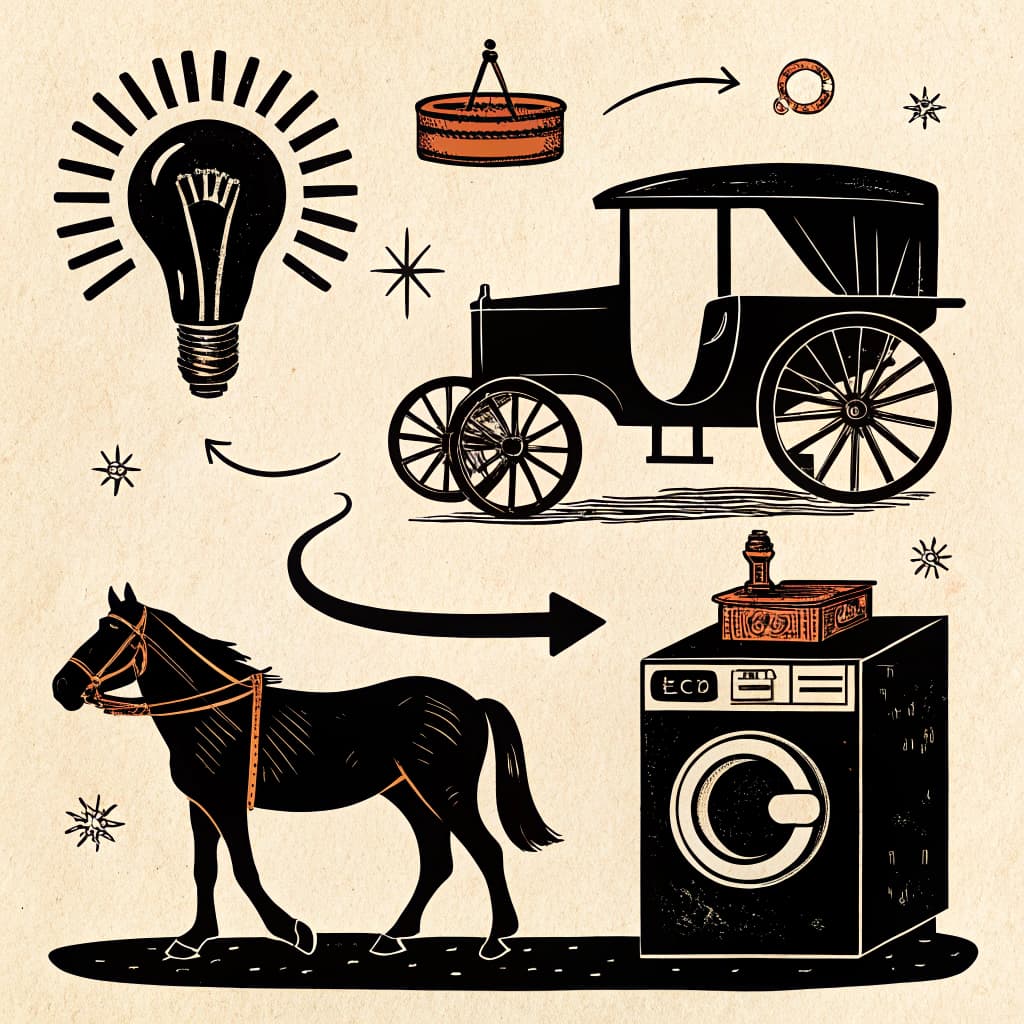
Evolution of Road Transport
Students will trace the development of road vehicles from horse-drawn carriages to early automobiles and modern cars, noting key innovations.
TL;DR:Active learning helps students grasp the evolution of road transport because physical timelines, model-building, and role-plays make abstract changes visible and memorable. Students connect cause and effect by handling real artefacts and collaborating to solve problems, which builds deeper understanding than passive listening.
About This Topic
Students trace the evolution of road transport from horse-drawn carriages to early automobiles and modern cars. They examine key innovations such as rubber tyres, internal combustion engines, and safety features like seatbelts. This content aligns with AC9HASS2K02 by comparing past and present transport methods and their effects on daily life, cities, and work patterns. Discussions focus on how cars increased speed and ease of travel but initially raised safety concerns, prompting inventions like traffic lights.
The topic fosters historical skills like sequencing events and understanding cause and effect. Students connect transport changes to broader societal shifts, such as suburban growth and commuting. Visual timelines and photographs from Australian history, including early motor cars in Sydney or Melbourne, make the content relevant and engaging.
Active learning suits this topic well. When students construct timelines with drawings or sort vehicle images chronologically, they grasp progression hands-on. Role-playing journeys in different eras reveals speed and comfort differences, while predicting future transport sparks creativity and critical thinking.
Key Questions
- How has the speed, safety, and ease of travelling by road changed from long ago to today?
- How did the invention of the car change the way cities were built and how people travelled to work?
- What changes do you think might happen to road transport in the future?
Learning Objectives
- Compare the features of horse-drawn carriages, early automobiles, and modern cars.
- Explain how innovations like rubber tires and engines changed the speed and efficiency of road travel.
- Identify key safety features introduced in vehicles over time.
- Describe the impact of the automobile on urban planning and daily commutes.
Before You Start
Why: Students need to understand basic human needs, including the need for movement and transport, to appreciate why vehicles developed.
Why: Understanding different materials like wood, metal, and rubber helps students identify components of early and modern vehicles.
Key Vocabulary
| Horse-drawn carriage | A vehicle that travels on roads and is pulled by horses. These were common forms of transport before cars were invented. |
| Internal combustion engine | A type of engine that burns fuel inside itself to create power, making cars move. This was a major invention for automobiles. |
| Automobile | A self-propelled vehicle, also known as a car, designed to travel on roads. Early automobiles were very different from cars today. |
| Innovation | A new method, idea, or product that improves on something that already exists. Examples include better tires or safer car designs. |
Watch Out for These Misconceptions
Common MisconceptionCars have always been the main road transport.
What to Teach Instead
Many students overlook carriages as the primary method before cars. Timeline activities with dated images help them sequence accurately. Group discussions reveal how engines caused the shift, building evidence-based understanding.
Common MisconceptionRoad transport changes did not affect city design.
What to Teach Instead
Students may think cities stayed the same. Mapping exercises comparing old photos of compact towns to modern suburbs show road expansion's role. Collaborative model-building reinforces cause-effect links.
Common MisconceptionFuture road transport will match today exactly.
What to Teach Instead
Predictions often ignore innovation patterns. Brainstorming sessions with past examples guide students to envision changes like electric cars. Sharing predictions in pairs encourages reasoned forecasts.
Active Learning Ideas
See all activities→Stations Rotation
Timeline Build: Transport Evolution
Provide images of carriages, early cars, and modern vehicles. In small groups, students sequence them on a class timeline strip, adding labels for innovations like engines or brakes. Groups present one change and its impact.
Stations Rotation
Model Station: Vehicle Comparisons
Set up stations with craft materials to build simple models of a carriage and a car. Students test models for speed down a ramp and safety with added cushions. Record differences in group charts.
Stations Rotation
Role-Play Relay: Past vs Present Journeys
Divide class into teams. One team acts a horse carriage trip with props, noting time and challenges. Switch to car role-play. Whole class discusses speed, safety, and ease changes.
Real-World Connections
- City planners and traffic engineers today use historical data on road transport evolution to design safer and more efficient road networks, considering how past changes influenced traffic flow and urban sprawl.
- Museum curators, like those at the National Museum of Australia, preserve and display early automobiles and transport artifacts, helping the public understand the historical context and technological progression of road travel.
- Classic car restoration businesses keep historical vehicles operational, showcasing the engineering and design of early automobiles for enthusiasts and educational purposes.
Assessment Ideas
Provide students with images of three different road vehicles: a horse-drawn carriage, a Model T Ford, and a modern electric car. Ask them to label each image with its era and write one sentence describing a key difference between it and the others.
Pose the question: 'Imagine you are a child in 1910. How would your journey to school be different from a child's journey today?' Encourage students to discuss speed, comfort, and safety based on what they have learned about transport evolution.
Ask students to write down two specific inventions or changes that made cars safer over time. For example, they might mention seatbelts or airbags.
Frequently Asked Questions
How to teach Year 2 evolution of road transport ACARA?
Activity ideas for road transport history Year 2 HASS?
How does active learning benefit road transport evolution topic?
Common misconceptions in teaching road transport changes?
More in Technology Changes Our Lives
Simple Tools: Past and Present
Students will compare simple tools from the past (e.g., hand tools) with their modern equivalents, focusing on efficiency and design.
8 methodologies
Impact of Electricity on Daily Life
Students will explore how the invention and widespread use of electricity transformed homes, work, and leisure activities.
8 methodologies
Everyday Technology at Home
Students will identify and discuss the various technologies used in their homes, considering their purpose and impact on family routines.
8 methodologies
Technology in the Classroom
Students will explore how technology is used in their school for learning, communication, and administrative tasks, and its evolution.
8 methodologies
The Wheel: A Transformative Invention
Students will investigate the invention of the wheel and its profound impact on transport, agriculture, and other aspects of human civilization.
8 methodologies
The Printing Press and Knowledge Sharing
Students will learn about the invention of the printing press and its role in spreading information, education, and new ideas.
8 methodologies