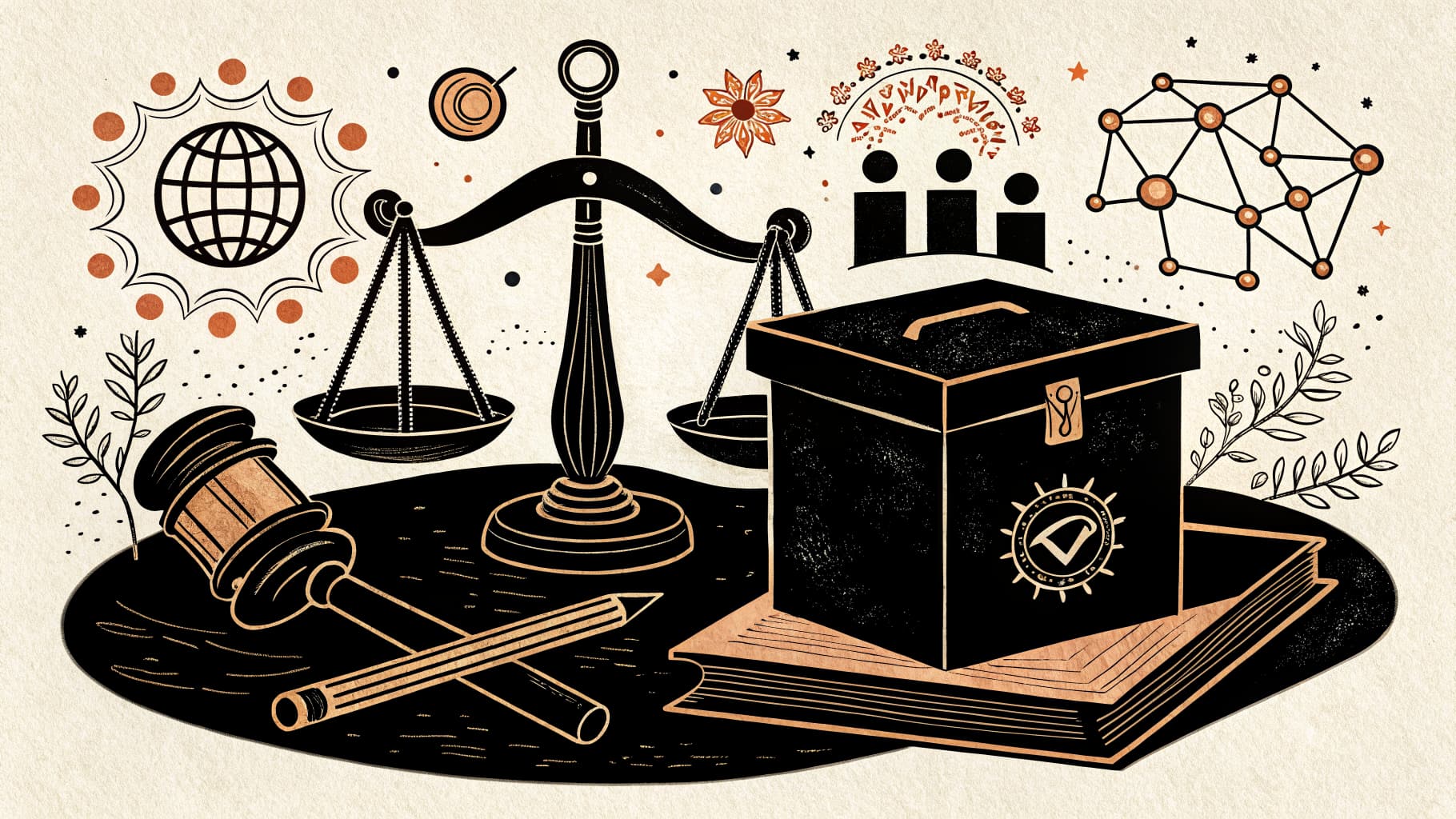
How Parliament Works: Roles and Functions
Understanding the basic roles of the Parliament, including making laws and representing the people, without delving into the complexities of the Westminster system.
TL;DR:Active learning transforms abstract roles and processes into lived experiences for students. By moving, debating, and stepping into roles, Year 5 students grasp how Parliament’s two chambers balance power and responsibility in a way that a textbook cannot.
About This Topic
The Australian Parliament forms the core of our federal democracy, with two main chambers: the House of Representatives and the Senate. Its key roles include making laws through debating and passing bills, and representing the people by allowing elected members of parliament (MPs) to voice community needs. Year 5 students focus on these basics, learning how MPs from electorates and states work together to create rules that guide national life, from education to transport.
This topic connects to AC9HASS5K01 in the Australian Curriculum, supporting key questions on Parliament's primary job, how representatives speak for citizens, and the importance of law-making. Students build analytical skills by examining real examples, such as bills progressing through readings and committees, and justify Parliament's role in maintaining order and fairness.
Active learning suits this topic perfectly because simulations and role plays let students embody MPs, experience debates, and track a bill's journey. These methods turn abstract processes into engaging, participatory experiences that strengthen understanding and civic engagement.
Key Questions
- Explain the main job of the Australian Parliament.
- Analyze how elected representatives speak for the people in Parliament.
- Justify why it is important for Parliament to make laws for our country.
Learning Objectives
- Identify the two main roles of the Australian Parliament: making laws and representing the people.
- Explain how a bill becomes a law by describing the basic steps of parliamentary debate and voting.
- Analyze how Members of Parliament (MPs) communicate the needs and concerns of their constituents.
- Justify the importance of Parliament in creating and enforcing laws for the Australian community.
Before You Start
Why: Students need a basic understanding of communities and the roles people play within them to grasp the concept of representation.
Why: Prior knowledge of why rules and laws exist helps students understand the purpose and function of parliamentary law-making.
Key Vocabulary
| Parliament | The national law-making body of Australia, made up of the House of Representatives and the Senate. |
| Law | A rule made by Parliament that everyone in Australia must follow. |
| Member of Parliament (MP) | An elected person who represents a specific area, called an electorate, in the House of Representatives. |
| Bill | A proposed law that is presented to Parliament for debate and voting before it can become an official law. |
| Electorate | A geographical area represented by a Member of Parliament in the House of Representatives. |
Watch Out for These Misconceptions
Common MisconceptionThe Prime Minister makes laws alone.
What to Teach Instead
Laws pass through Parliament's debate and vote in both chambers. Role-playing sessions help students see MPs' collective input, correcting the idea of single-person power through group negotiations.
Common MisconceptionThe Senate has no real role in law-making.
What to Teach Instead
The Senate reviews and amends bills from the House. Station activities on chamber differences clarify this balance, as students rotate and compare functions firsthand.
Common MisconceptionMPs only represent their own opinions, not voters.
What to Teach Instead
MPs speak for electorates based on elections. Debate simulations let students practice voicing 'constituent' views, revealing representation's community focus.
Active Learning Ideas
See all activities→Role Play
Mock Parliament Debate
Assign students roles as MPs, Speaker, and Prime Minister. Present a class-chosen bill, like school uniform rules. Groups debate for and against in 10-minute turns, then vote. Record outcomes on a shared chart.
Stations Rotation
Parliament Roles
Create four stations: one for law-making (bill flowchart), representation (electorate maps), debating (sample speeches), and voting (ballot process). Groups rotate every 10 minutes, completing tasks and discussing findings.
Role Play
Pairs: Bill Journey Timeline
Pairs draw and label a timeline showing a bill's path from idea to law, including readings and royal assent. Research one real Australian example. Present to class with key justification points.
Real-World Connections
- Local councils, like the City of Sydney Council, have elected councillors who represent residents and make local laws or by-laws regarding things like parking and park usage.
- Citizens can contact their local Member of Parliament, such as the MP for their federal electorate like Bennelong in New South Wales, to share concerns about issues like road safety or local services.
- News reports often cover parliamentary debates on new bills, such as recent discussions about environmental protection laws or changes to healthcare policy, showing Parliament in action.
Assessment Ideas
Provide students with a card asking: 'What are the two main jobs of the Australian Parliament?' and 'Give one example of how an MP represents people.' Students write their answers to check understanding of core functions.
During a lesson on law-making, ask students to line up in order to represent the stages of a bill becoming a law (e.g., Bill Introduced, Debate, Vote, Royal Assent). This visual check assesses their grasp of the process sequence.
Pose the question: 'Why is it important for our country to have a Parliament that makes laws?' Facilitate a class discussion, encouraging students to provide reasons and examples, assessing their justification skills.
Frequently Asked Questions
What are the main roles of the Australian Parliament?
How do MPs represent people in Parliament?
Why is it important for Parliament to make laws?
How can active learning help teach Parliament roles?
More in The Democratic Engine: How Australia Governs
Federal Government: Powers & Responsibilities
Distinguishing the specific responsibilities of the federal government to citizens, such as defence and national laws.
8 methodologies
State & Territory Governments: Local Impact
Investigating the roles of state and territory governments in areas like education, health, and transport.
8 methodologies
Local Councils: Community Governance
Examining the functions of local councils in managing community services, parks, and local infrastructure.
8 methodologies
The Australian Constitution: Structure & Purpose
Analyzing the Australian Constitution as the foundational document that governs the government, focusing on its key sections.
8 methodologies
Changing the Constitution: Referendums
Investigating the process of changing the Australian Constitution through a referendum and historical examples.
8 methodologies
The Governor-General's Role
Understanding the symbolic and constitutional role of the Governor-General in Australia's parliamentary system.
8 methodologies