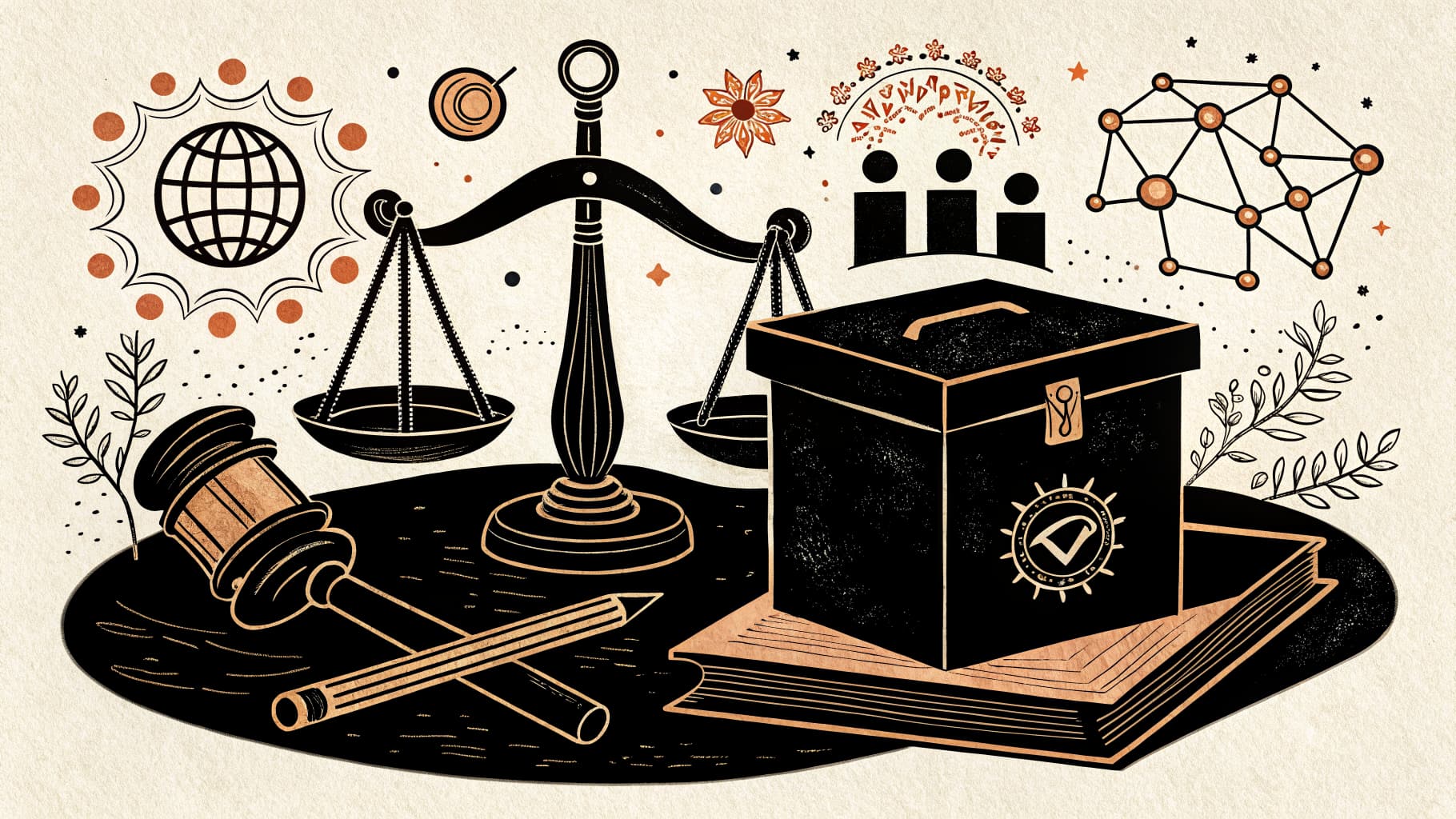
Making Laws: From Idea to Act
Tracing the journey of a bill through parliament, from its introduction to becoming a law.
TL;DR:Active learning works for this topic because the process of turning an idea into law is procedural and role-based. Students need to experience the sequence of stages and the collaborative decision-making to grasp how bills become acts. Movement, discussion, and simulation help solidify abstract steps into memorable actions.
About This Topic
Making laws in Australia follows a structured path through Parliament, where a bill starts as an idea from a Member of Parliament or public petition. Students in Year 5 map this process: first reading for introduction, second reading for debate on principles, committee stage for detailed review, third reading for final vote in the House of Representatives, then the same in the Senate. If passed by both houses with agreement, the Governor-General gives royal assent, turning the bill into an Act of Parliament.
This content meets AC9HASS5K01 by explaining Parliament's law-making institutions and roles of elected representatives. Students analyze citizen influence points, such as petitions, submissions to committees, and elections, while justifying multiple stages for scrutiny, debate, and compromise to prevent hasty decisions. These steps foster understanding of democratic checks and balances.
Active learning suits this topic well. Role-plays of parliamentary debates let students experience negotiation and voting firsthand. Collaborative flowcharts reveal process complexity through group discussion, making abstract procedures concrete and memorable while building teamwork and civic participation skills.
Key Questions
- Construct a flowchart illustrating the stages of law-making in Australia.
- Analyze the various points where citizens can influence the law-making process.
- Justify the need for multiple stages in passing a law.
Learning Objectives
- Construct a flowchart accurately representing the stages a bill passes through in the Australian Parliament.
- Analyze specific points within the law-making process where citizens can provide input or exert influence.
- Justify the necessity of multiple readings and committee stages for scrutinizing and amending proposed legislation.
- Compare and contrast the roles of the House of Representatives and the Senate in the passage of a bill.
- Explain the significance of the Governor-General's assent in transforming a bill into an Act of Parliament.
Before You Start
Why: Students need to understand the basic functions of government and the roles of elected representatives before learning how laws are made.
Why: A foundational understanding of what a government does is necessary to comprehend its role in creating laws.
Key Vocabulary
| Bill | A proposed law that has been introduced to Parliament but has not yet been passed. It must go through several stages before becoming law. |
| Act of Parliament | A bill that has been passed by both houses of Parliament and has received Royal Assent from the Governor-General. It is now a law. |
| First Reading | The initial introduction of a bill into Parliament. The title and main aims of the bill are read out, and copies are distributed. |
| Second Reading | The main debate on the principles and merits of the bill. Members of Parliament discuss whether the bill should proceed. |
| Committee Stage | A detailed examination of the bill, clause by clause. Amendments can be proposed and debated at this stage. |
| Royal Assent | The formal approval of a bill by the Governor-General, acting on behalf of the Queen. This is the final step before a bill becomes an Act. |
Watch Out for These Misconceptions
Common MisconceptionThe Prime Minister alone makes laws.
What to Teach Instead
Laws pass only with majority votes in both houses of Parliament after debate. Role-play activities help students see the collective decision-making process and roles of all MPs, correcting the idea of single-person power through direct experience.
Common MisconceptionBills become laws immediately after introduction.
What to Teach Instead
Multiple stages allow review and changes to ensure fairness. Flowchart activities reveal delays for debate and votes, helping students grasp checks and balances via visual sequencing and group justification.
Common MisconceptionCitizens have no role in law-making.
What to Teach Instead
Public input occurs via petitions and committee submissions. Simulations of petition drives demonstrate influence points, encouraging students to discuss real examples and value participation.
Active Learning Ideas
See all activities→Simulation Game
Collaborative Flowchart: Bill's Journey
Provide students with cards listing law-making stages. In small groups, they sequence the cards into a flowchart, add arrows for movement between House and Senate, and note citizen input points. Groups present and compare their charts to a model.
Simulation Game
Role-Play: Parliamentary Debate
Assign roles as MPs, committee members, and citizens. Groups debate a sample bill on school uniforms, progressing through readings with votes. Debrief on how debate changes the bill and citizen submissions influence outcomes.
Simulation Game
Petition Drive: Citizen Influence
Whole class brainstorms a local issue, drafts a petition, and 'submits' it to a mock committee. Students vote on amendments based on petition arguments, tracking changes on a shared bill template.
Real-World Connections
- Local council members often draft by-laws, similar to bills, to address specific community needs like waste management or park usage. Students could research a local by-law and trace its origin.
- Members of Parliament regularly receive letters and emails from constituents about issues they care about, such as environmental protection or school funding. These communications can influence how MPs vote on proposed laws.
- The process of creating a new road safety law, for example, involves input from police, transport experts, and community groups before it is debated and voted on in Parliament.
Assessment Ideas
Provide students with a blank card. Ask them to draw a simple diagram showing three key stages of a bill becoming a law and label each stage. Below the diagram, they should write one sentence explaining why a bill needs multiple stages.
Pose the question: 'If you were a Member of Parliament, what is one way you could encourage citizens to share their opinions on a new bill before it becomes law?' Facilitate a class discussion, encouraging students to refer to specific stages of the law-making process.
Present students with a short, simplified description of a hypothetical bill (e.g., a bill to ban single-use plastic bags). Ask them to identify one person or group (e.g., a shop owner, an environmental scientist, a concerned citizen) who might want to influence this bill and explain at which stage they could do so.
Frequently Asked Questions
How does a bill become a law in Australian Parliament?
Where can citizens influence the law-making process?
Why are there multiple stages in passing a law?
How does active learning help teach the law-making process?
More in The Democratic Engine: How Australia Governs
Federal Government: Powers & Responsibilities
Distinguishing the specific responsibilities of the federal government to citizens, such as defence and national laws.
8 methodologies
State & Territory Governments: Local Impact
Investigating the roles of state and territory governments in areas like education, health, and transport.
8 methodologies
Local Councils: Community Governance
Examining the functions of local councils in managing community services, parks, and local infrastructure.
8 methodologies
The Australian Constitution: Structure & Purpose
Analyzing the Australian Constitution as the foundational document that governs the government, focusing on its key sections.
8 methodologies
Changing the Constitution: Referendums
Investigating the process of changing the Australian Constitution through a referendum and historical examples.
8 methodologies
The Governor-General's Role
Understanding the symbolic and constitutional role of the Governor-General in Australia's parliamentary system.
8 methodologies