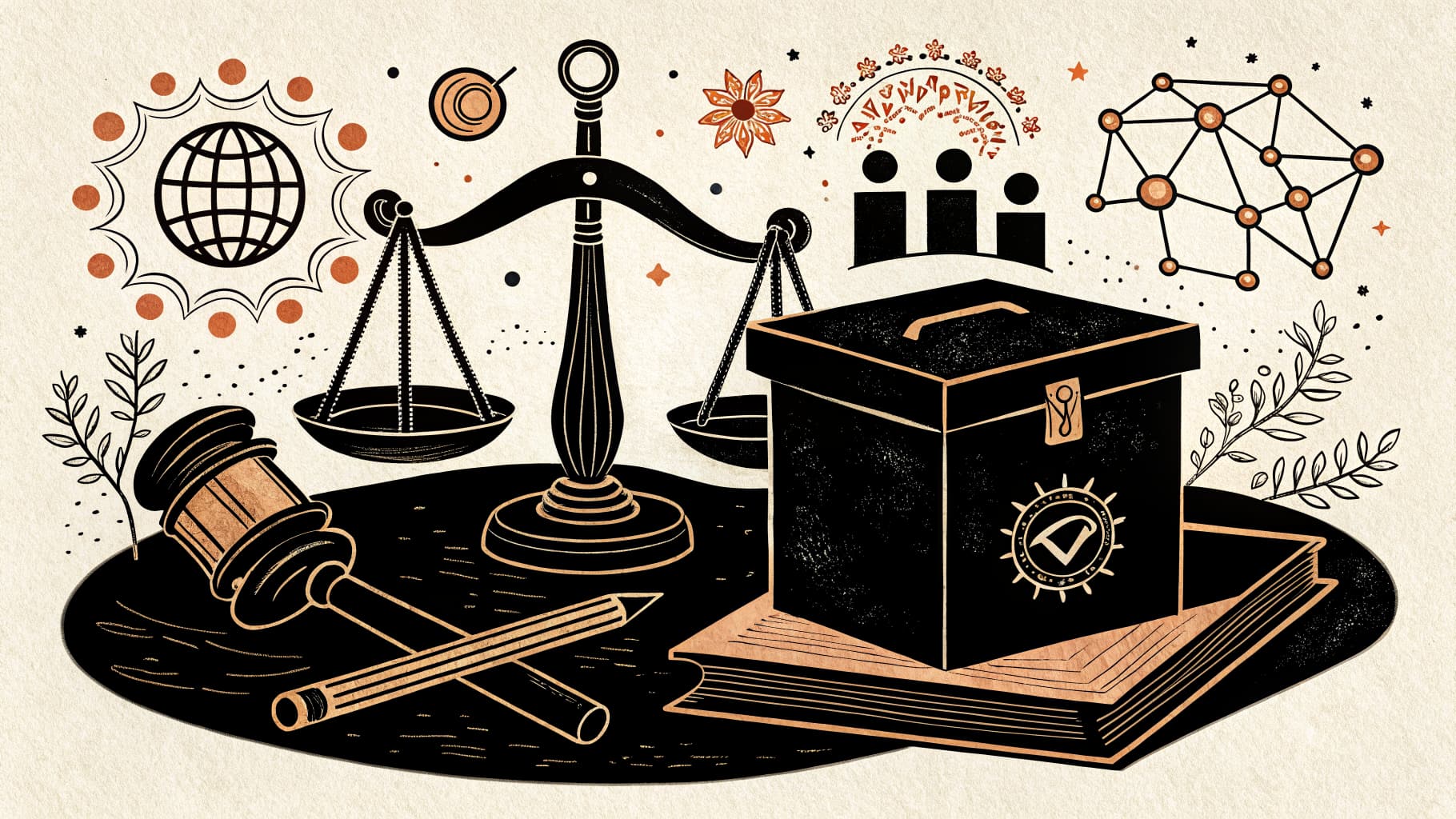
Changing Rules: A Democratic Process
Understanding that rules and laws are not static and can be improved through participation.
TL;DR:Active learning works because students grasp how rules shape daily life by experiencing the process firsthand. When they role-play proposing changes or analyze real surveys, abstract concepts like fairness and participation become concrete and meaningful.
About This Topic
Democratic processes allow rules and laws to change through community participation, a core idea in Australian civics. Year 3 students explore how school rules evolve when they become unfair, unsafe, or outdated. They evaluate rules using criteria like inclusivity and clarity, then design steps for proposing changes, such as gathering support or presenting to decision-makers. This meets AC9HASS3K03 on the nature of laws and AC9HASS3S02 on creating questions and planning inquiries.
Students connect classroom rules to wider civic life, like local council decisions on parks or traffic laws improved by resident input. They examine real examples, such as playground rules updated after student petitions, to see democracy in action. This builds skills in critical evaluation and respectful advocacy.
Active learning suits this topic perfectly. Role-plays of proposal meetings let students practice debate and voting in familiar settings. Group designs of change processes reinforce steps through collaboration. These methods make civic concepts immediate and relevant, helping students internalize participation as a right and responsibility.
Key Questions
- Evaluate when a rule or law needs to be changed.
- Design a process for proposing a change to a school rule.
- Explain how community members can participate in changing local laws.
Learning Objectives
- Evaluate the fairness and effectiveness of a given school rule using criteria such as clarity and inclusivity.
- Design a step-by-step process for proposing a change to a specific school rule, including methods for gathering support.
- Explain how community members can participate in proposing changes to local laws, citing at least one example.
- Compare the process for changing a school rule with the process for changing a local law.
Before You Start
Why: Students need to understand the purpose and existence of rules in their immediate environment before considering how they can change.
Why: Understanding what makes something fair or unfair is foundational to evaluating existing rules and proposing changes.
Key Vocabulary
| Rule | A statement of what you are allowed to do or not allowed to do, often set by a group or authority, like teachers or parents. |
| Law | A rule made by a government that everyone in a country or region must follow, with consequences for breaking it. |
| Participation | Taking part in an activity or process, such as voting, signing a petition, or sharing your ideas. |
| Proposal | A plan or suggestion put forward for consideration or discussion, often for a change or improvement. |
| Fairness | Treating everyone in a just and equitable way, without bias or favoritism. |
Watch Out for These Misconceptions
Common MisconceptionRules never change once made.
What to Teach Instead
Show timelines of school rule evolutions through class discussions. Students build their own timelines in groups, revealing patterns of improvement and reinforcing that participation drives change.
Common MisconceptionOnly adults or leaders can propose changes.
What to Teach Instead
Role-plays where students act as proposers demonstrate everyone's role. Peer feedback sessions help correct this by sharing examples of youth-led changes, building inclusive mindsets.
Common MisconceptionRule changes happen quickly without process.
What to Teach Instead
Multi-step activities like flowchart designs highlight time and steps needed. Group reflections compare quick fixes to real processes, clarifying democratic deliberation.
Active Learning Ideas
See all activities→Think-Pair-Share
Role-Play: Rule Change Assembly
Divide class into proposal teams, council members, and observers. Teams identify a school rule issue, prepare 2-minute pitches with reasons and solutions. Council questions and votes; observers note fair process elements. End with whole-class reflection on what worked.
Think-Pair-Share
Flowchart: Proposal Process Design
In pairs, students brainstorm steps to change a rule, from idea to vote. Draw flowcharts showing who is involved and decisions needed. Pairs present to class for feedback and class votes on best design.
Think-Pair-Share
Survey and Analyze: Rule Fairness Check
Create a class survey on current rules using yes/no and open questions. Tally results as a group, discuss findings, and propose one change based on data. Display results on a chart for ongoing reference.
Real-World Connections
- Local councils in towns like Ballarat or Perth consider resident feedback on proposed changes to traffic laws, such as speed limits or parking regulations, before voting on them.
- School principals and student representative councils work together to review and update school policies, like the rules for using the playground or library, after students voice concerns.
- Community groups in Adelaide might organize a petition to propose a new local park rule, such as designated quiet zones, to their city council.
Assessment Ideas
Present students with a hypothetical school rule, for example, 'No running in the corridors.' Ask: 'Is this rule fair? Why or why not? What could happen if students felt this rule was unfair? How could they suggest changing it?'
Provide students with a template for a 'Change Proposal.' Ask them to fill in the 'Problem with the Rule' section for a chosen school rule and list two ways they could gather support from classmates for their proposed change.
On a small card, ask students to write one sentence explaining how a community member might influence a local law, and one word describing why changing unfair rules is important.
Frequently Asked Questions
How to teach changing rules in Year 3 Australian Civics?
Active learning ideas for democratic rule changes Year 3?
Examples of school rules that have changed through student input?
How does this topic link to ACARA Civics standards?
More in Rules, Laws, and Fair Play
Classroom Rules: Why We Need Them
Exploring why we have rules in the classroom and their purpose.
8 methodologies
School Rules and Community Safety
Differentiating between school rules and broader community laws.
8 methodologies
Consequences: Fair vs. Unfair
Examining the impact of breaking rules and how consequences are determined.
8 methodologies
Authority and Rule Enforcement
Identifying who has the authority to make and enforce rules in different settings.
8 methodologies
The Purpose of Laws in Society
Exploring the fundamental reasons why societies create and maintain laws.
8 methodologies
Laws and Justice: Basic Concepts
Introducing the idea of justice and how laws aim to achieve it.
8 methodologies