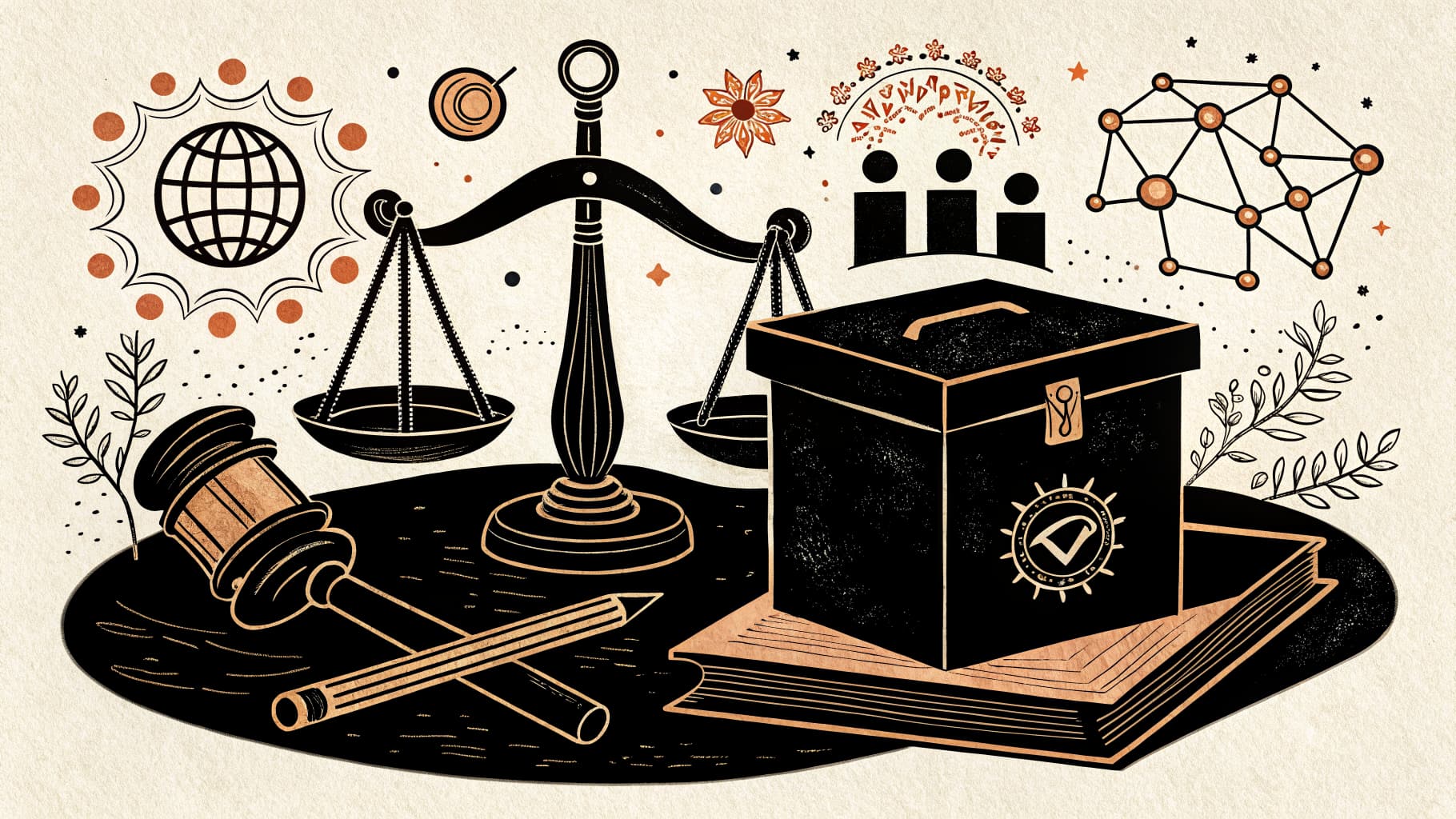
Authority and Rule Enforcement
Identifying who has the authority to make and enforce rules in different settings.
TL;DR:Active learning helps students grasp authority and rule enforcement by letting them experience roles firsthand. Acting out scenarios and mapping real systems builds concrete understanding beyond abstract discussion.
About This Topic
Authority and rule enforcement introduces Year 3 students to the people and roles that create and uphold rules in familiar settings. Students identify key figures such as teachers in classrooms, principals in schools, and community leaders like police officers or local councillors. They explore how these authorities ensure fair play by comparing responsibilities, for example, a teacher's role in daily routines versus a police officer's focus on safety laws. This aligns with AC9HASS3K03, building knowledge of civic systems.
The topic connects to the unit on rules, laws, and fair play by encouraging students to predict consequences of inconsistent enforcement, such as playground chaos without referee intervention. It fosters skills in analysis and empathy, as students consider perspectives of authority figures and peers. Discussions reveal how rules promote community harmony and prepare for democratic participation.
Active learning suits this topic well. Role-plays and simulations let students experience authority firsthand, making abstract roles concrete and memorable. Collaborative mapping of local authorities encourages ownership and deeper understanding through peer teaching and real-world connections.
Key Questions
- Explain who holds authority in the classroom, school, and local community.
- Compare the responsibilities of different authority figures in enforcing rules.
- Predict the outcome if rules were enforced inconsistently.
Learning Objectives
- Identify individuals and groups with authority in the classroom, school, and local community.
- Compare the responsibilities of different authority figures in enforcing rules.
- Explain the purpose of rules and laws in maintaining order and fairness.
- Predict the potential outcomes of inconsistent rule enforcement in familiar settings.
Before You Start
Why: Students need a foundational understanding of what rules are and why they exist in familiar environments like home and school before exploring who enforces them.
Why: Recognizing different roles and people within their local community is necessary to identify who holds authority.
Key Vocabulary
| Authority | The power or right to give orders, make decisions, and enforce obedience. This can be held by individuals or groups. |
| Rule Enforcement | The process of making sure that rules are followed and taking action when they are not. This ensures fairness and safety. |
| Responsibility | A duty or obligation to do something, or to take care of someone or something. Authority figures have responsibilities related to the rules they enforce. |
| Community | A group of people living in the same place or having a particular characteristic in common. Rules and authority figures exist within different communities. |
Watch Out for These Misconceptions
Common MisconceptionOnly police enforce all rules.
What to Teach Instead
Students often think police handle every rule issue, overlooking teachers and parents. Role-plays clarify context-specific authorities, as groups simulate scenarios and see peer-led enforcement succeed. This builds nuanced views through active comparison.
Common MisconceptionAuthority figures make rules alone without input.
What to Teach Instead
Children may believe rules come top-down only. Mapping activities reveal consultation processes, like class votes on playground rules. Peer discussions during creation help students value shared input and correct isolationist ideas.
Common MisconceptionRules never change, so authorities are fixed.
What to Teach Instead
Students assume static systems. Prediction debates on inconsistent enforcement show evolution needs, with groups proposing updates. This active forecasting highlights adaptability and reduces rigidity.
Active Learning Ideas
See all activities→Hot Seat
Role-Play: Classroom Court
Assign roles like teacher, student, and principal to groups. Present scenarios of rule-breaking, such as talking during lessons. Groups act out enforcement steps and discuss outcomes. Debrief as a class on authority responsibilities.
Hot Seat
Authority Mapping: Community Web
Provide large paper charts. Students draw and label authority figures in classroom, school, and community bubbles, then connect with lines showing interactions. Add responsibilities via sticky notes. Share maps in pairs.
Hot Seat
Prediction Debate: Rule Chaos
Pose scenarios like 'no enforcement on the bus.' In small groups, students predict outcomes and propose solutions. Vote on best ideas whole class and link to real authorities.
Real-World Connections
- Students can observe their classroom teacher setting and enforcing rules for learning and behaviour, comparing this to the school principal who has authority over the entire school.
- Local police officers enforce traffic laws and community safety rules, demonstrating a different type of authority and responsibility compared to a librarian who manages the borrowing of books.
- Local council members make decisions about community rules, such as park opening hours or waste collection schedules, affecting everyone in the local area.
Assessment Ideas
Provide students with a scenario, such as 'Someone is not sharing toys on the playground.' Ask them to write down who has the authority to address this and what their responsibility might be. Review responses to gauge understanding of authority and responsibility.
Pose the question: 'What might happen if the school principal decided to only sometimes enforce the rule about wearing hats outside?' Facilitate a class discussion, prompting students to consider fairness, safety, and potential confusion. Record key student predictions.
Give each student a card with the name of an authority figure (e.g., teacher, police officer, parent). Ask them to write one rule that person helps enforce and one reason why that rule is important.
Frequently Asked Questions
How to teach Year 3 students about authority figures in the community?
What activities align with AC9HASS3K03 for rule enforcement?
How can active learning help students understand authority and rule enforcement?
Common misconceptions in teaching rules and authorities to Year 3?
More in Rules, Laws, and Fair Play
Classroom Rules: Why We Need Them
Exploring why we have rules in the classroom and their purpose.
8 methodologies
School Rules and Community Safety
Differentiating between school rules and broader community laws.
8 methodologies
Consequences: Fair vs. Unfair
Examining the impact of breaking rules and how consequences are determined.
8 methodologies
Changing Rules: A Democratic Process
Understanding that rules and laws are not static and can be improved through participation.
8 methodologies
The Purpose of Laws in Society
Exploring the fundamental reasons why societies create and maintain laws.
8 methodologies
Laws and Justice: Basic Concepts
Introducing the idea of justice and how laws aim to achieve it.
8 methodologies