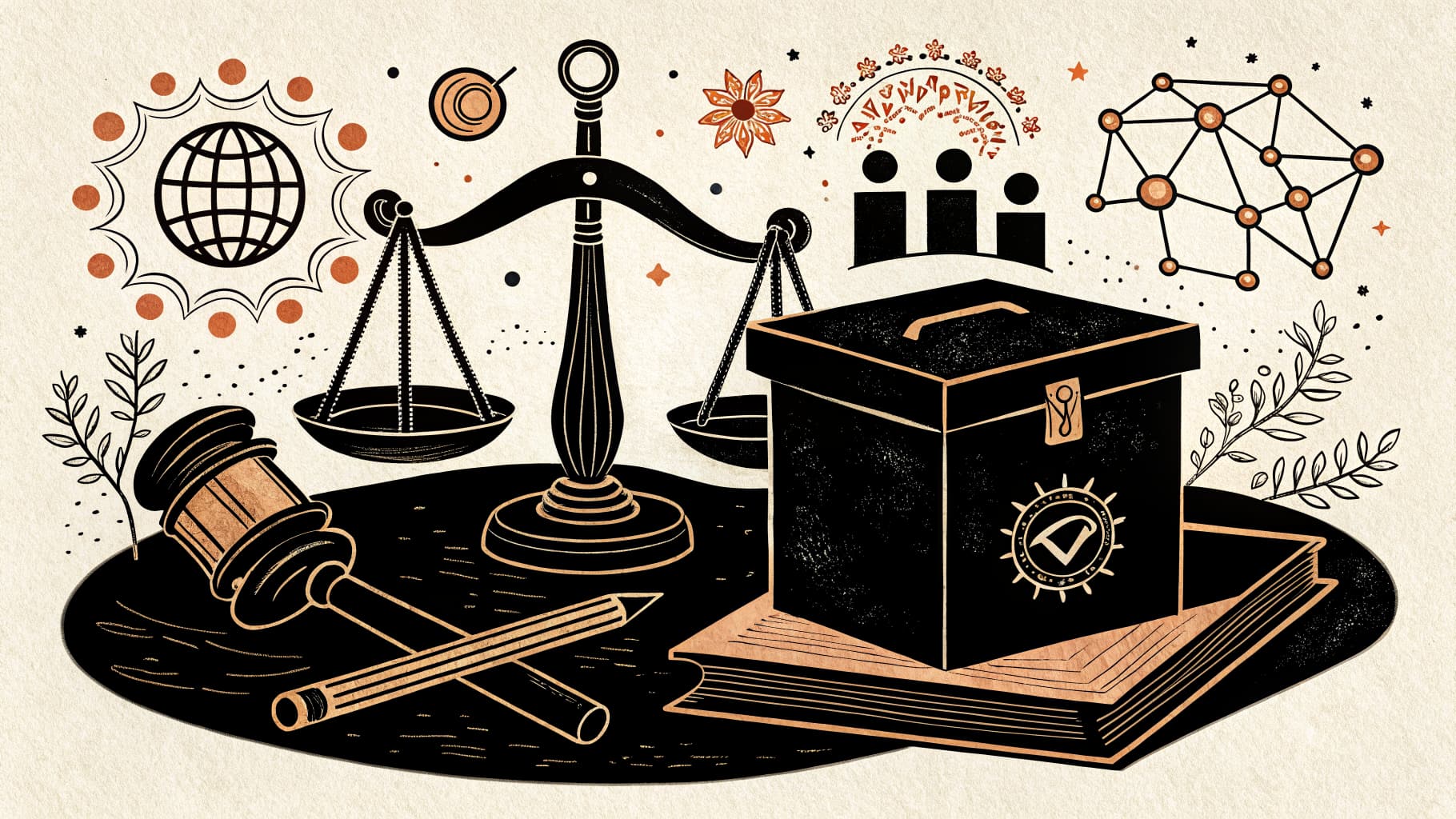
Laws and Justice: Basic Concepts
Introducing the idea of justice and how laws aim to achieve it.
TL;DR:Active learning helps Year 3 students grasp abstract concepts like justice and fairness by connecting them to familiar experiences. When students take on roles and debate real scenarios, they move from passive listeners to active participants in understanding how laws protect and shape their community. This approach builds empathy and critical thinking while making the topic meaningful and memorable.
About This Topic
This topic introduces Year 3 students to the basic concepts of laws and justice within the Australian Curriculum's Civics and Citizenship strand. Students explore how laws, created by governments, aim to ensure fairness, safety, and rights for all citizens. They learn to evaluate whether specific laws treat everyone justly, explain how laws promote fairness in everyday situations like playground rules or traffic laws, and predict outcomes if laws fail to be just, such as increased conflict or inequality.
Key standards AC9HASS3K03 and AC9HASS3S05 guide this content, fostering skills in critical thinking and civic participation. Students connect personal experiences with classroom rules to broader societal laws, understanding justice as balanced treatment rather than mere punishment. This builds empathy and responsibility, preparing them for discussions on Australian democracy.
Active learning shines here because abstract ideas like justice become concrete through role-plays and debates. When students simulate scenarios, such as deciding playground laws in small groups, they experience consequences firsthand, deepening understanding and retention while encouraging respectful dialogue.
Key Questions
- Evaluate whether a specific law is just or unjust for all citizens.
- Explain how laws attempt to create fairness in society.
- Predict the consequences of a legal system that is not just.
Learning Objectives
- Explain how laws aim to create fairness and safety for all citizens in Australia.
- Identify examples of rules in the classroom and compare them to laws in the wider community.
- Evaluate whether a specific law, such as a speed limit, is just and fair for everyone.
- Predict the consequences of a society without just laws, such as increased arguments or unfairness.
Before You Start
Why: Students need experience with established rules in a familiar environment to understand how societal laws function similarly.
Why: Understanding that laws often address community needs helps students grasp the purpose behind legal structures.
Key Vocabulary
| Law | A rule made by the government that everyone in a country must follow. Laws help keep people safe and ensure fairness. |
| Justice | The idea of fairness and treating everyone equally. Justice means people get what they deserve, and that rules are applied fairly. |
| Fairness | Treating everyone in a way that is right and equal. Fairness is a key part of justice and making good laws. |
| Consequences | What happens as a result of an action or a law. Consequences can be good or bad, depending on the situation. |
Watch Out for These Misconceptions
Common MisconceptionLaws only punish bad behaviour.
What to Teach Instead
Laws protect rights and ensure safety for everyone, not just punishment. Role-plays help students see laws in action, like fair sharing rules preventing disputes, shifting focus from fear to protection.
Common MisconceptionJustice means getting even with someone who wrongs you.
What to Teach Instead
Justice involves fair treatment for all, guided by agreed rules. Debates allow students to argue both sides, revealing how revenge escalates problems while fair laws resolve them peacefully.
Common MisconceptionAll laws are always fair and never change.
What to Teach Instead
Laws can be evaluated and improved for justice. Group discussions on real examples, like school rules, show students how community input refines laws, promoting critical evaluation skills.
Active Learning Ideas
See all activities→Four Corners
Role-Play: Classroom Court
Divide the class into roles: judge, lawyers, witnesses for a scenario like sharing equipment unfairly. Groups present arguments on whether a proposed rule is just, then vote on a fair law. Debrief with reflections on fairness.
Four Corners
Debate Pairs: Just or Unjust Laws
Pair students and give each a simple law example, like 'no running in hallways.' One argues it's just, the other unjust; they switch sides after 5 minutes. Pairs share key points with the class.
Four Corners
Consequence Chain: Whole Class Mapping
Project a unjust law scenario on the board. Students add sticky notes to a chain showing short-term and long-term effects, like arguments leading to fights. Discuss predictions as a group.
Real-World Connections
- Traffic wardens at school crossings use rules and laws to ensure students and drivers behave safely, demonstrating how laws protect the community.
- Local council members discuss and vote on new local laws, like rules for parks or waste collection, showing how laws are made to address community needs and fairness.
Assessment Ideas
Give students a card with a simple scenario, like 'Sharing toys on the playground.' Ask them to write one rule that would make it fair and one sentence explaining why that rule is just.
Pose the question: 'Imagine a rule that only some people had to follow. Would that be fair? Why or why not?' Encourage students to explain their reasoning using the terms 'law,' 'justice,' and 'fairness.'
Present students with two different classroom rules. Ask them to choose one and explain how it helps create fairness and safety for everyone in the class. This checks their understanding of the purpose of rules and laws.
Frequently Asked Questions
How do I introduce laws and justice to Year 3 students?
What activities help evaluate if a law is just?
How can active learning benefit teaching laws and justice?
How does this topic connect to Australian society?
More in Rules, Laws, and Fair Play
Classroom Rules: Why We Need Them
Exploring why we have rules in the classroom and their purpose.
8 methodologies
School Rules and Community Safety
Differentiating between school rules and broader community laws.
8 methodologies
Consequences: Fair vs. Unfair
Examining the impact of breaking rules and how consequences are determined.
8 methodologies
Authority and Rule Enforcement
Identifying who has the authority to make and enforce rules in different settings.
8 methodologies
Changing Rules: A Democratic Process
Understanding that rules and laws are not static and can be improved through participation.
8 methodologies
The Purpose of Laws in Society
Exploring the fundamental reasons why societies create and maintain laws.
8 methodologies