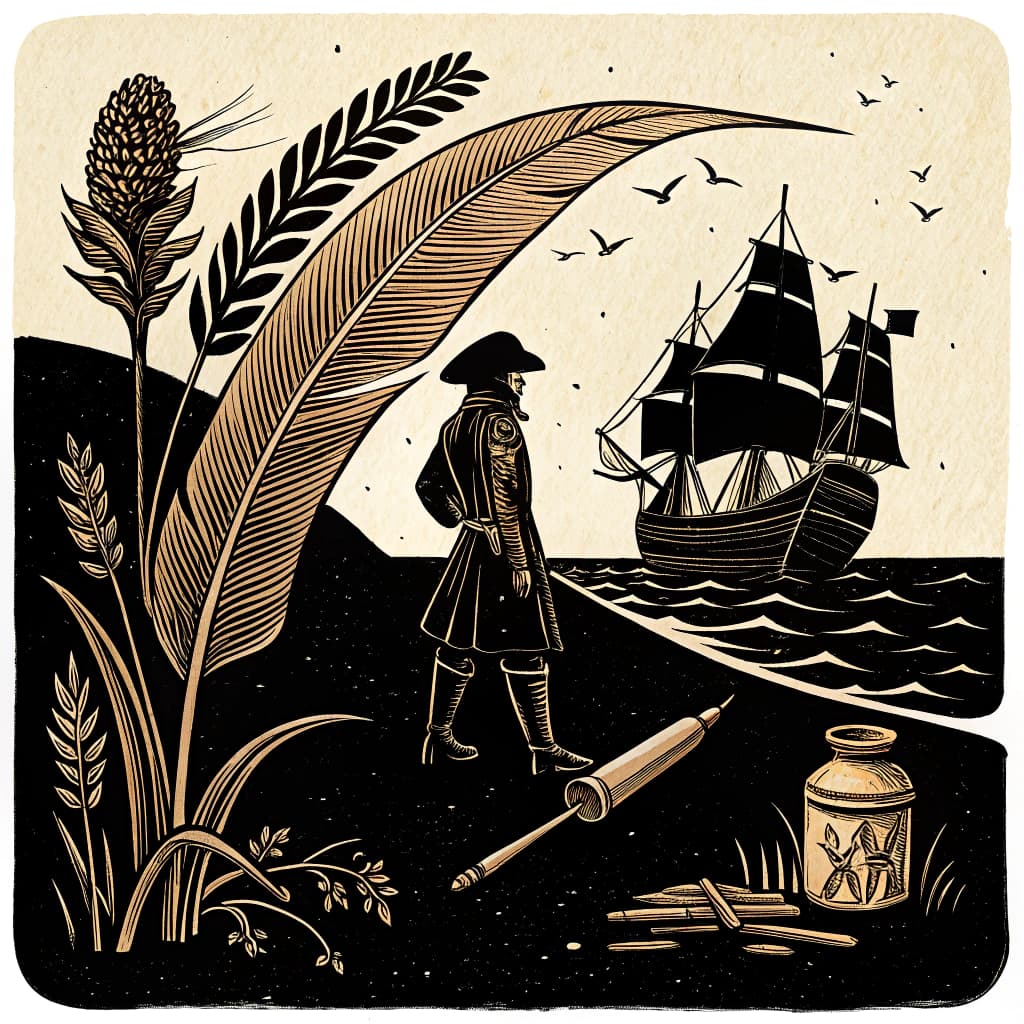
The Middle Colonies: Diversity & Trade
Examine the 'Breadbasket' colonies, known for their religious tolerance, diverse populations, and thriving trade.
TL;DR:Active learning builds spatial and critical thinking around the Middle Colonies by turning maps, images, and documents into collaborative tools. Students move beyond facts to analyze how geography, diversity, and trade shaped daily life, preparing them to recognize agency and resistance in historical records.
About This Topic
The Southern Colonies developed a distinct economy based on large-scale plantation agriculture. Students learn how the long growing season and fertile soil led to the cultivation of cash crops like tobacco, rice, and indigo. This economic model created a massive demand for labor, which led to the rise of the transatlantic slave trade and the institutionalization of slavery. The curriculum also covers the lived experiences of enslaved people and their efforts to maintain their culture and resist their condition.
This topic is essential for understanding the origins of the American economic system and the history of racial inequality. It aligns with standards requiring students to analyze the development of the slave trade. This topic particularly benefits from structured discussion and peer explanation as students carefully navigate the difficult history of forced labor and human rights.
Key Questions
- Explain why the Middle Colonies attracted a more diverse population than other regions.
- Analyze the impact of William Penn's Quaker principles on Pennsylvania's development.
- Compare the economic activities of the Middle Colonies to those of New England.
Learning Objectives
- Compare the economic activities and primary trade goods of the Middle Colonies with those of New England.
- Explain how William Penn's Quaker beliefs influenced the establishment of religious tolerance and governance in Pennsylvania.
- Analyze the factors that contributed to the greater diversity of settlers in the Middle Colonies compared to other colonial regions.
- Identify the key agricultural products that earned the Middle Colonies the nickname 'Breadbasket Colonies'.
Before You Start
Why: Students need a foundational understanding of the geographic locations and general characteristics of the three colonial regions to compare and contrast them effectively.
Why: Understanding the initial motivations and challenges of early settlements provides context for the later development and unique characteristics of the Middle Colonies.
Key Vocabulary
| Quakers | A Protestant group known for their belief in the equality of all people and their commitment to peace. They were often persecuted in England, leading many to seek refuge in America. |
| Religious Tolerance | The acceptance of different religious beliefs and practices. This was a key characteristic of the Middle Colonies, attracting people from various faiths. |
| Proprietary Colony | A colony owned and governed by an individual or a group of individuals who were granted land by the king. Pennsylvania was a proprietary colony under William Penn. |
| Cash Crop | A crop grown primarily for sale in a market, rather than for the farmer's own use. Wheat and corn were important cash crops in the Middle Colonies. |
| Artisan | A skilled craftsperson who makes or creates things by hand. Artisans were important to the economy of the Middle Colonies, producing goods for trade. |
Watch Out for These Misconceptions
Common MisconceptionSlavery only existed in the South.
What to Teach Instead
Slavery existed in all thirteen colonies, though it was most widespread and central to the economy in the South. A map-based collaborative investigation helps students see the presence of enslaved people throughout the colonies.
Common MisconceptionEnslaved people accepted their condition.
What to Teach Instead
Enslaved people resisted in many ways, from small daily acts to organized revolts and escapes. A gallery walk on resistance helps students recognize the agency and humanity of enslaved individuals.
Active Learning Ideas
See all activities→Inquiry Circle
The Cash Crop Economy
Small groups research one southern cash crop (tobacco, rice, or indigo). they create a flowchart showing the process from planting to export and explain why this crop required so much labor.
Gallery Walk
Resistance and Resilience
Stations display primary sources about how enslaved people resisted slavery (e.g., through song, family, or slowing down work). Students reflect on how these actions were forms of courage and cultural survival.
Think-Pair-Share
The Geography of Slavery
Students look at a map of the 13 colonies. They discuss why slavery became more central to the South's economy than to the North's, focusing on climate and soil types.
Real-World Connections
- Philadelphia, Pennsylvania, remains a major center for commerce and culture, reflecting its historical role as a hub for trade and diverse populations in the Middle Colonies.
- Modern-day farmers in states like Pennsylvania and New York continue to grow wheat and corn, echoing the agricultural foundations of the Middle Colonies' 'Breadbasket' economy.
- The concept of religious freedom, a cornerstone of the Middle Colonies' appeal, is a fundamental principle in the United States Constitution, protecting the rights of individuals to practice their faith.
Assessment Ideas
Provide students with a graphic organizer comparing the Middle Colonies to New England. Ask them to list two key differences in their economies and one reason for the Middle Colonies' greater population diversity.
Pose the question: 'How did William Penn's Quaker beliefs shape Pennsylvania into a unique colony?' Encourage students to cite specific examples of religious tolerance and fair treatment of Native Americans in their responses.
Present students with a list of colony characteristics (e.g., 'primarily tobacco plantations', 'strict religious laws', 'diverse settlers and trade'). Ask them to sort these characteristics into categories for the Southern, New England, and Middle Colonies.
Frequently Asked Questions
What were the main cash crops in the Southern Colonies?
How did the Southern economy lead to the growth of slavery?
What was life like for enslaved people on plantations?
How can active learning help students understand the sensitivity of the Southern Colonies and slavery?
Planning templates for Early American History
5E Model
The 5E Model structures lessons through five phases (Engage, Explore, Explain, Elaborate, and Evaluate), guiding students from curiosity to deep understanding through inquiry-based learning.
Unit PlannerThematic Unit
Organize a multi-week unit around a central theme or essential question that cuts across topics, texts, and disciplines, helping students see connections and build deeper understanding.
RubricSingle-Point Rubric
Build a single-point rubric that defines only the "meets standard" level, leaving space for teachers to document what exceeded and what fell short. Simple to create, easy for students to understand.
More in Colonial America
Jamestown: Early English Settlement
Explore the challenges and successes of the first permanent English colony, including the role of tobacco and John Rolfe.
8 methodologies
Pilgrims & Puritans: New England Life
Investigate the motivations for Puritan migration, their religious beliefs, and the development of self-governance in New England.
8 methodologies
The Southern Colonies: Plantation Economy
Study the development of the plantation system, cash crops like tobacco and rice, and the rise of the transatlantic slave trade.
8 methodologies
Life in Colonial America
Explore daily life, social classes, gender roles, and the challenges of colonial existence for different groups.
8 methodologies
Colonial Government & Early Democracy
Examine the evolution of self-governance through institutions like the Virginia House of Burgesses and town meetings.
8 methodologies
The Great Awakening & Enlightenment Ideas
Investigate the religious revival of the Great Awakening and the influence of Enlightenment thinkers on colonial thought.
8 methodologies