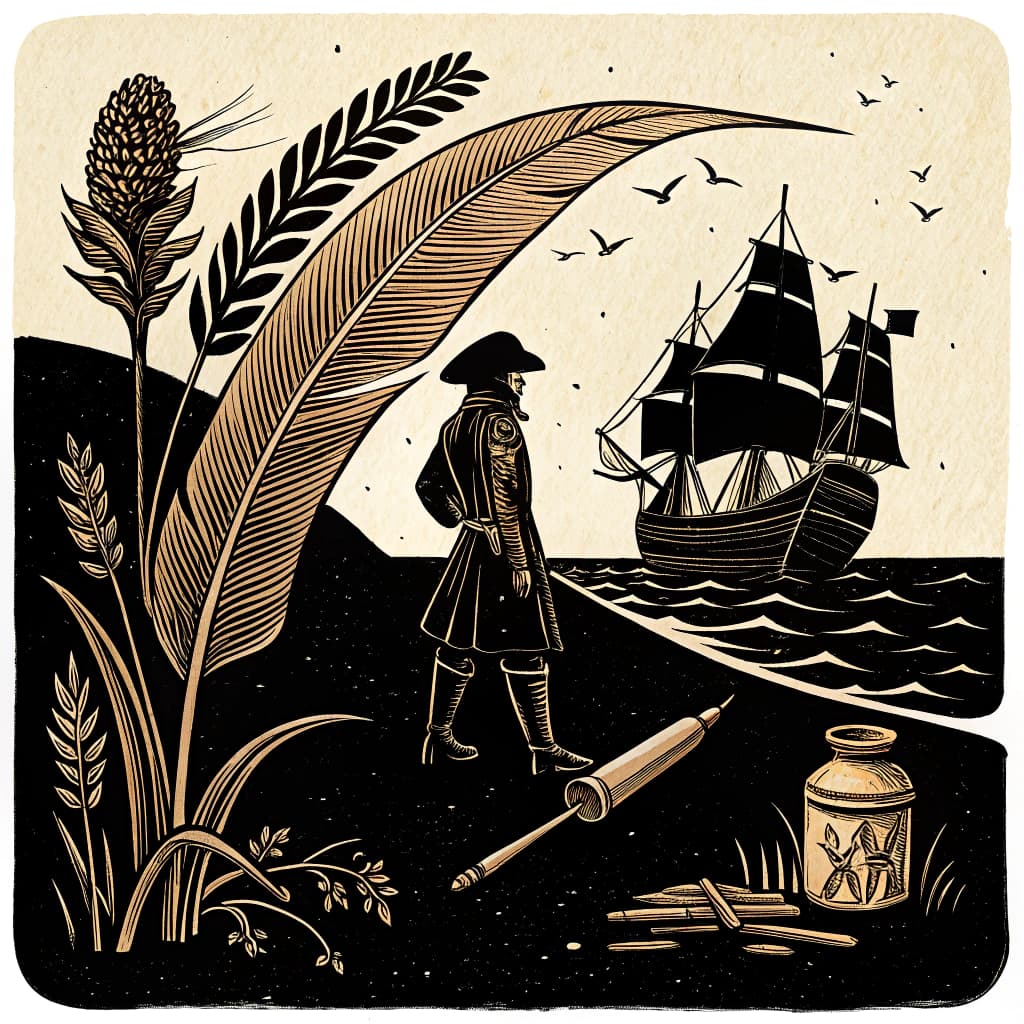
Jamestown: Early English Settlement
Explore the challenges and successes of the first permanent English colony, including the role of tobacco and John Rolfe.
TL;DR:Active learning works well for Jamestown because the colony's story is filled with real dilemmas that students can grapple with directly. When students simulate the settlers' choices or analyze primary sources, they engage with history as a series of consequential decisions rather than abstract facts.
About This Topic
Jamestown, established in May 1607 along the James River in present-day Virginia, was the first permanent English settlement in North America, and its early history is a story of near failure followed by transformation. The Virginia Company investors who funded the voyage expected quick profits from gold, but the settlers found a tidal swamp with disease-carrying mosquitoes and brackish water rather than riches. In the colony's first two years, disease, starvation, and conflict with the Powhatan Confederacy killed roughly 70 percent of arrivals.
What saved Jamestown was tobacco. John Rolfe cultivated a milder West Indian strain beginning around 1611, and by the 1620s the colony was shipping profitable quantities to England. Tobacco transformed Jamestown's labor needs, ultimately driving the expansion of indentured servitude and, beginning in 1619, the introduction of enslaved Africans. The Powhatan Confederacy, led by Chief Wahunsenacah, played a crucial role in the colony's survival that is often underappreciated: trade with the Powhatan provided food that kept the colony alive through its most precarious early years.
Students engage deeply with Jamestown through problem-solving simulations and primary source analysis that require them to weigh the factors behind both the colony's failures and its eventual survival.
Key Questions
- Analyze the environmental and social challenges faced by early Jamestown settlers.
- Explain how the cultivation of tobacco transformed the colony's economy.
- Evaluate the significance of the Powhatan Confederacy in Jamestown's survival.
Learning Objectives
- Analyze the primary environmental challenges faced by the Jamestown settlers, such as disease and water quality.
- Explain the economic impact of tobacco cultivation on Jamestown's development and labor demands.
- Evaluate the role of the Powhatan Confederacy in providing essential resources for Jamestown's survival.
- Compare the motivations of the Virginia Company investors with the daily struggles of the Jamestown colonists.
Before You Start
Why: Students need a basic understanding of the diverse societies present in North America before colonization to contextualize their interactions with the Powhatan Confederacy.
Why: Understanding the reasons European powers, like England, sought new lands and resources provides context for the Virginia Company's investment in Jamestown.
Key Vocabulary
| Settlement | A place where people establish a community, often in a new or previously uninhabited area. |
| Virginia Company | An English joint-stock company chartered by King James I in 1606. It sponsored the Jamestown settlement with the goal of making a profit. |
| Powhatan Confederacy | A group of Native American tribes in Virginia, led by Chief Wahunsenacah, who interacted with the early English settlers. |
| Tobacco | A plant whose leaves are dried and prepared for smoking or chewing. Its cultivation became crucial to Jamestown's economic survival. |
| Indentured Servitude | A labor system where people agree to work for a certain number of years in exchange for passage to a new land or other benefits. |
Watch Out for These Misconceptions
Common MisconceptionJamestown failed early on because the settlers were lazy.
What to Teach Instead
This was John Smith's characterization, but it misrepresents the situation. Many early settlers were craftsmen with skills suited to English towns rather than wilderness agriculture. They faced genuinely lethal conditions: contaminated water, unfamiliar crops, malarial mosquitoes, and a supply chain that broke down repeatedly. The Virginia Company's own planning was deeply flawed. A survival simulation helps students see how structural conditions, not just individual character, determined early outcomes.
Common MisconceptionJohn Smith and Pocahontas had a romantic relationship.
What to Teach Instead
Pocahontas (Amonute) was approximately 10 to 12 years old during her interactions with the Jamestown settlers. The romantic narrative was a 19th-century invention. The historical Pocahontas later converted to Christianity, married John Rolfe, traveled to England, and died there in 1617 at roughly age 21. Primary source analysis helps students distinguish historical fact from mythology that was created much later.
Common MisconceptionTobacco was always the plan for Jamestown.
What to Teach Instead
The Virginia Company investors expected gold and quick profits, not an agricultural export economy. Tobacco was not part of the original plan and was initially dismissed as an inferior product compared to Spanish colonial tobacco. John Rolfe's cultivation of a milder Caribbean strain was a pivot born of economic desperation. Understanding this contingency, that history could easily have gone differently, is an important historical thinking skill.
Active Learning Ideas
See all activities→Simulation Game
Survival Decisions in 1607
Groups receive a packet describing Jamestown's actual conditions: brackish water, mosquitoes, inadequate food, limited tools, and uncertain relations with the Powhatan. They must prioritize three actions from a list of options and justify their choices. The class then reviews what actually happened and discusses why the early settlers made the choices they did.
Simulation Game
Primary Source Analysis: John Smith and the Powhatan
Students read a short excerpt from John Smith's account of trade negotiations with the Powhatan and a historian's reconstruction of the Powhatan perspective on the same relationship. Using a structured annotation guide, they compare what each source emphasizes and what each leaves unexamined.
Simulation Game
Cause-and-Effect Chain: Tobacco's Transformation
Starting with Rolfe's cultivation of Caribbean tobacco, small groups trace a chain of consequences: profitability, expanded planting, increased labor needs, the headright system, indentured servitude, and the introduction of enslaved labor. Each group presents their chain and the class builds a master version on the board.
Real-World Connections
- Historians studying Jamestown use archaeological evidence and written records, similar to how forensic anthropologists analyze remains to understand past populations.
- Modern agricultural businesses, like tobacco farms in North Carolina, still deal with crop yields and market demands, echoing the economic pressures faced by early Jamestown farmers.
- The establishment of Jamestown is a foundational event for understanding the complex relationships between European colonists and Native American tribes, a theme revisited in later US history with events like westward expansion.
Assessment Ideas
Provide students with two index cards. On the first, ask them to list one major challenge Jamestown faced and one reason it was overcome. On the second, ask them to write one sentence explaining why tobacco was important to the colony's success.
Pose the question: 'Imagine you are a Jamestown settler in 1610. Write a short journal entry describing your biggest fear and your greatest hope for the colony.' Facilitate a brief class discussion comparing student entries.
Display an image of John Rolfe or a tobacco plant. Ask students to write down two sentences explaining the significance of this image to Jamestown's history. Review responses for understanding of tobacco's role.
Frequently Asked Questions
Why was Jamestown nearly a failure in its early years?
How did tobacco save Jamestown?
What role did the Powhatan Confederacy play in Jamestown's early survival?
How can active learning strategies make Jamestown more meaningful for students?
Planning templates for Early American History
5E Model
The 5E Model structures lessons through five phases (Engage, Explore, Explain, Elaborate, and Evaluate), guiding students from curiosity to deep understanding through inquiry-based learning.
Unit PlannerThematic Unit
Organize a multi-week unit around a central theme or essential question that cuts across topics, texts, and disciplines, helping students see connections and build deeper understanding.
RubricSingle-Point Rubric
Build a single-point rubric that defines only the "meets standard" level, leaving space for teachers to document what exceeded and what fell short. Simple to create, easy for students to understand.
More in Colonial America
Pilgrims & Puritans: New England Life
Investigate the motivations for Puritan migration, their religious beliefs, and the development of self-governance in New England.
8 methodologies
The Middle Colonies: Diversity & Trade
Examine the 'Breadbasket' colonies, known for their religious tolerance, diverse populations, and thriving trade.
8 methodologies
The Southern Colonies: Plantation Economy
Study the development of the plantation system, cash crops like tobacco and rice, and the rise of the transatlantic slave trade.
8 methodologies
Life in Colonial America
Explore daily life, social classes, gender roles, and the challenges of colonial existence for different groups.
8 methodologies
Colonial Government & Early Democracy
Examine the evolution of self-governance through institutions like the Virginia House of Burgesses and town meetings.
8 methodologies
The Great Awakening & Enlightenment Ideas
Investigate the religious revival of the Great Awakening and the influence of Enlightenment thinkers on colonial thought.
8 methodologies