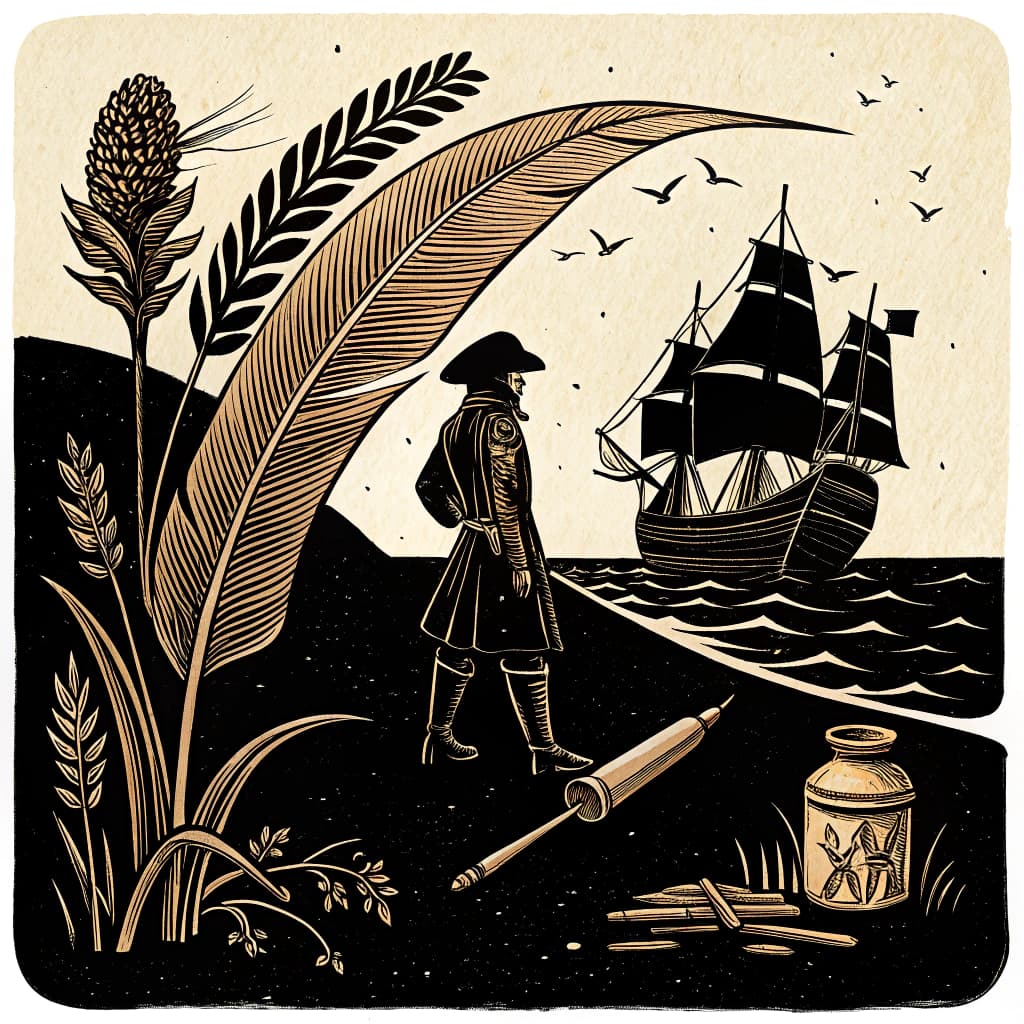
Pilgrims & Puritans: New England Life
Investigate the motivations for Puritan migration, their religious beliefs, and the development of self-governance in New England.
TL;DR:Active learning helps students grasp the complexity of the Middle Colonies, where diversity and tolerance shaped daily life. When students explore primary sources and collaborate on investigations, they move beyond textbook generalizations to see how real people built communities with different values from the rest of colonial America.
About This Topic
The Middle Colonies, New York, New Jersey, Pennsylvania, and Delaware, were known as the 'Breadbasket' because of their fertile soil and high production of grains like wheat and rye. This region was the most diverse and tolerant of the thirteen colonies, attracting settlers from many different European countries and religious backgrounds. Students examine the influence of William Penn and the Quakers, who promoted peace and fair treatment of Indigenous peoples.
This topic aligns with standards regarding the economic and cultural development of the colonies. It provides a contrast to the more homogeneous New England and Southern regions. This topic comes alive when students can physically model the patterns of diversity through a collaborative investigation into the different groups that settled there.
Key Questions
- Differentiate between the Pilgrims' and Puritans' reasons for leaving England.
- Analyze the role of religion in shaping New England's social and political structures.
- Explain how the Mayflower Compact established an early form of self-government.
Learning Objectives
- Compare the motivations of Pilgrims and Puritans for migrating to New England.
- Analyze the influence of Puritan religious beliefs on the social and political development of New England colonies.
- Explain the significance of the Mayflower Compact as an early example of self-governance in the colonies.
Before You Start
Why: Students need a basic understanding of European exploration and initial settlement attempts in North America before focusing on the specific motivations and governance of the Pilgrims and Puritans.
Why: Understanding foundational ideas of rules, laws, and leadership is necessary to grasp the significance of the Mayflower Compact.
Key Vocabulary
| Pilgrims | A group of English Separatists who sought religious freedom and established Plymouth Colony in 1620. |
| Puritans | A larger group of English Protestants who wanted to reform the Church of England and established the Massachusetts Bay Colony in 1630. |
| Mayflower Compact | An agreement signed by the Pilgrims aboard the Mayflower, establishing a basic framework for self-government in Plymouth Colony. |
| Theocracy | A system of government in which priests or religious leaders rule in the name of God or a god. |
| Self-governance | The ability of a group of people to govern themselves without external control. |
Watch Out for These Misconceptions
Common MisconceptionAll colonists were English.
What to Teach Instead
The Middle Colonies had large populations of Dutch, German, Swedish, and Irish settlers. A gallery walk showing the different languages and customs of these groups helps students visualize colonial diversity.
Common MisconceptionReligious tolerance was common in all colonies.
What to Teach Instead
The Middle Colonies were unique in their high level of tolerance compared to New England or the South. A comparative chart activity helps students see that Pennsylvania was an outlier in its time.
Active Learning Ideas
See all activities→Gallery Walk
The Breadbasket
Stations feature the different groups that settled in the Middle Colonies (Quakers, Germans, Scots-Irish, Dutch). Students collect 'identity cards' at each station to see how these groups contributed to the region's diversity.
Inquiry Circle
Penn's 'Holy Experiment'
In small groups, students read excerpts from William Penn's plan for Pennsylvania. They identify three specific ways he tried to make his colony different from others, such as religious tolerance or fair land purchases.
Think-Pair-Share
Why Diversity Matters
Students discuss why having many different types of people and religions might make a colony stronger or more difficult to govern. They share their ideas with the class to explore the concept of tolerance.
Real-World Connections
- Historians studying early American documents, like the Mayflower Compact, use their analytical skills to interpret the intentions and societal structures of the time, similar to how legal scholars analyze modern contracts.
- Community organizers today often establish foundational agreements for new groups or projects, drawing parallels to the Pilgrims' need for a governing document to ensure order and cooperation in a new land.
Assessment Ideas
Provide students with two columns labeled 'Pilgrims' and 'Puritans'. Ask them to list at least two reasons each group left England and one key difference in their goals for settlement.
Pose the question: 'How might the strict religious beliefs of the Puritans have both helped and hindered the growth of their communities?' Encourage students to share examples from their reading.
Present students with a simplified scenario of a new group needing to establish rules. Ask them to write one sentence explaining why a document like the Mayflower Compact would be necessary for their group's success.
Frequently Asked Questions
Why were the Middle Colonies called the 'Breadbasket'?
How did William Penn influence the Middle Colonies?
What made the Middle Colonies different from New England?
How can active learning help students understand the Middle Colonies?
Planning templates for Early American History
5E Model
The 5E Model structures lessons through five phases (Engage, Explore, Explain, Elaborate, and Evaluate), guiding students from curiosity to deep understanding through inquiry-based learning.
Unit PlannerThematic Unit
Organize a multi-week unit around a central theme or essential question that cuts across topics, texts, and disciplines, helping students see connections and build deeper understanding.
RubricSingle-Point Rubric
Build a single-point rubric that defines only the "meets standard" level, leaving space for teachers to document what exceeded and what fell short. Simple to create, easy for students to understand.
More in Colonial America
Jamestown: Early English Settlement
Explore the challenges and successes of the first permanent English colony, including the role of tobacco and John Rolfe.
8 methodologies
The Middle Colonies: Diversity & Trade
Examine the 'Breadbasket' colonies, known for their religious tolerance, diverse populations, and thriving trade.
8 methodologies
The Southern Colonies: Plantation Economy
Study the development of the plantation system, cash crops like tobacco and rice, and the rise of the transatlantic slave trade.
8 methodologies
Life in Colonial America
Explore daily life, social classes, gender roles, and the challenges of colonial existence for different groups.
8 methodologies
Colonial Government & Early Democracy
Examine the evolution of self-governance through institutions like the Virginia House of Burgesses and town meetings.
8 methodologies
The Great Awakening & Enlightenment Ideas
Investigate the religious revival of the Great Awakening and the influence of Enlightenment thinkers on colonial thought.
8 methodologies