United States · Common Core State Standards
2nd Grade Communities Near & Far
Second Grade Social Studies exploring local and global communities, geography skills, world cultures, and historical change over time. Children broaden their understanding of how people live and work together around the world.
01Our Community and Citizenship
Children define what a community is, compare different types of environments, and learn about the rights and responsibilities of being a good citizen.
Children learn that a community is a place where people live, work, and play together, sharing common spaces and goals.
Children compare different community settings, discovering how population density and land use make each type unique.
Students explore how individuals contribute to their community through kindness, following rules, and volunteering.
Children learn about the people who lead and serve at the local level, such as the mayor, city council members, and local police.
Students differentiate between local, state, and national leadership roles, including governors and the President of the United States.
Children explore how communities make decisions, from voting for leaders to participating in town hall meetings.
Students identify various community helpers and explain how their jobs contribute to the functioning and safety of the community.
02Geography and the Environment
Students develop map skills and learn how physical geography and climate influence how people live across the United States.
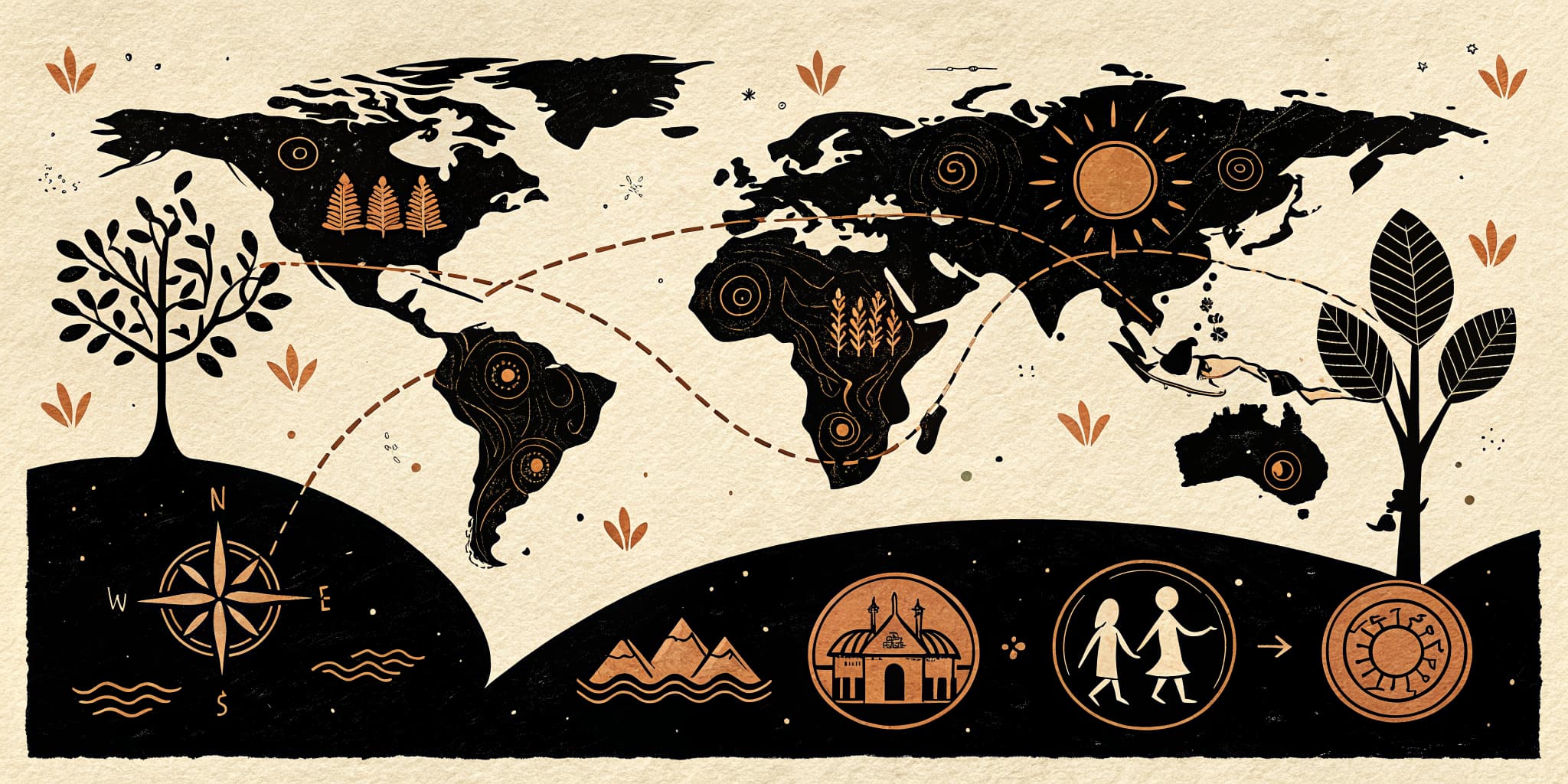
Children identify the seven continents and five oceans, understanding the large-scale layout of the Earth.
Students learn to decode maps using legends, compass roses, and cardinal directions to navigate and find locations.
Students identify mountains, plains, plateaus, rivers, and lakes, and how these features shape human settlements.
Children explore how weather patterns and natural resources like timber, water, and soil affect a community's economy.
Students investigate different weather patterns and the concept of seasons, understanding their impact on daily life and the environment.
Children learn about ways humans interact with and change their environment, both positively and negatively, and the importance of conservation.
03Working in a Community
An introduction to basic economics, focusing on producers, consumers, goods, services, and how money is used in a community.
Students distinguish between physical items people buy (goods) and work people do for others (services).
Children learn about the roles of people who make things and people who buy things in an economy.
Students explore the concept of having limited resources and how people must make choices about what they need versus what they want.
Children learn about income, banks, and the importance of saving money for future goals.
Students look at how people exchange goods and services, both in the past through bartering and today using currency.
Children explore how people specialize in certain jobs and how this leads to interdependence within a community.
Students learn about individuals who create new businesses and products, understanding their role in economic growth.
Children are introduced to the concept of taxes and how they fund public services like schools, parks, and roads.
04History: Then and Now
Students explore how technology, daily life, and the United States itself have changed over several generations.
Children learn how to use timelines and family stories to understand how their own ancestors lived.
Students compare how people sent messages in the past (letters, telegraphs) versus modern digital communication.
Children trace the development of travel from horse-drawn wagons to high-speed trains and airplanes.
Students identify key American symbols like the flag, the Statue of Liberty, and the Liberty Bell, and explain their meanings.
Students compare aspects of daily life, such as clothing, food, and housing, from historical periods to the present day.
Children learn about important historical figures who made significant contributions to their communities or the nation.
Students are introduced to the difference between primary sources (first-hand accounts) and secondary sources (interpretations of events).
Children explore how communities and societies change over time, focusing on causes and effects of these changes.
05Global Cultures
An exploration of how people in other countries live, focusing on traditions, languages, and the concept of a global community.
Students explore unique cultural practices from around the world, including food, clothing, and music.
Children discover the diversity of languages and how they are a key part of a culture's identity.
Students learn how communities around the world depend on each other for products, ideas, and help.
Students explore various holidays and festivals celebrated by different cultures worldwide, understanding their significance.
Children investigate different types of homes and shelters found in various cultures and climates, understanding adaptations.
Students explore diverse food sources and agricultural practices from different regions, understanding how food connects cultures.
Children discover various forms of artistic expression, including music, dance, and visual arts, from cultures worldwide.
Students learn about the responsibilities of being a global citizen, including respecting diversity and contributing to a peaceful world.