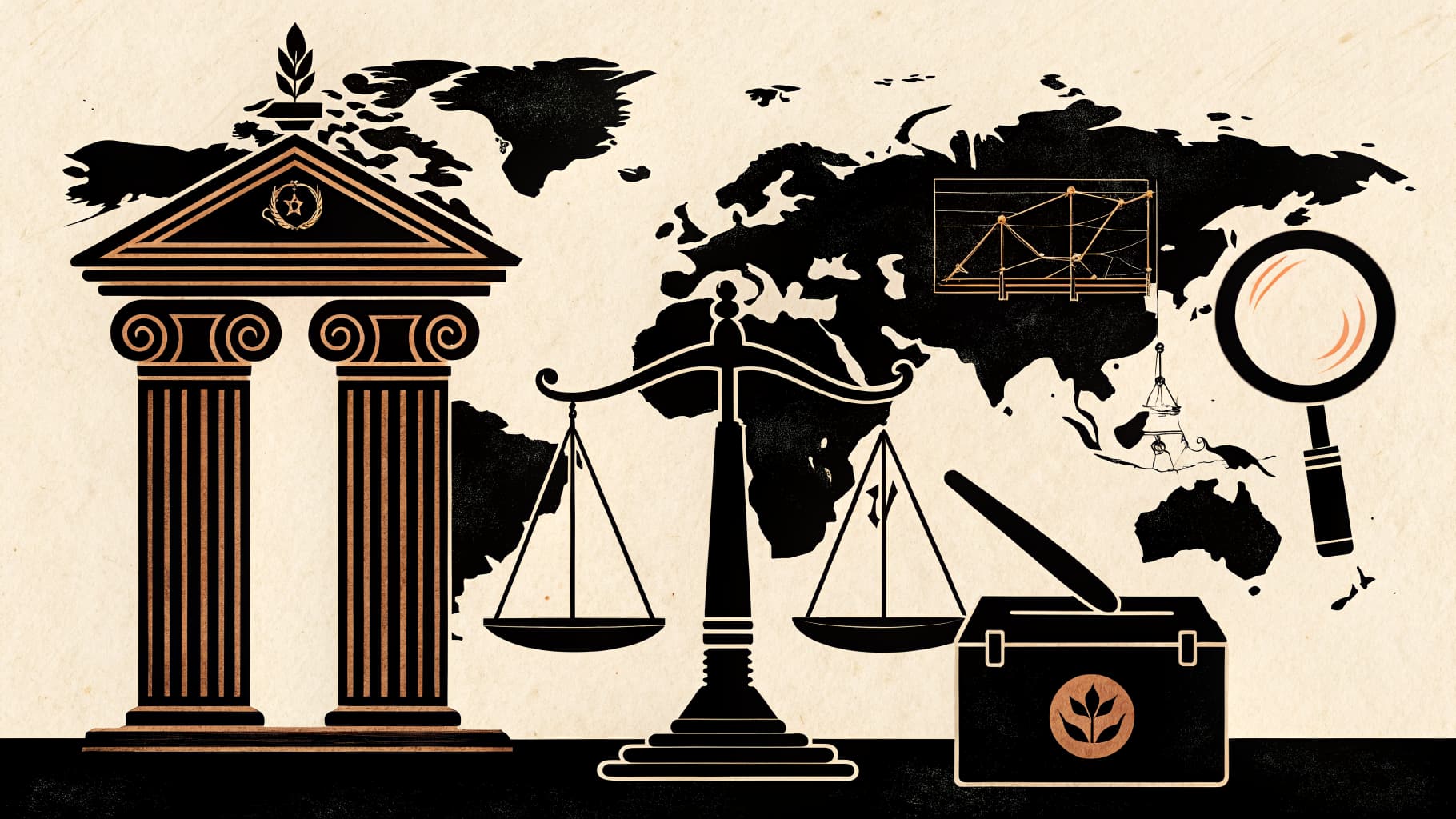
Political Theory: An Introduction
Introduce the scope and significance of political theory. Discuss how political theory helps in understanding concepts like freedom, equality, and justice.
TL;DR:Political Theory: An Introduction serves as the conceptual foundation for the second half of the syllabus. It moves students from the 'how' of government to the 'why' of political ideas. This topic covers the definition of politics, the importance of studying theory, and how ideas like freedom and equality are not just abstract terms but lived realities that shape our laws.
About This Topic
Political Theory: An Introduction serves as the conceptual foundation for the second half of the syllabus. It moves students from the 'how' of government to the 'why' of political ideas. This topic covers the definition of politics, the importance of studying theory, and how ideas like freedom and equality are not just abstract terms but lived realities that shape our laws.
Students learn to distinguish between political science as a discipline and politics as a practice. This unit encourages critical thinking about the values that underpin our society. This topic comes alive when students can physically model the patterns of political thought through collaborative brainstorming and debate.
Key Questions
- What is politics?
- Why should we study political theory?
- How do political ideas shape society?
Watch Out for These Misconceptions
Common MisconceptionPolitical theory is just a collection of old opinions with no modern use.
What to Teach Instead
Theory helps us understand current debates on reservations, free speech, and privacy. Linking a theoretical concept to a recent news headline helps students see its immediate relevance.
Common MisconceptionPolitics is only what politicians do in Parliament.
What to Teach Instead
Politics involves any collective decision-making and the struggle over resources and values. A 'brainstorming map' of politics in a school setting can broaden this perspective.
Active Learning Ideas
See all activities→Inquiry Circle
Politics in Daily Life
Groups identify 'political' aspects of non-political settings (e.g., family, school, sports). They present how power, negotiation, and decision-making operate in these everyday spaces.
Think-Pair-Share
Is Politics 'Dirty'?
Students reflect on the common perception of politics as corrupt versus its role as a tool for social change. They share their views in pairs and try to redefine 'politics' in a positive sense.
Gallery Walk
Political Thinkers
Stations feature quotes from thinkers like Kautilya, Gandhi, and Marx. Students move around to identify which core value (justice, peace, power) each thinker is emphasizing.
Frequently Asked Questions
Why should science students or commerce students study political theory?
How can active learning help students understand political theory?
What is the difference between Political Science and Political Theory?
How do political ideas change over time?
More in Introduction to Political Theory
Freedom and Liberty
Explore the concept of freedom, distinguishing between negative and positive liberty. Analyze the harm principle and the importance of freedom of expression.
8 methodologies
Equality
Examine the multifaceted nature of equality, including political, social, and economic dimensions. Discuss affirmative action and its role in promoting equality.
8 methodologies
Social Justice
Understand the principles of social justice and John Rawls' theory of justice. Evaluate the concept of proportional justice and the pursuit of a just society.
8 methodologies