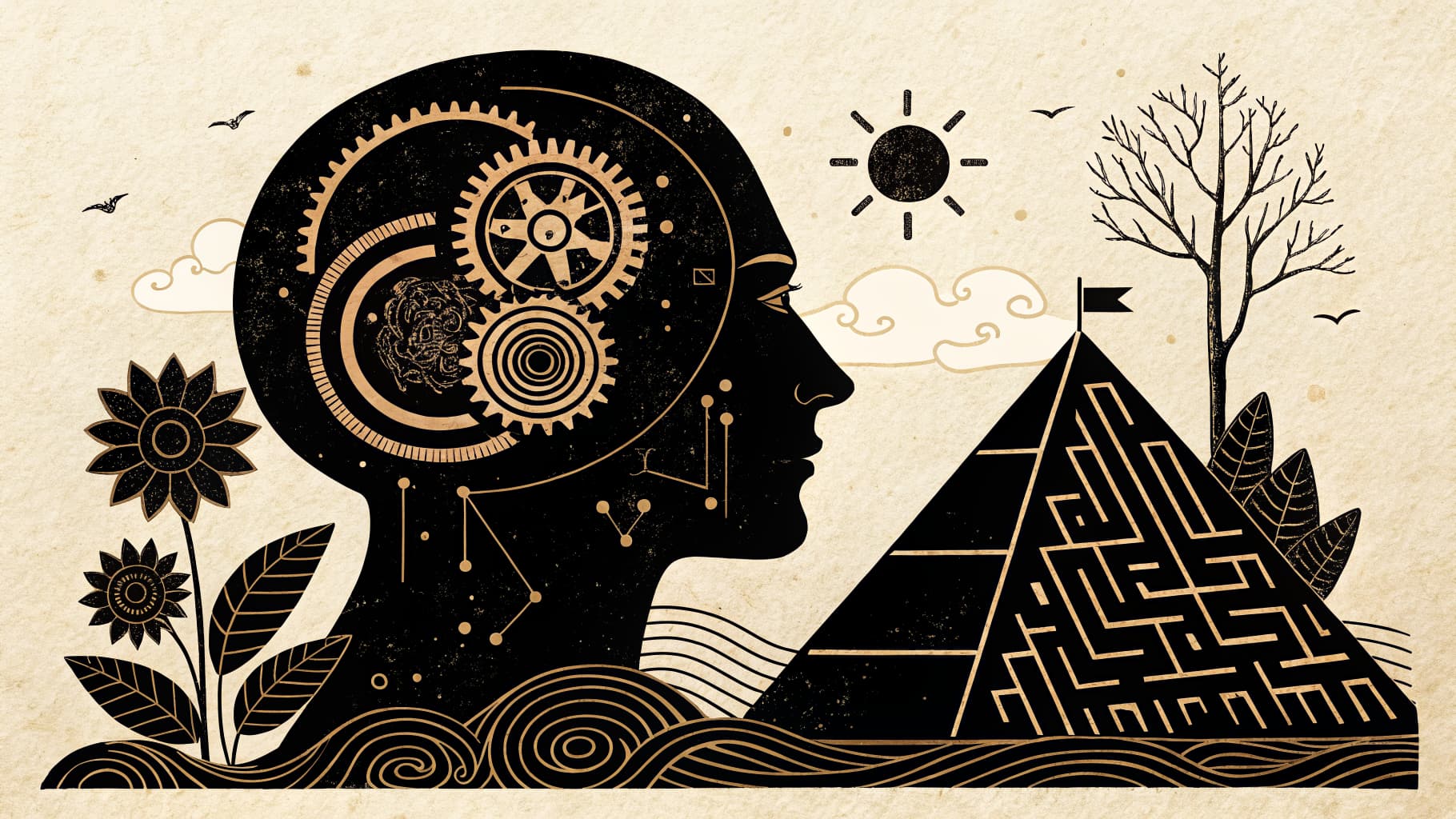
Free Will and Determinism
This topic explores the extent to which human behaviour is self-determined or driven by internal and external forces. Students will evaluate hard and soft determinism across different psychological approaches.
TL;DR:The Free Will and Determinism debate is a cornerstone of psychological philosophy. Students explore the tension between the belief that we are self-directed agents and the scientific pursuit of identifying the causes of behaviour. The AQA specification requires an understanding of various forms of determinism, including biological, environmental, and psychic, as well as the distinction between hard and soft determinism.
About This Topic
The Free Will and Determinism debate is a cornerstone of psychological philosophy. Students explore the tension between the belief that we are self-directed agents and the scientific pursuit of identifying the causes of behaviour. The AQA specification requires an understanding of various forms of determinism, including biological, environmental, and psychic, as well as the distinction between hard and soft determinism.
This topic is highly relevant for Year 13 students as it forces them to evaluate the very foundations of the psychological approaches they have studied since Year 12. It also has significant real-world implications for the British legal system, where the concept of moral responsibility relies heavily on the assumption of free will. Students grasp this concept faster through structured discussion and peer explanation where they can test the logic of 'cause and effect' against their own experiences.
Key Questions
- Are human beings truly free to choose their actions?
- What are the implications of biological determinism?
- How does the legal system view free will and moral responsibility?
Watch Out for These Misconceptions
Common MisconceptionSoft determinism is just a 'weak' version of free will.
What to Teach Instead
Soft determinism is actually a middle ground that suggests all behaviour has a cause, but humans have the conscious mental control to choose how to act within those constraints. Using a think-pair-share approach helps students distinguish between 'having no choice' and 'having limited choices'.
Common MisconceptionIf we accept determinism, we can't punish criminals.
What to Teach Instead
Even if behaviour is determined, the legal system often uses punishment as a 'zeitgeber' or environmental deterrent. Structured debates help students see that determinism and social order can coexist, even if the philosophical justification changes.
Active Learning Ideas
See all activities→Mock Trial
The Determinism Defence
Students act out a courtroom scenario where a defendant claims their crime was determined by biological or environmental factors. The 'prosecution' must argue for free will and moral responsibility, while the 'jury' decides the verdict based on psychological evidence.
Stations Rotation
Types of Determinism
Set up stations for Biological, Environmental, and Psychic determinism. At each station, small groups must find one piece of research evidence that supports that view and one argument against it, rotating every ten minutes.
Inquiry Circle
The Libet Experiment
Students work in pairs to analyse the findings of Libet's brain activity studies. They must create a visual flow-chart that explains how the results support a determinist view and then write a counter-argument from a free-will perspective.
Frequently Asked Questions
What is the difference between hard and soft determinism?
How does biological determinism explain behaviour?
What are the implications of the free will debate for the legal system?
What are the best hands-on strategies for teaching free will and determinism?
More in Issues and Debates in Psychology
Gender and Culture in Psychology
Students examine alpha and beta bias in psychological research. They will also evaluate ethnocentrism and the importance of cultural relativism.
8 methodologies
The Nature-Nurture Debate
Students investigate the relative importance of heredity and environment in determining behaviour. The interactionist approach is highlighted as a modern synthesis of this classic debate.
8 methodologies