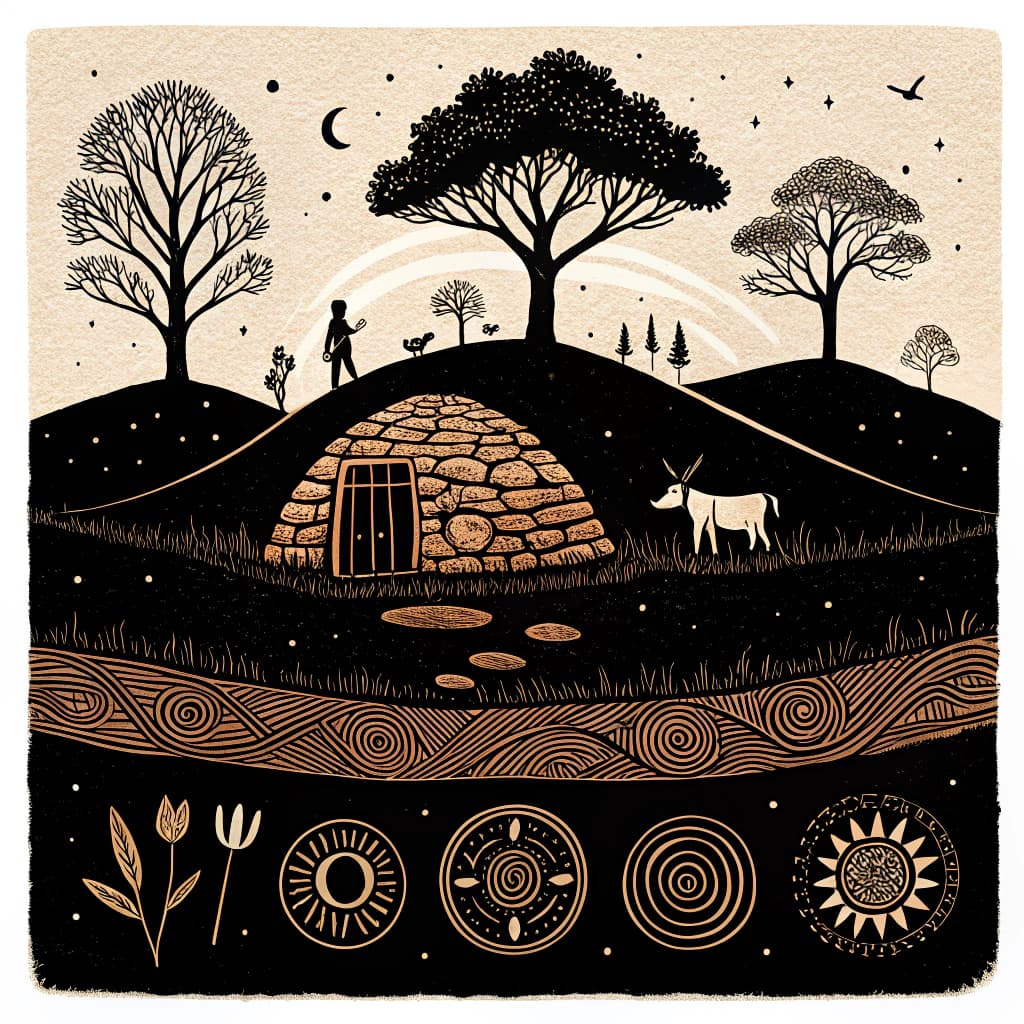
Celtic Art & Identity
Exploring the beautiful swirling patterns of Celtic art found on jewellery, weapons, and everyday objects, and its connection to tribal identity.
TL;DR:Active learning works for this topic because Druids were oral tradition keepers who relied on memory and symbolic expression rather than written records. Having students simulate their methods, analyze artifacts, and debate interpretations mirrors how knowledge was shared and contested in Iron Age communities.
About This Topic
The Druids were the mysterious religious leaders, judges, and lore-keepers of the Iron Age. Because they didn't write anything down, most of what we know comes from their enemies (the Romans) or from archaeology. This topic explores Iron Age beliefs in the spirits of nature and the importance of sacred places like groves, rivers, and bogs. It is a key part of the National Curriculum's focus on Iron Age religion and society.
Students investigate the role of the Druid as a person who spent 20 years learning all the tribe's stories and laws by heart. They look at the 'Lindow Man' (a bog body) and what it tells us about ritual sacrifice. This topic comes alive when students can physically model the 'oral tradition' and the ritual of giving gifts to nature.
Key Questions
- Analyze the distinctive characteristics that define Celtic art.
- Explain how Celtic art was used to express tribal identity and status.
- Evaluate the significance of objects like the 'Torc' necklace in Iron Age society.
Learning Objectives
- Analyze the distinctive swirling patterns and motifs characteristic of Celtic art.
- Explain how specific artistic elements, such as zoomorphic designs, conveyed meaning and status within Celtic tribes.
- Evaluate the cultural significance of the 'Torc' necklace as a symbol of wealth, power, and identity in Iron Age Britain.
- Compare the artistic styles found on different types of Celtic artifacts, including weaponry and personal adornments.
- Classify objects based on their likely function and the tribal affiliation suggested by their decoration.
Before You Start
Why: Students need a basic understanding of the time period and the concept of tribes to contextualize Celtic art and identity.
Why: Understanding that metal can be shaped, twisted, and decorated is foundational to appreciating the craftsmanship of Celtic objects.
Key Vocabulary
| Zoomorphic | Artistic designs that feature animal shapes or animal-like forms, often stylized and intertwined, common in Celtic art. |
| La Tène style | The main style of Celtic art that flourished from about 500 BCE to the Roman conquest, characterized by curvilinear patterns, spirals, and stylized animal motifs. |
| Torc | A rigid neck ring, typically made of twisted metal, worn by wealthy and high-status individuals in the Iron Age, often associated with Celtic culture. |
| Repoussé | A metalworking technique where a malleable piece of metal is hammered from the reverse side to create a design in relief on the front. |
Watch Out for These Misconceptions
Common MisconceptionDruids were just 'wizards' who lived in the woods.
What to Teach Instead
Druids were the most educated people in society. they were lawyers, doctors, and advisors to kings. Emphasizing their role in 'law and order' helps students see them as a vital part of the tribal government.
Common MisconceptionWe know exactly what Druids believed.
What to Teach Instead
Because they forbid writing, we only have 'second-hand' accounts from Romans who wanted to make them look bad. Discussing 'bias' in history helps students understand why we have to be careful with Roman descriptions of Druids.
Active Learning Ideas
See all activities→Simulation Game
The Memory Challenge
To understand the Druids' training, the teacher tells a long, complex 'tribal law' or story only once. Students must work in small groups to see how much they can remember and repeat perfectly to the 'Chief'.
Think-Pair-Share
Sacred Nature
Students think of a place in nature that feels 'special' (a big tree, a hidden stream). They share with a partner and discuss why an Iron Age person might believe a spirit lived there and what 'gift' they might leave for it.
Inquiry Circle
The Bog Body Mystery
Groups are given 'clues' about Lindow Man (his last meal, his groomed beard, the way he died). They must decide: Was he a victim of a crime, or was he a special sacrifice to the gods? They present their 'verdict' with evidence.
Real-World Connections
- Museum curators at the British Museum and National Museum of Scotland study Celtic artifacts daily, using their knowledge of art styles and materials to authenticate objects and interpret their historical context for public exhibitions.
- Jewellery designers today are inspired by historical patterns, sometimes incorporating Celtic motifs into modern necklaces, bracelets, and earrings sold in high street shops and online marketplaces.
- Archaeologists working on Iron Age sites in Britain, such as Maiden Castle, meticulously excavate and analyze objects like torcs and decorated shields to understand the social structures and artistic achievements of ancient Celtic communities.
Assessment Ideas
Provide students with images of two different Celtic artifacts. Ask them to write one sentence identifying a key artistic feature of each and one sentence explaining what the object might have communicated about its owner's status or identity.
Display a large image of a torc. Ask students to point to or verbally identify at least two characteristics of Celtic art visible on the object. Follow up by asking: 'Why might someone wear something like this?'
Facilitate a class discussion using the prompt: 'Imagine you are a Celtic warrior. How would the art on your shield or sword help other warriors identify which tribe you belong to and show your bravery?' Encourage students to refer to specific art styles.
Frequently Asked Questions
Why didn't the Druids write anything down?
What is a 'Bog Body'?
What are the best hands-on strategies for teaching about Druids?
Did Druids really wear white robes?
Planning templates for History
5E Model
The 5E Model structures lessons through five phases (Engage, Explore, Explain, Elaborate, and Evaluate), guiding students from curiosity to deep understanding through inquiry-based learning.
Unit PlannerThematic Unit
Organize a multi-week unit around a central theme or essential question that cuts across topics, texts, and disciplines, helping students see connections and build deeper understanding.
RubricSingle-Point Rubric
Build a single-point rubric that defines only the "meets standard" level, leaving space for teachers to document what exceeded and what fell short. Simple to create, easy for students to understand.
More in The Iron Age: Hillforts and Warriors
Iron: The Superior Metal
Learning why iron replaced bronze as the dominant metal and how its properties changed farming, tools, and warfare.
8 methodologies
Life in an Iron Age Hillfort
Studying the massive earthworks like Maiden Castle and their role as fortified tribal centres, exploring their defensive and social functions.
8 methodologies
Iron Age Farming & Food
Investigating agricultural practices in the Iron Age, including crop rotation, livestock management, and the types of food consumed.
8 methodologies
The Druids: Priests & Power
Investigating the mysterious religious leaders of the Iron Age, the Druids, and their significant role in society, law, and spiritual beliefs.
8 methodologies
Iron Age Beliefs & Rituals
Exploring the spiritual world of Iron Age Britons, including their reverence for nature, water offerings, and the significance of bog bodies.
8 methodologies
The Arrival of the Romans
The end of the Iron Age and the first contacts between Britain and the Roman Empire, leading to significant cultural and political shifts.
8 methodologies