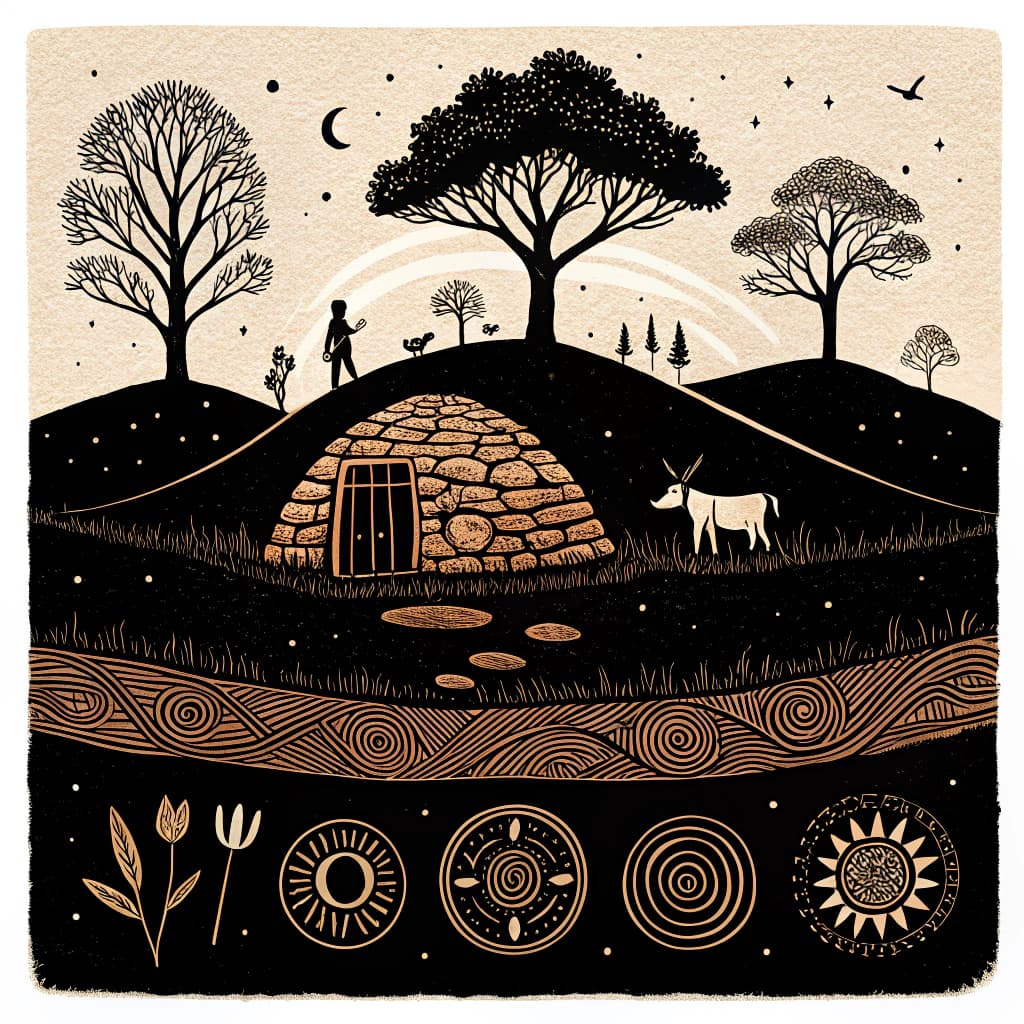
Burial Mounds & Ritual Hoards
Investigating why people buried valuable bronze items in bogs or rivers and built 'barrows' for the dead, exploring beliefs and rituals.
TL;DR:Active learning builds understanding of Bronze Age burial practices by letting students manipulate physical evidence. Handling replicas and mapping real data helps them grasp abstract ideas like social hierarchy and spiritual beliefs through concrete experience.
About This Topic
Bronze Age communities in Britain built round barrows, mound-like tombs for their dead, often placing grave goods such as bronze weapons, jewellery, and pottery inside. These items suggest beliefs in an afterlife and reveal social status through their quality and quantity. People also created ritual hoards by burying valuable bronze objects in bogs, rivers, and fields. Students hypothesize reasons for these deposits, such as offerings to gods, and analyze grave goods to understand rituals and hierarchy.
This topic supports the KS2 National Curriculum on Stone Age to Iron Age Britain, with emphasis on burial practices and beliefs. Children differentiate Neolithic long barrows from Bronze Age round ones, noting shifts linked to metalworking and new customs. Through evidence from archaeology, they practice hypothesizing, interpreting sources, and building arguments about past lives.
Active learning suits this topic well. When students handle replica artefacts, map hoard sites, or role-play rituals, they engage directly with evidence. This makes abstract beliefs tangible, encourages collaborative debate, and helps children retain concepts through personal connection.
Key Questions
- Hypothesize the reasons behind burying valuable bronze objects in specific locations.
- Analyze what grave goods found in barrows reveal about a person's status and beliefs.
- Differentiate between Neolithic and Bronze Age burial practices, noting changes.
Learning Objectives
- Compare the types and placement of grave goods found in Neolithic long barrows and Bronze Age round barrows.
- Analyze archaeological evidence from burial mounds and hoards to infer Bronze Age beliefs about the afterlife and social status.
- Hypothesize the potential ritualistic or practical reasons for depositing valuable bronze objects in bogs and rivers.
- Differentiate between the construction and purpose of Neolithic long barrows and Bronze Age round barrows.
Before You Start
Why: Students need a basic understanding of early human societies and their material culture before exploring Bronze Age developments.
Why: Understanding the shift towards settled life and the development of new technologies provides context for the emergence of more complex burial practices.
Key Vocabulary
| Round barrow | A prehistoric burial mound, typically circular, built during the Bronze Age to cover graves. |
| Grave goods | Objects placed in a burial, such as tools, weapons, or ornaments, believed to be useful in the afterlife or to signify status. |
| Ritual hoard | A collection of valuable objects deliberately buried in a specific location, often a bog or river, possibly as an offering. |
| Archaeologist | A scientist who studies human history and prehistory by excavating sites and analyzing artifacts and other physical remains. |
Watch Out for These Misconceptions
Common MisconceptionBronze Age people buried hoards because they lost them accidentally.
What to Teach Instead
Hoards appear in specific ritual locations like rivers, with no signs of retrieval. Hands-on mapping activities reveal patterns tied to sacred sites, helping students test hypotheses against evidence through group discussion.
Common MisconceptionEveryone in the Bronze Age was buried in barrows with rich grave goods.
What to Teach Instead
Only high-status individuals received such burials; most left no trace. Sorting replica artefacts in stations lets students compare goods and infer social differences, correcting ideas via peer evidence-sharing.
Common MisconceptionRitual deposits had no spiritual meaning; they were just practical storage.
What to Teach Instead
Patterns and object types point to beliefs in gods or ancestors. Role-play debates encourage students to weigh evidence collaboratively, shifting focus from modern views to ancient worldviews.
Active Learning Ideas
See all activities→Mystery Object
Artefact Sorting: Grave Goods Station
Supply replica bronze axes, pots, and beads. In small groups, students sort items into high-status and everyday categories based on material and decoration. Groups present evidence from photos of real finds to justify choices, then compare with class.
Mystery Object
Mapping Task: Hoard Patterns
Provide outline maps of Britain marked with river and bog sites. Pairs plot known hoard locations using provided coordinates, note patterns, and hypothesize reasons like offerings to water spirits. Share maps in whole-class discussion.
Mystery Object
Model Building: Barrow Construction
Using clay or sand, small groups construct a mini round barrow with a central burial pit and added grave goods. Label features and explain choices based on archaeological evidence. Display models for peer gallery walk.
Real-World Connections
- Museum curators, like those at the British Museum, analyze and interpret artifacts from burial sites to piece together the lives and beliefs of ancient peoples, making this history accessible to the public.
- Archaeological survey teams use ground-penetrating radar and metal detectors to locate potential burial mounds and hoards, similar to how treasure hunters might search for lost items, though with scientific methods.
- Conservationists work to protect ancient sites, including burial mounds and bogs, from damage, recognizing their importance as historical records and natural habitats.
Assessment Ideas
Present students with images of different grave goods (e.g., a bronze dagger, a pottery vessel, simple beads). Ask: 'If you found these in a barrow, what might they tell you about the person buried there? How might the number and quality of items change your idea?'
Give each student a card with either 'Burial Mound' or 'Ritual Hoard' written on it. Ask them to write two sentences explaining why someone might have created this and one difference between it and the other type of deposit.
Show students two simple diagrams, one of a long barrow and one of a round barrow. Ask them to label each and write one key difference in purpose or time period. Collect and review for understanding of the shift in practices.
Frequently Asked Questions
What do Bronze Age barrows reveal about burial beliefs?
Why did Bronze Age people bury bronze in bogs and rivers?
How can active learning help Year 3 students understand Bronze Age rituals?
How did Bronze Age burials differ from Neolithic ones?
Planning templates for History
5E Model
The 5E Model structures lessons through five phases (Engage, Explore, Explain, Elaborate, and Evaluate), guiding students from curiosity to deep understanding through inquiry-based learning.
Unit PlannerThematic Unit
Organize a multi-week unit around a central theme or essential question that cuts across topics, texts, and disciplines, helping students see connections and build deeper understanding.
RubricSingle-Point Rubric
Build a single-point rubric that defines only the "meets standard" level, leaving space for teachers to document what exceeded and what fell short. Simple to create, easy for students to understand.
More in The Bronze Age: Metal and Magic
The Beaker People: New Arrivals
Learning about the new arrivals in Britain, their distinctive pottery, and how their culture influenced existing British societies.
8 methodologies
Smelting Bronze: A New Technology
Understanding the complex process of mixing copper and tin to create the much stronger alloy, bronze, and its technological implications.
8 methodologies
Bronze Age Craftsmen & Status
Exploring the role of skilled metalworkers (smiths) in Bronze Age society and how their craft contributed to social hierarchy and power.
8 methodologies
Bronze Age Trade Routes
Exploring how the demand for tin and copper created extensive trade networks across Britain and Europe, leading to cultural exchange.
8 methodologies
Bronze Age Roundhouses & Villages
Examining the design and construction of Bronze Age roundhouses and the layout of their settlements, understanding family and community life.
8 methodologies
Bronze Age Warfare & Weapons
Exploring the development of bronze weapons like swords and spears, and their impact on warfare and social power.
8 methodologies