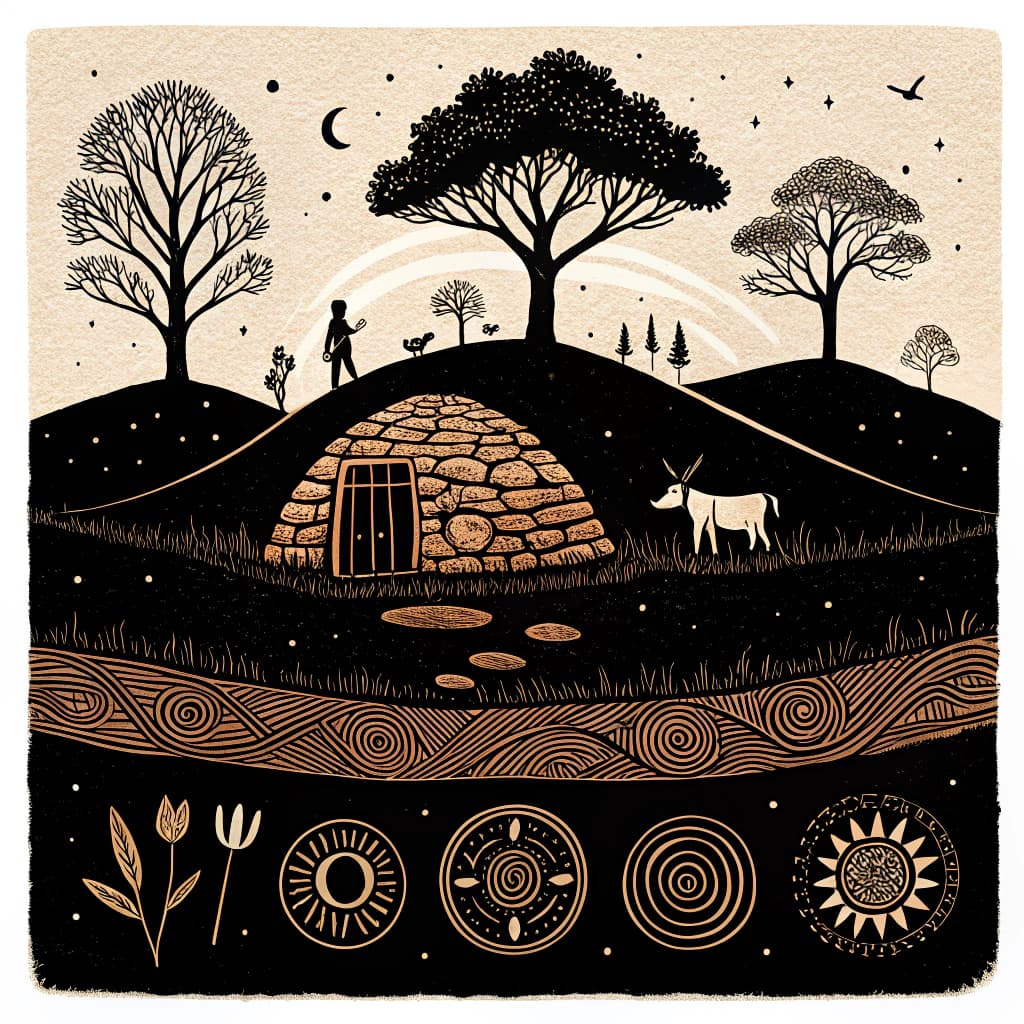
Bronze Age Roundhouses & Villages
Examining the design and construction of Bronze Age roundhouses and the layout of their settlements, understanding family and community life.
TL;DR:Active learning works for this topic because students need to interpret physical evidence from the past, not just memorize facts. Handling replica artifacts or examining real barrow maps engages spatial and analytical thinking, which static textbooks cannot do.
About This Topic
Bronze Age people had complex beliefs about death and the afterlife, which we can see through their burial mounds (barrows) and the 'hoards' of treasure they left in the ground. This topic explores the shift from the communal 'long barrows' of the Stone Age to the individual 'round barrows' of the Bronze Age. It is a key part of the National Curriculum's focus on beliefs and burial practices.
Students investigate 'grave goods', the items buried with people to take to the next world, and what they tell us about a person's status. They also look at 'votive offerings', where valuable bronze swords or shields were thrown into rivers or bogs as gifts to the gods. This topic comes alive when students can physically model the 'ritual' of a burial or the selection of items for a hoard.
Key Questions
- Construct a model or drawing of a typical Bronze Age roundhouse, explaining its features.
- Analyze how the design of roundhouses met the needs of Bronze Age families.
- Compare the structure of Bronze Age villages with earlier Neolithic settlements.
Learning Objectives
- Construct a model or drawing of a typical Bronze Age roundhouse, labeling key features.
- Explain how the design of Bronze Age roundhouses met the daily needs of families, such as for shelter and cooking.
- Compare the structural elements and layout of Bronze Age villages with those of earlier Neolithic settlements.
- Analyze the function of different areas within a Bronze Age roundhouse based on archaeological evidence.
Before You Start
Why: Students need to have a basic understanding of earlier settled life and dwelling types to compare them with Bronze Age structures.
Why: Understanding basic properties of materials like wood, mud, and straw helps students grasp how roundhouses were constructed and why certain materials were used.
Key Vocabulary
| Roundhouse | A circular dwelling common in Bronze Age Britain, typically built with a timber frame and wattle and daub walls, often with a thatched roof. |
| Wattle and daub | A building material used for walls, made by weaving thin branches (wattle) and then covering them with a sticky mixture of mud, clay, and straw (daub). |
| Thatch | A roofing material made from dried vegetation, such as straw or reeds, layered thickly to provide insulation and waterproofing. |
| Settlement | A place where people establish a community, including houses, storage areas, and possibly defensive features. |
| Post holes | Holes dug into the ground to hold upright wooden posts, which formed the structural framework for buildings like roundhouses. |
Watch Out for These Misconceptions
Common MisconceptionPeople buried treasure just to keep it safe.
What to Teach Instead
While some hoards were for safety, many items were broken or thrown into deep water where they couldn't be retrieved. This suggests a religious 'sacrifice' rather than a 'bank'. Discussing 'giving something up' to the gods helps students understand ritual behavior.
Common MisconceptionAll Bronze Age people were buried in big mounds.
What to Teach Instead
Barrows were usually for important or wealthy people. Most ordinary people were buried in simpler graves or cremated. Comparing a 'rich' barrow to a 'simple' grave helps students understand social hierarchy.
Active Learning Ideas
See all activities→Inquiry Circle
The Hoard Mystery
Students are shown a 'hoard' (a box of replica bronze items found in a bog). They must work in groups to decide: Was it hidden from enemies? Was it a shopkeeper's stock? Or was it a gift to a water god? They must use clues like 'the swords were broken on purpose' to decide.
Gallery Walk
Barrows of Britain
Images of different barrows (Bush Barrow, Mold Gold Cape burial) are displayed. Students move around to see what was found inside and 'rank' the people from 'most powerful' to 'least powerful' based on their grave goods.
Think-Pair-Share
What Would You Take?
If you believed you were going to another world and could only take three things to show who you were, what would they be? Students think, share with a partner, and discuss how this helps us understand Bronze Age 'status'.
Real-World Connections
- Architectural historians study ancient building techniques, like those used in roundhouses, to understand how early societies adapted to their environment and developed new technologies.
- Archaeologists excavating Bronze Age sites, such as those found in Orkney, Scotland, use evidence from post holes and hearths to reconstruct the layout and daily life of ancient villages.
Assessment Ideas
Provide students with a diagram of a roundhouse with blank labels. Ask them to label at least four key features (e.g., roof, walls, doorway, hearth) and write one sentence explaining the purpose of one labeled feature.
Pose the question: 'Imagine you are a child living in a Bronze Age roundhouse. What would be the best and worst parts of your home?' Encourage students to refer to specific features of the roundhouse design in their answers.
Ask students to draw a simple comparison between a Neolithic longhouse and a Bronze Age roundhouse, listing one key difference in their structure or layout on the back of their drawing.
Frequently Asked Questions
What is a 'votive offering'?
Why did they build mounds over the dead?
How can active learning help students understand burial practices?
What was the 'Mold Gold Cape'?
Planning templates for History
5E Model
The 5E Model structures lessons through five phases (Engage, Explore, Explain, Elaborate, and Evaluate), guiding students from curiosity to deep understanding through inquiry-based learning.
Unit PlannerThematic Unit
Organize a multi-week unit around a central theme or essential question that cuts across topics, texts, and disciplines, helping students see connections and build deeper understanding.
RubricSingle-Point Rubric
Build a single-point rubric that defines only the "meets standard" level, leaving space for teachers to document what exceeded and what fell short. Simple to create, easy for students to understand.
More in The Bronze Age: Metal and Magic
The Beaker People: New Arrivals
Learning about the new arrivals in Britain, their distinctive pottery, and how their culture influenced existing British societies.
8 methodologies
Smelting Bronze: A New Technology
Understanding the complex process of mixing copper and tin to create the much stronger alloy, bronze, and its technological implications.
8 methodologies
Bronze Age Craftsmen & Status
Exploring the role of skilled metalworkers (smiths) in Bronze Age society and how their craft contributed to social hierarchy and power.
8 methodologies
Bronze Age Trade Routes
Exploring how the demand for tin and copper created extensive trade networks across Britain and Europe, leading to cultural exchange.
8 methodologies
Burial Mounds & Ritual Hoards
Investigating why people buried valuable bronze items in bogs or rivers and built 'barrows' for the dead, exploring beliefs and rituals.
8 methodologies
Bronze Age Warfare & Weapons
Exploring the development of bronze weapons like swords and spears, and their impact on warfare and social power.
8 methodologies