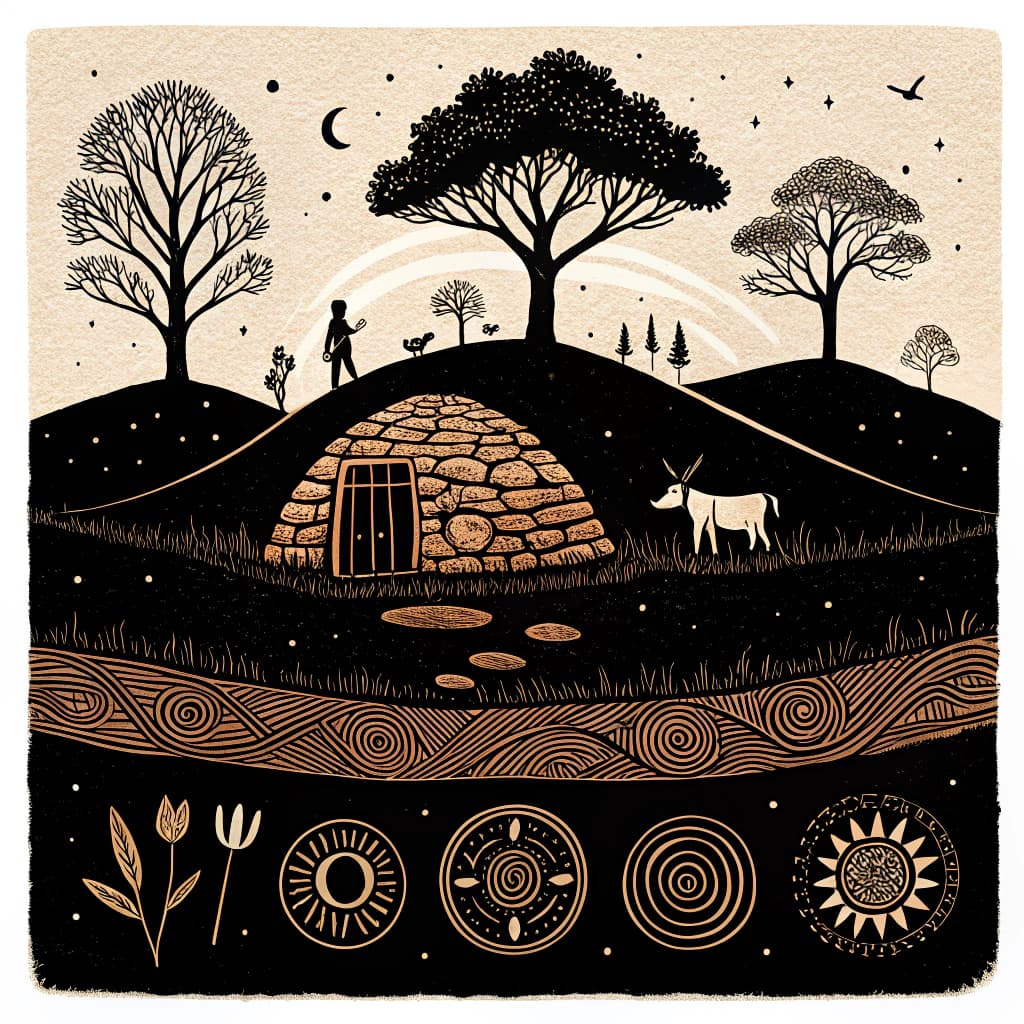
Bronze Age Trade Routes
Exploring how the demand for tin and copper created extensive trade networks across Britain and Europe, leading to cultural exchange.
TL;DR:Active learning works for this topic because Year 3 students learn best by touching, building, and moving. Handling real materials and acting out daily life in a roundhouse helps them connect abstract ideas about the past to their own experiences.
About This Topic
The Bronze Age roundhouse was a masterpiece of prehistoric design. This topic explores how families lived in these circular homes, which were built using timber posts, wattle-and-daub walls, and thick thatched roofs. For Year 3, this provides a wonderful opportunity to compare modern homes with those of the past, looking at materials, heat, and space.
Students investigate the 'zoning' of a roundhouse, where people slept, where they cooked, and where they kept animals. They learn how the circular shape was excellent for keeping heat in and resisting wind. This topic connects to the Design and Technology curriculum through the study of structures. Students grasp this concept faster through structured discussion and peer explanation of why a circle might be better than a square for a prehistoric house.
Key Questions
- Analyze the challenges and methods of long-distance travel and trade in the Bronze Age.
- Differentiate the types of goods exchanged beyond just metals.
- Explain how trade contributed to the wealth and influence of certain communities.
Learning Objectives
- Analyze the geographical challenges of transporting goods across Britain and Europe during the Bronze Age.
- Identify at least three types of goods exchanged between communities, beyond just tin and copper.
- Explain how access to valuable trade goods contributed to the power and status of certain Bronze Age settlements.
- Compare the methods of Bronze Age sea and land travel with modern transportation techniques.
Before You Start
Why: Students need to understand the concept of using natural resources for tools and the limitations of locally sourced materials before exploring the need for trade in metals.
Why: Understanding how early communities were established provides context for how trade routes would develop between these settled groups.
Key Vocabulary
| Tin | A soft, silvery-white metal that was crucial for making bronze when mixed with copper. Its scarcity in many areas drove long-distance trade. |
| Copper | A reddish-brown metal, the other essential component of bronze. Like tin, its uneven distribution across the landscape encouraged trade networks. |
| Trade Network | A system of connections between different groups of people or places for the purpose of exchanging goods and resources. |
| Amber | A hard, yellowish-brown fossilized tree resin that was often traded as a valuable commodity and used for jewelry. |
| Cultural Exchange | The process where different societies share ideas, customs, and technologies through interaction, often facilitated by trade. |
Watch Out for These Misconceptions
Common MisconceptionRoundhouses were dark, dirty, and miserable.
What to Teach Instead
They were actually very cozy! The thatch kept them dry, and the central fire provided constant warmth and light. Comparing a 'dark' description with a 'cozy' one and looking at modern reconstructions helps students see the house from a Bronze Age person's perspective.
Common MisconceptionThey didn't have any privacy.
What to Teach Instead
While everyone lived in one room, evidence suggests they had 'zones' and possibly curtains made of skins or woven fabric to create separate spaces. Role-playing 'sharing a space' helps students think about the social rules they would have needed.
Active Learning Ideas
See all activities→Inquiry Circle
The Wattle and Daub Lab
Students try to make a 'mini-wall' using a frame of sticks (wattle) and a mixture of clay, straw, and 'pretend' dung (brown paint/mud). They test how strong it is when it dries and discuss why these materials were used.
Gallery Walk
A Day in the Roundhouse
Stations represent different areas: 'The Hearth' (cooking), 'The Loom' (weaving), 'The Beds' (sleeping), and 'The Porch' (storage). Students move around to find out what a child's chores would be in each area.
Think-Pair-Share
Circle vs. Square
Students think about why they didn't build square houses. In pairs, they discuss things like wind, heat, and how easy it is to build with logs. They share their best 'pro-circle' argument with the class.
Real-World Connections
- Modern archaeologists use residue analysis on pottery shards and isotopic analysis on metal artifacts to trace the origins and movement of goods, similar to how we track the sources of imported foods today.
- Shipping companies like Maersk operate vast global networks, transporting everything from electronics to raw materials across oceans, mirroring the scale of Bronze Age trade but with vastly different technology and speed.
- The demand for rare earth minerals, essential for modern electronics, creates complex international supply chains and geopolitical considerations, echoing the Bronze Age's reliance on distant sources for tin and copper.
Assessment Ideas
Provide students with a simple map of Bronze Age Britain and Europe. Ask them to draw two potential trade routes and label at least three types of goods that might have traveled along them. Include one challenge a trader might face on each route.
Pose the question: 'Imagine you are a trader in the Bronze Age. What three items would you want to trade, and why? What risks would you face?' Encourage students to share their answers and justify their choices, considering the value of goods and the dangers of travel.
Show images of different Bronze Age artifacts (e.g., bronze axe head, amber bead, pottery). Ask students to identify which items were likely traded over long distances and explain their reasoning based on the materials and their origins.
Frequently Asked Questions
Where did the smoke go if there was no chimney?
How many people lived in one roundhouse?
What are the best hands-on strategies for teaching about roundhouses?
Why did they keep animals inside the house?
Planning templates for History
5E Model
The 5E Model structures lessons through five phases (Engage, Explore, Explain, Elaborate, and Evaluate), guiding students from curiosity to deep understanding through inquiry-based learning.
Unit PlannerThematic Unit
Organize a multi-week unit around a central theme or essential question that cuts across topics, texts, and disciplines, helping students see connections and build deeper understanding.
RubricSingle-Point Rubric
Build a single-point rubric that defines only the "meets standard" level, leaving space for teachers to document what exceeded and what fell short. Simple to create, easy for students to understand.
More in The Bronze Age: Metal and Magic
The Beaker People: New Arrivals
Learning about the new arrivals in Britain, their distinctive pottery, and how their culture influenced existing British societies.
8 methodologies
Smelting Bronze: A New Technology
Understanding the complex process of mixing copper and tin to create the much stronger alloy, bronze, and its technological implications.
8 methodologies
Bronze Age Craftsmen & Status
Exploring the role of skilled metalworkers (smiths) in Bronze Age society and how their craft contributed to social hierarchy and power.
8 methodologies
Bronze Age Roundhouses & Villages
Examining the design and construction of Bronze Age roundhouses and the layout of their settlements, understanding family and community life.
8 methodologies
Burial Mounds & Ritual Hoards
Investigating why people buried valuable bronze items in bogs or rivers and built 'barrows' for the dead, exploring beliefs and rituals.
8 methodologies
Bronze Age Warfare & Weapons
Exploring the development of bronze weapons like swords and spears, and their impact on warfare and social power.
8 methodologies