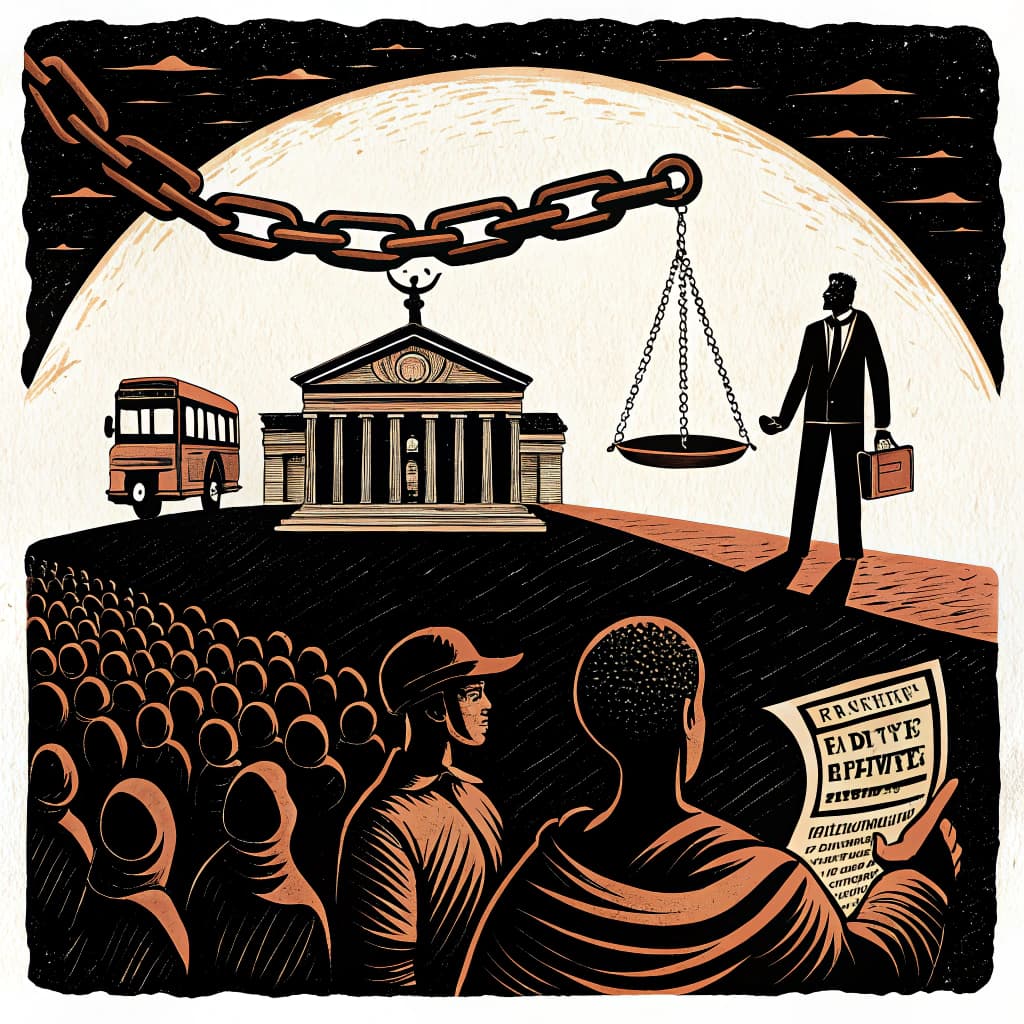
Synoptic Themes: Power, Identity, Rights
Students will connect the overarching themes of power, identity, and rights across the US Civil Rights and British Empire units, fostering synoptic understanding.
TL;DR:Active learning works for this topic because synoptic themes demand students to analyze connections across contexts rather than memorize isolated facts. Moving beyond lectures, these activities push students to compare, debate, and synthesize, which strengthens their ability to think historically and critically.
About This Topic
Synoptic themes of power, identity, and rights require Year 13 students to link the US Civil Rights movement with the British Empire's decline. They compare patterns in rights struggles, from legal challenges against segregation to anti-colonial protests. Students analyze how global ideologies, such as liberalism, socialism, and nationalism, fueled change across both contexts. They also evaluate if the 20th century truly saw traditional hierarchies collapse, weighing evidence of enduring inequalities.
This unit supports A-Level standards in historical enquiry and synoptic understanding. Students synthesize prior learning into coherent arguments, honing skills for coursework completion. Comparative analysis reveals shared dynamics, like grassroots mobilization against entrenched power, while highlighting contextual differences in identity formation under imperialism and domestic racism.
Active learning excels for these abstract connections. Tasks like group matrix-building or paired debates let students manipulate evidence actively, spotting patterns independently. This builds confidence in synoptic essays, clarifies complex ideologies through peer challenge, and mirrors the independent thinking needed for summer term assessments.
Key Questions
- Compare common patterns in the struggle for rights in the US and the British Empire.
- Analyze how global ideologies (liberalism, socialism, nationalism) drove change in both contexts.
- Evaluate to what extent the 20th century is defined by the collapse of traditional hierarchies.
Learning Objectives
- Compare the strategies employed by civil rights activists in the US and anti-colonial movements within the British Empire to challenge existing power structures.
- Analyze the influence of global ideologies, including liberalism, socialism, and nationalism, on the demands for rights and self-determination in both the US and the British Empire.
- Evaluate the extent to which the collapse of traditional hierarchies in the 20th century was a consequence of the struggles for power, identity, and rights examined.
- Synthesize evidence from both the US Civil Rights movement and the British Empire's decline to construct a coherent argument about the nature of historical change.
- Critique the limitations of legal and political reforms in fully addressing entrenched inequalities related to race, class, and colonial status.
Before You Start
Why: Students need a foundational understanding of the key events, figures, and goals of this movement to compare it with other struggles for rights.
Why: Familiarity with the processes and consequences of decolonization is essential for analyzing the struggles for rights within the context of the British Empire.
Why: Understanding the core tenets of liberalism, socialism, and nationalism is crucial for analyzing their impact on historical movements.
Key Vocabulary
| Self-determination | The right of a nation or people to choose their own form of government and political status, often a key demand in anti-colonial movements. |
| Segregation | The enforced separation of different racial groups in a country, community, or institution, a central issue in the US Civil Rights movement. |
| Imperialism | A policy of extending a country's power and influence through colonization, use of military force, or other means, shaping the identity and rights of colonized peoples. |
| Grassroots mobilization | The organizing of ordinary people at a local level to achieve political or social change, evident in both US and anti-colonial struggles. |
| Post-colonialism | The academic study of the cultural legacy of colonialism and imperialism, focusing on the human consequences of the control and exploitation of colonized peoples and their lands. |
Watch Out for These Misconceptions
Common MisconceptionRights struggles in the US and British Empire followed identical paths.
What to Teach Instead
Patterns like non-violent resistance appear in both, but contexts shaped outcomes differently, such as imperial racial hierarchies versus domestic Jim Crow laws. Group timeline activities help students map variances visually, fostering nuanced comparisons through shared evidence discussion.
Common MisconceptionThe 20th century marked a complete collapse of traditional hierarchies.
What to Teach Instead
Change was partial, with backlash and continuities evident. Debate carousels encourage students to weigh counter-evidence collaboratively, refining oversimplified views into balanced evaluations vital for synoptic work.
Common MisconceptionGlobal ideologies drove change independently in each context.
What to Teach Instead
Ideologies intersected with local power dynamics. Jigsaw tasks reveal interconnections as students teach peers, building a web of influences through active exchange.
Active Learning Ideas
See all activities→Jigsaw
Cross-Unit Themes
Divide class into expert groups, one per theme (power, identity, rights). Each group gathers evidence from US Civil Rights and British Empire units, then reforms into mixed groups to share and synthesize findings into a shared chart. Conclude with whole-class discussion of overlaps.
Philosophical Chairs
Debate Carousel: Ideological Drivers
Pairs prepare arguments on one ideology's (liberalism, socialism, nationalism) impact in each context. Rotate partners every 10 minutes to defend and counter claims. Groups note evolving arguments on flipcharts for plenary synthesis.
Philosophical Chairs
Timeline Build: Hierarchy Collapse
In small groups, plot key events from both units on a class timeline. Annotate with evidence of hierarchy shifts or persistence. Vote as a class on the strongest evaluation of 20th-century change.
Real-World Connections
- International human rights lawyers working with organizations like Amnesty International analyze historical struggles for rights to inform contemporary advocacy for political prisoners and minority groups worldwide.
- Museum curators at the Imperial War Museum in London and the National Civil Rights Museum in Memphis use comparative exhibits to help visitors understand the interconnectedness of global struggles against oppression and for equality.
- Political scientists advising governments on reconciliation efforts in post-conflict societies draw upon lessons from the US Civil Rights era and decolonization movements to address deep-seated social divisions and historical grievances.
Assessment Ideas
Facilitate a class debate using the prompt: 'To what extent did the 20th century witness the collapse of traditional hierarchies?' Ask students to use specific examples from both the US Civil Rights movement and the British Empire's decline to support their arguments, referencing at least one global ideology.
Provide students with a Venn diagram template. Ask them to identify three distinct patterns in the struggle for rights within the US Civil Rights movement and three within the British Empire's decline, placing any shared patterns in the overlapping section. Review diagrams for accurate identification of comparative elements.
Students write a short paragraph (5-7 sentences) comparing how nationalism manifested differently in the US Civil Rights movement versus an anti-colonial movement. Partners read each other's paragraphs and provide feedback on the clarity of the comparison and the use of specific historical evidence.
Frequently Asked Questions
How to teach synoptic links between US Civil Rights and British Empire at A-Level?
What activities build synoptic understanding of power, identity, rights?
How does active learning support synoptic themes in Year 13 History?
Preparing students for A-Level History synoptic essays on 20th-century change?
Planning templates for History
5E Model
The 5E Model structures lessons through five phases (Engage, Explore, Explain, Elaborate, and Evaluate), guiding students from curiosity to deep understanding through inquiry-based learning.
Unit PlannerThematic Unit
Organize a multi-week unit around a central theme or essential question that cuts across topics, texts, and disciplines, helping students see connections and build deeper understanding.
RubricSingle-Point Rubric
Build a single-point rubric that defines only the "meets standard" level, leaving space for teachers to document what exceeded and what fell short. Simple to create, easy for students to understand.
More in Historical Enquiry and Coursework Completion
Historiographical Approaches to Your Topic
Students will engage with complex schools of historical thought relevant to their chosen coursework topic, analyzing different interpretations.
8 methodologies
Evaluating Historical Evidence
Students will learn to critically evaluate the validity of historical arguments and assess how new archival discoveries can change historical consensus.
8 methodologies
Structuring a Coherent Historical Argument
Students will refine the structure of their independent investigation to ensure a tight, logical flow of argument, balancing narrative with thematic analysis.
8 methodologies
Integrating Primary Source Analysis
Students will master the effective integration of primary source analysis into a high-level historical argument, demonstrating critical engagement with evidence.
8 methodologies
Academic Integrity and Referencing
Students will master the technical requirements of academic writing, including precise footnoting, bibliography, and distinguishing their own analysis from others' ideas.
8 methodologies
Crafting the Abstract and Conclusion
Students will prepare the final draft of their coursework, focusing on summarising core findings, articulating their contribution to historical debate, and addressing limitations.
8 methodologies