Decolonisation and End of British Empire
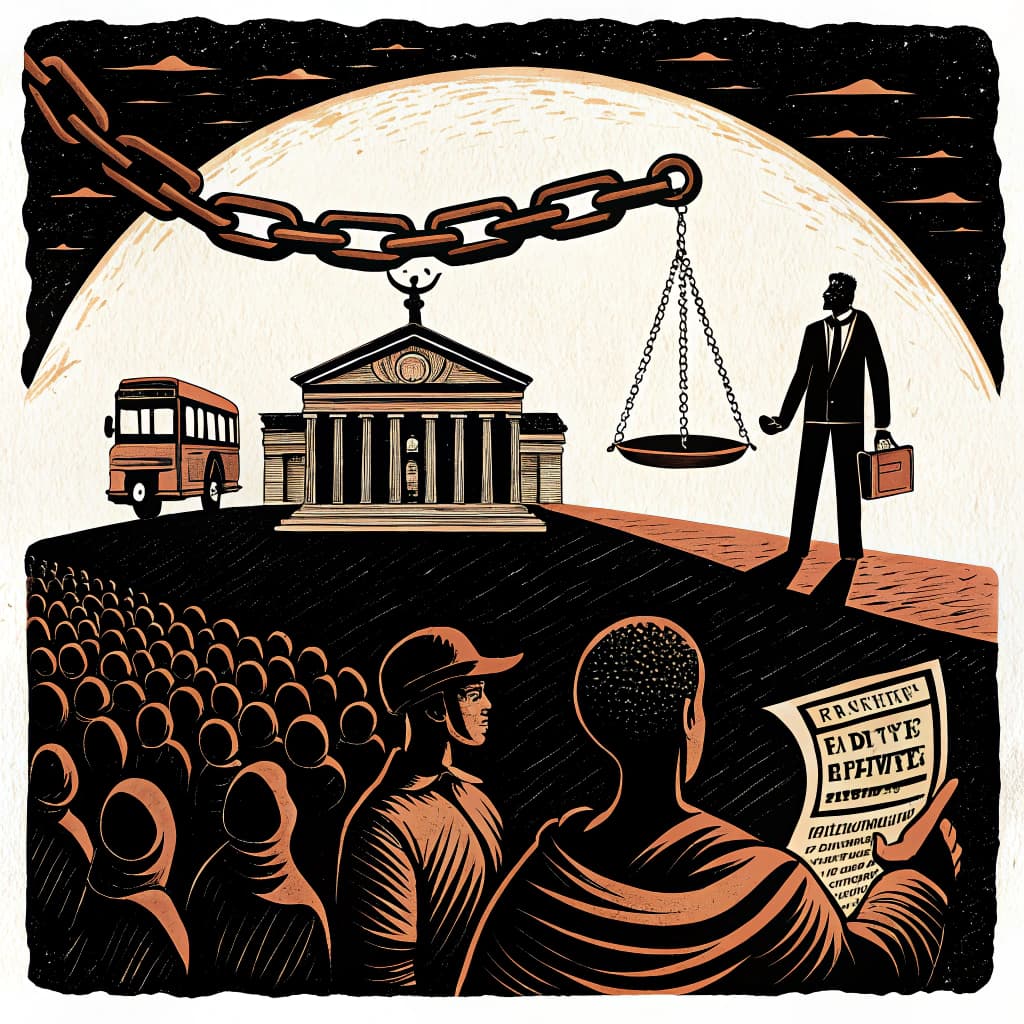
Students will investigate how the post-war period saw the acceleration of decolonisation, analyzing the factors that led to the dismantling of the British Empire.
TL;DR:Active learning works for this topic because decolonisation is a contested process with layered causes and perspectives. Students must move beyond textbook summaries to weigh propaganda, economic pressures, and nationalist movements, which demands discussion and source analysis rather than passive reading.
About This Topic
Decolonisation after 1945 marked the rapid dismantling of the British Empire, driven by the Second World War's economic and military drain on Britain, alongside rising nationalist movements in colonies like India, Ghana, and Kenya. Students examine key events such as the 1947 partition of India under Attlee's government, the Mau Mau uprising, and the Suez Crisis of 1956, which exposed Britain's diminished global power. They evaluate causation through factors including US and Soviet anti-colonial pressures during the Cold War, and Britain's shifting political will from imperial maintenance to welfare state priorities at home.
This topic fits within A-Level History specifications on the British Empire from 1857 to 1967 and post-colonial Britain, fostering skills in historiographical debate and source evaluation. Students assess whether decolonisation represented a managed retreat or chaotic response to irresistible forces, comparing perspectives from British policymakers, colonial subjects, and international actors. Such analysis builds nuanced understanding of power dynamics and legacy issues like migration and Commonwealth relations.
Active learning suits this topic well because it engages students with contested narratives through debates and collaborative source work. Role-playing negotiations or mapping empire contraction makes abstract geopolitical shifts concrete, while group jigsaws on regional case studies encourage ownership of evidence and peer teaching, deepening critical evaluation.
Key Questions
- Evaluate to what extent the Second World War fatally weakened Britain's capacity and political will to maintain its global empire.
- Analyze the role of nationalist independence movements in accelerating the end of British imperial rule after 1945.
- Assess whether post-war decolonisation was a planned and managed British withdrawal or an unavoidable response to irresistible pressure.
Learning Objectives
- Evaluate the extent to which World War II depleted Britain's resources and political will to sustain its empire.
- Analyze the impact of nationalist movements, such as those in India and Ghana, on accelerating decolonisation after 1945.
- Compare and contrast interpretations of post-war decolonisation as either a planned British withdrawal or an unavoidable response to external pressures.
- Synthesize evidence from primary and secondary sources to construct an argument about the primary drivers of imperial decline.
Before You Start
Why: Students need to understand Britain's economic and social condition post-WWII to evaluate its capacity for imperial maintenance.
Why: A foundational understanding of nationalist ideologies and early independence movements is necessary to analyze their acceleration post-1945.
Key Vocabulary
| Mandate System | A system established by the League of Nations after World War I, where former Ottoman and German territories were administered by Allied powers, influencing post-WWII decolonisation debates. |
| Self-determination | The principle that peoples have the right to freely choose their own form of political government and national status, a key tenet of post-war anti-colonial movements. |
| Dominion status | A status granted to former British colonies, allowing them a high degree of self-governance within the British Empire, a model some colonies sought to emulate or surpass. |
| Neocolonialism | The use of economic, political, or cultural pressure by powerful nations to control or influence other countries, often former colonies, after they have gained formal independence. |
| Commonwealth of Nations | An association of 56 independent states, most of which were formerly part of the British Empire, evolving from the Imperial Conference of 1926. |
Watch Out for These Misconceptions
Common MisconceptionBritain willingly and benevolently granted independence to colonies.
What to Teach Instead
Decolonisation often resulted from violent resistance and economic pressures, not altruism. Active debates pitting British imperial views against nationalist sources help students unpack propaganda, revealing contested motives through peer challenge.
Common MisconceptionThe Second World War alone caused the empire's collapse.
What to Teach Instead
WWII weakened Britain, but nationalist movements and Cold War dynamics accelerated it. Mapping activities in groups visualise multiple factors over time, correcting over-simplification by integrating regional evidence collaboratively.
Common MisconceptionDecolonisation was uniform and rapid across the empire.
What to Teach Instead
Processes varied by region, from India's 1947 partition to slower African transitions into the 1960s. Jigsaw expert groups on case studies expose diversity, with sharing sessions building comprehensive timelines via discussion.
Active Learning Ideas
See all activities→Structured Academic Controversy
Debate Carousel: Planned vs Pressured Withdrawal
Divide class into four groups, each preparing arguments for or against decolonisation as managed or forced, using sources on India, Africa, Suez, and Cold War. Groups rotate to debate opponents every 10 minutes, with a scribe noting counterpoints. Conclude with whole-class vote and reflection on evidence strength.
Structured Academic Controversy
Source Stations: Nationalist Movements
Set up stations for India (Gandhi/Nehru docs), Ghana (Nkrumah speeches), Kenya (Mau Mau reports), and Malaya (emergency files). Pairs spend 8 minutes per station analysing bias, utility, and causation, rotating with a shared Google Doc for notes. Debrief links movements to empire's end.
Jigsaw
Key Decolonisation Events
Assign expert groups to 1945-1967 events like Atlantic Charter, independence dates, and Wilson/Heath policies. Each group creates visual timeline segments with evidence. Regroup into mixed teams to assemble full timelines, discussing interconnections and WWII's role.
Real-World Connections
- The legacy of decolonisation continues to shape international relations, influencing trade agreements and diplomatic ties between the UK and countries like India, Nigeria, and Malaysia.
- Historians specializing in post-colonial studies at institutions like SOAS University of London research and publish on the long-term social, economic, and political impacts of imperial withdrawal on both former colonies and Britain.
Assessment Ideas
Divide students into three groups: British policymakers, Indian independence leaders, and US diplomats. Pose the question: 'Was the partition of India in 1947 a necessary evil or a catastrophic failure of decolonisation?' Allow groups 10 minutes to prepare their arguments based on historical context, then facilitate a debate.
Ask students to write on a slip of paper: 'Identify one specific factor that weakened Britain's ability to maintain its empire after WWII, and one specific nationalist action that hastened its end. Briefly explain the connection between the two.'
Present students with three short primary source excerpts: a speech by a British colonial secretary, a pamphlet from an African independence movement, and a US State Department memo on decolonisation. Ask students to identify the author's perspective and the main argument regarding imperial control for each source.
Frequently Asked Questions
How does active learning enhance understanding of decolonisation?
What key sources illustrate nationalist movements' role?
How to evaluate WWII's impact on Britain's empire?
How does this topic connect to post-colonial Britain?
Planning templates for History
5E Model
The 5E Model structures lessons through five phases (Engage, Explore, Explain, Elaborate, and Evaluate), guiding students from curiosity to deep understanding through inquiry-based learning.
Unit PlannerThematic Unit
Organize a multi-week unit around a central theme or essential question that cuts across topics, texts, and disciplines, helping students see connections and build deeper understanding.
RubricSingle-Point Rubric
Build a single-point rubric that defines only the "meets standard" level, leaving space for teachers to document what exceeded and what fell short. Simple to create, easy for students to understand.
More in World War II and the Cold War Context 1941-1954
Britain's Home Front in WWII
Students will analyze the experiences of British civilians during World War II, highlighting the impact of rationing, bombing, evacuation, and the changing role of women.
8 methodologies
Wartime Coalition & Churchill's Leadership
Students will analyze the impact of the wartime coalition government and Winston Churchill's leadership on British morale and the conduct of the war.
8 methodologies
The Beveridge Report and Welfare Vision
Students will evaluate the significance of the Beveridge Report and its proposals for a comprehensive welfare state, focusing on its influence on post-war social policy.
8 methodologies
The 1945 General Election: Labour Landslide
Students will examine the 1945 General Election, analyzing its causes, the surprising Labour landslide victory, and what it revealed about post-war public sentiment.
8 methodologies
Attlee Government & NHS Creation
Students will examine how the Attlee Labour government implemented key welfare state reforms, focusing on the creation of the National Health Service (NHS) and its impact.
8 methodologies
Nationalisation under Attlee
Students will investigate the Attlee government's program of nationalisation, examining the industries brought under state control and the economic and social motivations.
8 methodologies