Britain's Home Front in WWII
Students will analyze the experiences of British civilians during World War II, highlighting the impact of rationing, bombing, evacuation, and the changing role of women.
TL;DR:Active learning helps students grasp the personal and political tensions of Britain’s Home Front by moving beyond dates and facts. When students analyse propaganda, examine veteran voices, and debate turning points, they confront the contradictions of a nation fighting fascism while grappling with inequality at home.
About This Topic
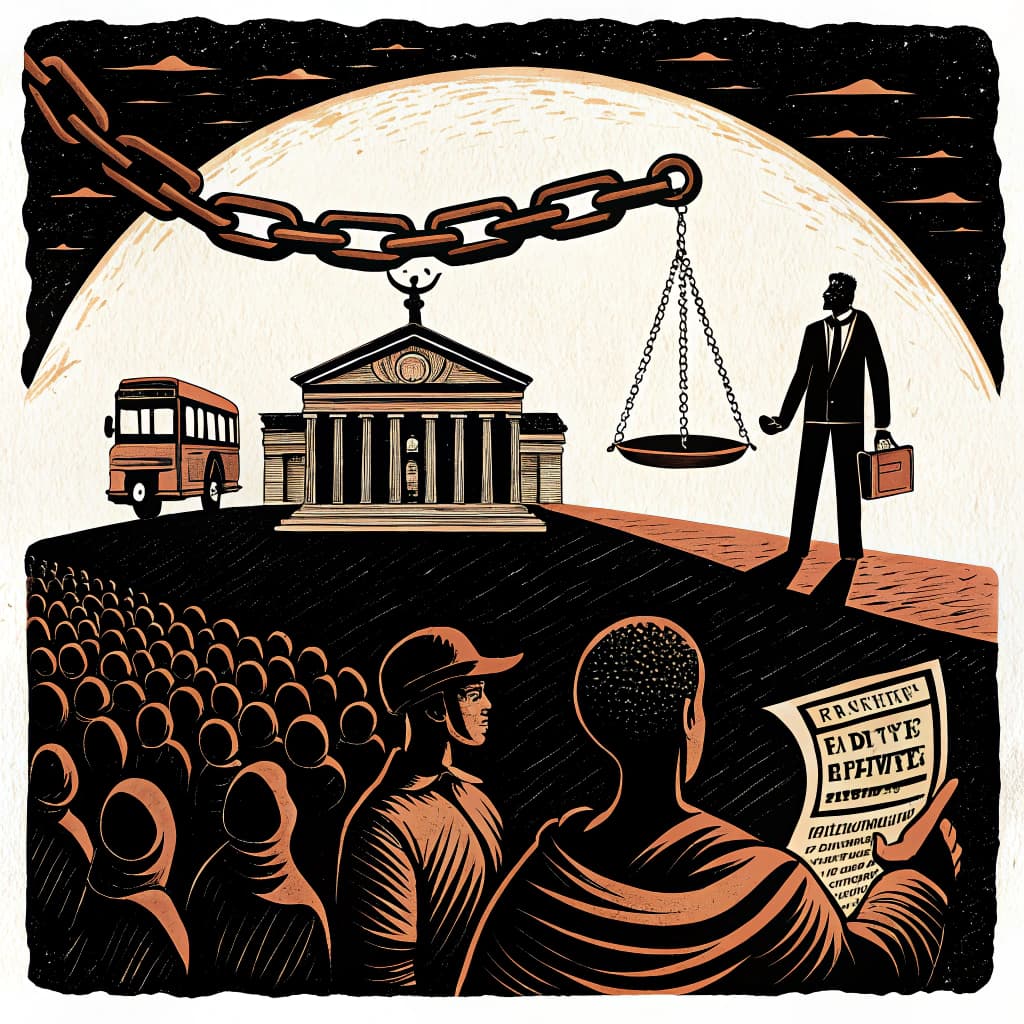
This topic explores the 'Double V' campaign, Victory over fascism abroad and Victory over racism at home, which became the rallying cry for African Americans during World War II. Students analyse how the experience of fighting for democracy in a segregated military radicalised a generation of Black veterans and exposed the hypocrisy of American domestic policy. The war created new economic opportunities in the 'Arsenal of Democracy', but also led to intense racial friction in industrial cities.
At Year 13, students evaluate the extent to which the war was a 'turning point' for the civil rights movement. They examine the impact of the FEPC, the growth of the NAACP, and how the global context of the war against Nazism made US segregation ideologically indefensible. This topic benefits from collaborative investigations of veteran testimonies and the analysis of wartime propaganda, helping students see the war as a catalyst for the 'classical' phase of the movement.
Key Questions
- Analyze how the war effort transformed daily life on the British Home Front.
- Evaluate the contributions of women to the war effort and their changing social status.
- Explain the challenges faced by civilians during the Blitz and other bombing campaigns.
Learning Objectives
- Analyze the impact of rationing on civilian diets and morale during World War II.
- Evaluate the effectiveness of government propaganda in maintaining public support for the war effort.
- Explain the social and economic changes experienced by women working in traditionally male roles.
- Critique the psychological effects of the Blitz on urban populations.
- Compare the experiences of evacuated children with those who remained in cities.
Before You Start
Why: Students need a foundational understanding of the conflict's origins to contextualize Britain's involvement and the subsequent impact on the home front.
Why: Knowledge of pre-war social structures, including gender roles and class divisions, is necessary to analyze the transformations brought about by the war.
Key Vocabulary
| The Blitz | The sustained bombing campaign by Nazi Germany against Britain in 1940-1941, targeting cities and industrial centers. |
| Rationing | The controlled distribution of scarce resources, such as food and fuel, to ensure fair allocation during wartime. |
| Evacuation | The organized movement of civilians, particularly children, from areas considered at risk to safer locations during wartime. |
| Dig for Victory | A government campaign encouraging citizens to grow their own food to supplement rationing and support the war effort. |
| Auxiliary Services | Support services staffed by civilians, often women, who assisted the military in roles such as nursing, transport, and factory work. |
Watch Out for These Misconceptions
Common MisconceptionBlack soldiers were happy to serve in a segregated military to prove their loyalty.
What to Teach Instead
While many were proud to serve, there was deep resentment and frequent violent clashes between Black and white troops on bases. Peer discussion of the 1943 riots on military bases helps students see the military as a site of intense resistance.
Common MisconceptionThe 'Double V' campaign was a government-sponsored initiative.
What to Teach Instead
It was a grassroots campaign started by the Black press (specifically the Pittsburgh Courier). Using a station rotation to look at the FBI's investigation of Black newspapers helps students see that the government actually viewed the campaign as potentially subversive.
Active Learning Ideas
See all activities→Inquiry Circle
Veteran Testimonies
Students work in groups to read and listen to accounts from Black soldiers who served in Europe and the Pacific. They identify how their experiences of 'freedom' abroad and the racism of the US military command influenced their post-war activism.
Gallery Walk
Double V Propaganda
Stations feature posters, editorials from the Pittsburgh Courier, and government 'unity' films. Students move in pairs to analyse how Black activists used the war's democratic rhetoric to demand domestic change.
Think-Pair-Share
The War as a Turning Point
Students debate whether WWII was the most significant factor in the rise of the modern civil rights movement. They compare the impact of the war with earlier developments like the Great Migration and the New Deal.
Real-World Connections
- Museums like the Imperial War Museum in London preserve artifacts and oral histories from the Blitz, allowing visitors to understand the physical and emotional toll on civilians.
- The National Archives holds government documents detailing rationing policies and propaganda campaigns, such as posters urging citizens to 'Dig for Victory' or conserve resources.
- Historians analyze the experiences of women in the Women's Auxiliary Air Force (WAAF) or the Women's Royal Naval Service (WRENS) to understand shifts in gender roles and their long-term impact on British society.
Assessment Ideas
Ask students to write two sentences describing a challenge faced by civilians during the Blitz and one sentence explaining a strategy used to cope with it. Collect and review for understanding of hardship and resilience.
Pose the question: 'To what extent did the war effort fundamentally alter traditional gender roles in Britain?' Facilitate a class discussion, encouraging students to cite specific examples of women's contributions and changing social expectations.
Provide students with a short primary source excerpt (e.g., a diary entry about rationing, a letter from an evacuee). Ask them to identify one specific impact of the war on civilian life described in the text and explain its significance in one sentence.
Frequently Asked Questions
What was the 'Double V' campaign?
How did WWII affect the NAACP?
What was the impact of the Tuskegee Airmen?
How can active learning help students understand the impact of WWII on civil rights?
Planning templates for History
5E Model
The 5E Model structures lessons through five phases (Engage, Explore, Explain, Elaborate, and Evaluate), guiding students from curiosity to deep understanding through inquiry-based learning.
Unit PlannerThematic Unit
Organize a multi-week unit around a central theme or essential question that cuts across topics, texts, and disciplines, helping students see connections and build deeper understanding.
RubricSingle-Point Rubric
Build a single-point rubric that defines only the "meets standard" level, leaving space for teachers to document what exceeded and what fell short. Simple to create, easy for students to understand.
More in World War II and the Cold War Context 1941-1954
Wartime Coalition & Churchill's Leadership
Students will analyze the impact of the wartime coalition government and Winston Churchill's leadership on British morale and the conduct of the war.
8 methodologies
The Beveridge Report and Welfare Vision
Students will evaluate the significance of the Beveridge Report and its proposals for a comprehensive welfare state, focusing on its influence on post-war social policy.
8 methodologies
The 1945 General Election: Labour Landslide
Students will examine the 1945 General Election, analyzing its causes, the surprising Labour landslide victory, and what it revealed about post-war public sentiment.
8 methodologies
Attlee Government & NHS Creation
Students will examine how the Attlee Labour government implemented key welfare state reforms, focusing on the creation of the National Health Service (NHS) and its impact.
8 methodologies
Nationalisation under Attlee
Students will investigate the Attlee government's program of nationalisation, examining the industries brought under state control and the economic and social motivations.
8 methodologies
Decolonisation and End of British Empire
Students will investigate how the post-war period saw the acceleration of decolonisation, analyzing the factors that led to the dismantling of the British Empire.
8 methodologies