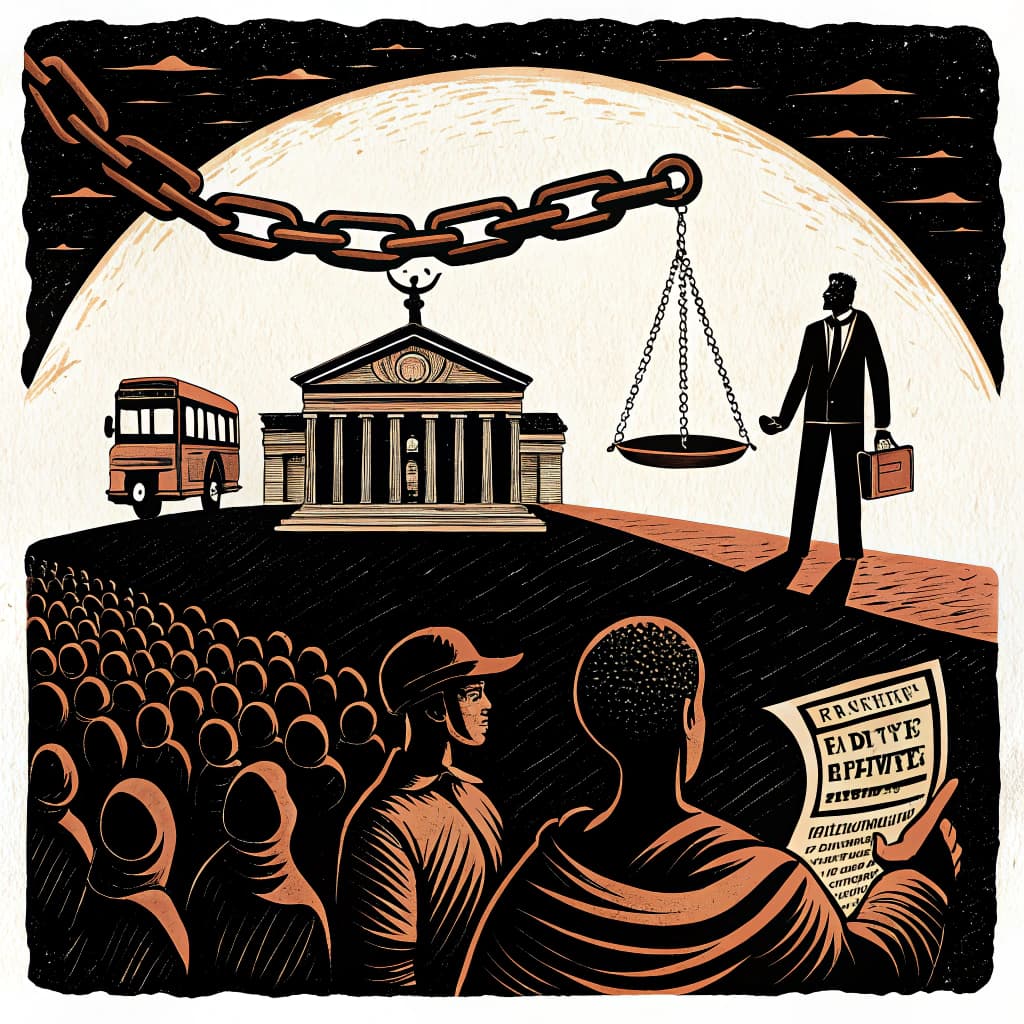
Consequences of the General Strike (1926)
Students will analyze the long-term consequences of the 1926 General Strike for industrial relations, trade union power, and the political landscape of Britain.
TL;DR:Active learning works for the General Strike topic because nine days of industrial action demand analysis beyond dates and names. Students need to weigh fragmented perspectives, legal shifts, and fractured unity, which lecture alone cannot convey. Movement between debate, sources, and role-play builds the critical thinking these consequences require.
About This Topic
The 1926 General Strike involved nine days of widespread action by over 1.7 million workers supporting coal miners against wage cuts and longer hours. Year 13 students assess its long-term consequences, including diminished trade union influence, the Trade Disputes Act 1927 that restricted union funds and sympathy strikes, and a political shift strengthening Conservative dominance until 1940. Key sources like government reports, union minutes, and Baldwin's speeches reveal how the strike fractured labour unity and prompted legal curbs on industrial action.
This topic anchors the Britain Between the Wars unit by linking economic pressures post-WWI, coal industry decline, and class tensions to modern industrial relations. Students develop skills in causation, evaluating turning points through evidence, such as comparing pre- and post-strike membership data or strike ballot results showing public opposition.
Active learning suits this topic well. Role-plays of negotiations recreate decision-making tensions, while collaborative source sorts help students weigh perspectives and build substantiated arguments. These methods make distant events relatable, sharpen analytical debate, and foster empathy for historical actors.
Key Questions
- Assess the long-term impact of the General Strike on the power and strategy of trade unions in Britain.
- Explain how the government's use of the Trade Disputes Act (1927) reshaped the legal framework of industrial relations.
- Evaluate the significance of the General Strike as a turning point in the relationship between organised labour and the British state.
Learning Objectives
- Analyze the long-term impact of the 1926 General Strike on trade union membership and bargaining power.
- Explain how the Trade Disputes Act of 1927 altered the legal landscape for industrial action and union finances.
- Evaluate the extent to which the General Strike represented a turning point in the relationship between organized labour and the British state.
- Compare the strategies and outcomes of trade unions before and after the 1926 General Strike.
Before You Start
Why: Understanding the post-war economic climate, including inflation and unemployment, is crucial for grasping the context of the miners' dispute and the government's response.
Why: Students need foundational knowledge of the growth and political influence of trade unions and the Labour Party to analyze changes in their power and strategy after 1926.
Key Vocabulary
| General Strike | A nationwide protest involving a coalition of trade unions withdrawing their labour for nine days in May 1926, primarily in support of coal miners. |
| Trade Disputes Act 1927 | Legislation passed by the Conservative government that restricted trade union activities, including banning sympathetic strikes and limiting the use of union funds for political purposes. |
| Sympathy Strike | A strike by workers in one industry to support workers in another industry, often to exert broader pressure on employers or the government. |
| Political Levy | A system where trade union members could opt in to contribute to a political fund, often supporting the Labour Party, which was significantly curtailed by the 1927 Act. |
| Industrial Relations | The relationship between employers and employees, particularly concerning wages, working conditions, and the role of trade unions in negotiations. |
Watch Out for These Misconceptions
Common MisconceptionThe General Strike strengthened trade unions long-term.
What to Teach Instead
The strike led to membership decline and the 1927 Act's restrictions on funds and actions. Group debates with data charts help students confront this by comparing pre-1926 unity to post-strike fragmentation, building evidence-based causation skills.
Common MisconceptionThe Trade Disputes Act banned all unions.
What to Teach Instead
It curtailed sympathy strikes and political levies but allowed core activities. Source analysis rotations expose nuances, as students collaboratively evaluate Act clauses against union responses, clarifying legal shifts over outright bans.
Common MisconceptionPublic fully supported the strikers throughout.
What to Teach Instead
Ballots showed majority opposition by day nine. Role-plays incorporating public viewpoint sources let students experience shifting sympathies, correcting oversimplifications through immersive perspective-taking.
Active Learning Ideas
See all activities→Formal Debate
Debate Pairs: Strike Success or Failure?
Assign pairs to argue for or against the strike as a turning point for unions. Provide sources on membership drops and the 1927 Act. Pairs prepare 3-minute speeches, then switch sides for rebuttals. Conclude with whole-class vote and evidence reflection.
Formal Debate
Source Carousel: Consequences in Rotation
Display 6 stations with cartoons, Acts, speeches, and stats on unions and politics. Small groups spend 6 minutes per station analysing impact, noting key quotes. Groups report one insight per source to the class.
Formal Debate
Timeline Build: Whole Class Chain
Students receive event cards on strike fallout from 1926-1939. In sequence, individuals add cards to a class timeline, justifying placements with evidence. Discuss gaps and connections to political shifts.
Real-World Connections
- The ongoing debates about the balance of power between employers and unions, seen in recent industrial actions by transport workers or nurses, echo the tensions and legal frameworks established after 1926.
- Historians and political scientists continue to analyze the legacy of the General Strike when studying the evolution of British democracy and the development of social welfare policies.
- The legal restrictions imposed by the Trade Disputes Act 1927 influenced the strategies of trade unions for decades, shaping their approach to organizing and political engagement.
Assessment Ideas
Pose the question: 'To what extent was the 1926 General Strike a defeat for the trade union movement?' Ask students to identify at least two pieces of evidence supporting the idea of defeat and two pieces of evidence suggesting a more complex outcome, referencing specific legislation or union data.
Students write a short paragraph (3-4 sentences) explaining the primary impact of the Trade Disputes Act 1927 on trade union power. They should use at least one key vocabulary term correctly.
Present students with three short primary source excerpts (e.g., a newspaper report, a union leader's statement, a government minister's speech) related to the strike's aftermath. Ask them to identify the perspective of each source and how it reflects a consequence of the strike.
Frequently Asked Questions
What were the main consequences of the 1926 General Strike?
How did the Trade Disputes Act 1927 change industrial relations?
Was the General Strike a turning point for British labour?
How can active learning teach the consequences of the General Strike?
Planning templates for History
5E Model
The 5E Model structures lessons through five phases (Engage, Explore, Explain, Elaborate, and Evaluate), guiding students from curiosity to deep understanding through inquiry-based learning.
Unit PlannerThematic Unit
Organize a multi-week unit around a central theme or essential question that cuts across topics, texts, and disciplines, helping students see connections and build deeper understanding.
RubricSingle-Point Rubric
Build a single-point rubric that defines only the "meets standard" level, leaving space for teachers to document what exceeded and what fell short. Simple to create, easy for students to understand.
More in Britain Between the Wars 1918–1939
Aftermath of WWI: Social Impact on Britain
Students will assess the significance of the social and economic changes in Britain following World War I, focusing on the challenges of demobilisation, unemployment, and housing.
8 methodologies
Economic Impact of WWI on Britain
Students will examine the economic consequences of World War I for Britain, including debt, industrial decline, and the challenges of returning to a peacetime economy.
8 methodologies
The Roaring Twenties in Britain: Culture
Students will explore the broader social and cultural impact of the 1920s in Britain, examining changes in lifestyle, entertainment, and the underlying social tensions.
8 methodologies
The General Strike of 1926: Causes
Students will evaluate the impact of the 1926 General Strike, analyzing its causes, the role of the trade unions and government, and its long-term consequences for industrial relations.
8 methodologies
Rise of Fascism in Britain (1920s-30s)
Students will analyze the emergence of fascist movements in Britain, such as the British Union of Fascists, examining their appeal, methods, and the societal response.
8 methodologies
The Great Depression in Britain: Causes
Students will investigate the causes and impact of the Great Depression on Britain, including mass unemployment, poverty, and government responses.
8 methodologies