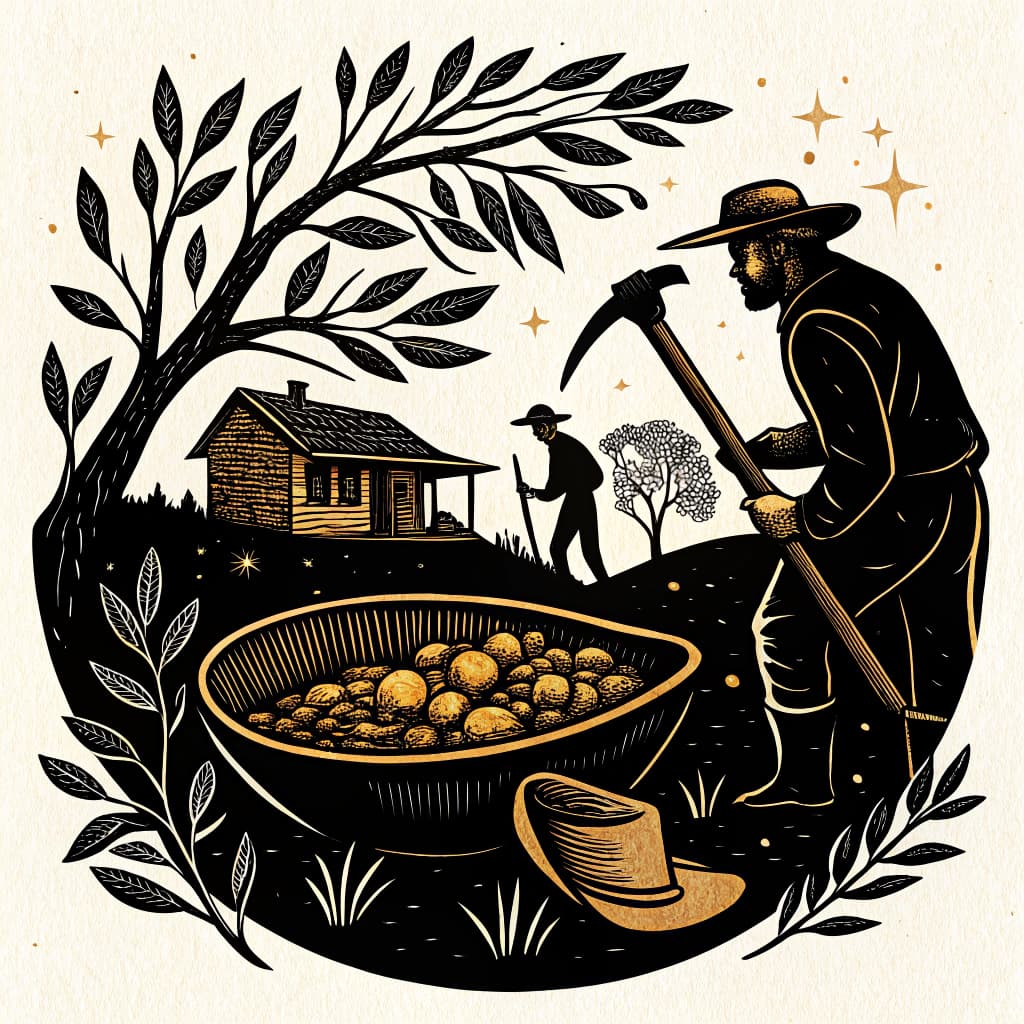
Whose Stories in the Bush Myth?
Examine whose experiences are included and excluded from the traditional 'bush myth,' including women and First Nations peoples.
TL;DR:Active learning works for this topic because Year 5 students need to engage directly with the gaps and biases in the bush myth. By handling sources, role-playing perspectives, and constructing timelines, they move from passive listeners to critical investigators of how stories shape identity.
About This Topic
The traditional bush myth portrays Australia as a land of rugged male bushrangers, selectors, and drovers who embody mateship and survival against harsh conditions. This narrative, popularised in literature like Banjo Paterson's works and films such as Ned Kelly stories, often centres white men's experiences while sidelining women and First Nations peoples. Year 5 students examine these exclusions to understand how stories shape national identity, aligning with AC9HASS5K01 on diverse colonial experiences.
Students identify marginalised voices through primary sources: women's diaries detailing farm labour or First Nations oral histories of resistance and land connections. They analyse how the myth evolved, challenged by feminist histories and Indigenous activism since the 1970s. Key questions guide them to construct arguments for inclusive national stories, fostering critical historical thinking.
Active learning suits this topic because students actively compare sources, role-play perspectives, and debate inclusions. These approaches build empathy for excluded voices, sharpen analytical skills, and make abstract concepts of bias and representation concrete and relevant.
Key Questions
- Identify the voices and perspectives often marginalized in the traditional bush myth.
- Analyze how the bush myth has evolved or been challenged over time.
- Construct an argument for including diverse perspectives in the Australian national story.
Learning Objectives
- Identify specific examples of marginalized voices (women, First Nations peoples) within traditional bush myth narratives.
- Analyze how historical narratives, such as the bush myth, have been shaped by dominant perspectives.
- Compare and contrast the experiences of different groups within colonial Australia as represented in historical sources.
- Evaluate the impact of excluding certain voices on the construction of national identity.
- Construct an argument for the inclusion of diverse perspectives in understanding Australian history.
Before You Start
Why: Students need a basic understanding of the colonial period in Australia to contextualize the experiences of different groups.
Why: Students must be able to differentiate between types of historical sources to effectively analyze primary and secondary accounts.
Key Vocabulary
| Bush Myth | A popular, often romanticized, narrative about life in the Australian bush, frequently featuring white male figures like bushrangers and drovers. |
| Marginalized Voices | Perspectives and experiences of groups or individuals who have been historically excluded or silenced in dominant narratives. |
| Perspective | A particular attitude toward or way of regarding something; a point of view, shaped by individual experiences and background. |
| National Identity | A sense of belonging to one nation, often shaped by shared history, culture, and stories. |
| Primary Sources | Original materials such as diaries, letters, oral histories, or photographs that provide firsthand accounts of events or experiences. |
Watch Out for These Misconceptions
Common MisconceptionThe bush myth includes stories from all Australians equally.
What to Teach Instead
This myth focuses on white men, excluding women's labour and First Nations land knowledge. Source comparison activities reveal these gaps, as students annotate texts side-by-side. Peer discussions help them question the 'mateship' ideal and appreciate diverse contributions.
Common MisconceptionWomen and First Nations peoples had no role in bush life.
What to Teach Instead
Women managed farms and families, while First Nations people guided settlers and resisted invasion. Role-plays let students embody these roles, building empathy. Group debates correct this by weighing evidence from diaries and oral histories.
Common MisconceptionThe bush myth has stayed the same since colonial times.
What to Teach Instead
Challenges from 20th-century activism reshaped it. Timeline activities show evolution, with students adding modern examples. Collaborative construction highlights how perspectives shift narratives over time.
Active Learning Ideas
See all activities→Socratic Seminar
Source Analysis Stations: Bush Myth Voices
Prepare stations with excerpts from Banjo Paterson poems, women's settler journals, and First Nations testimonies. Students rotate in groups, noting who is included or excluded and why. Each group records evidence on a shared chart for plenary discussion.
Socratic Seminar
Perspective Role-Play: Debate the Myth
Assign roles as bushranger, woman selector, or First Nations elder. Pairs prepare 1-minute speeches on their experiences, then debate in whole class whether the bush myth should change. Vote and reflect on biases revealed.
Socratic Seminar
Timeline Build: Evolving Bush Stories
In small groups, students sequence cards with events like 1890s bush ballads, 1970s Indigenous rights movements, and modern films. Add sticky notes with diverse perspectives. Present timelines to class, explaining challenges to the myth.
Real-World Connections
- Museum curators at the National Museum of Australia work to present a more inclusive history by actively seeking out and displaying artifacts and stories from First Nations peoples and women, challenging older, singular narratives.
- Documentary filmmakers often research historical archives and conduct interviews with descendants to uncover and share the stories of overlooked communities, similar to how the 'bush myth' is being re-examined today.
- Authors and historians today are writing new books and articles that specifically focus on the lives of women on the frontier or the impact of colonization on Aboriginal communities, offering counter-narratives to traditional stories.
Assessment Ideas
Pose this question to small groups: 'Imagine you are creating a new exhibit about the Australian bush. Which three stories or people, often left out of the traditional bush myth, would you include and why? Be ready to explain how their inclusion changes our understanding of this period.'
Ask students to write down one traditional figure from the bush myth (e.g., a bushranger) and one figure often excluded (e.g., a female selector). Then, they should write one sentence explaining how the excluded figure's story offers a different perspective on life in the bush.
Present students with two short, contrasting quotes about life in colonial Australia, one reflecting the traditional bush myth and another from a marginalized perspective. Ask students to identify which quote represents which perspective and explain one reason why they are different.
Frequently Asked Questions
What is the traditional bush myth in Australian history?
How to identify marginalized voices in the bush myth?
How has the bush myth been challenged over time?
What active learning strategies work for teaching bush myth exclusions?
More in Bushrangers and the Bush
Origins of Bushranging
Explore the social and economic conditions that led to the emergence of bushrangers in colonial Australia.
8 methodologies
Famous Bushrangers: Beyond Ned Kelly
Investigate the stories of bushrangers such as Ben Hall, Captain Thunderbolt, and Frank Gardiner, and their impact.
8 methodologies
The Life and Times of Ned Kelly
Examine the early life, family background, and formative experiences of Ned Kelly.
8 methodologies
The Kelly Gang and the Siege of Glenrowan
Investigate the crimes of the Kelly Gang, the events leading to Glenrowan, and Ned Kelly's final stand.
8 methodologies
Ned Kelly's Legacy and Mythology
Explore the enduring debate about Ned Kelly's status as a hero or villain in Australian culture.
8 methodologies
Squatters, Selectors, and Rural Life
Examine the lives of squatters and selectors, and the challenges of establishing farms in the Australian bush.
8 methodologies