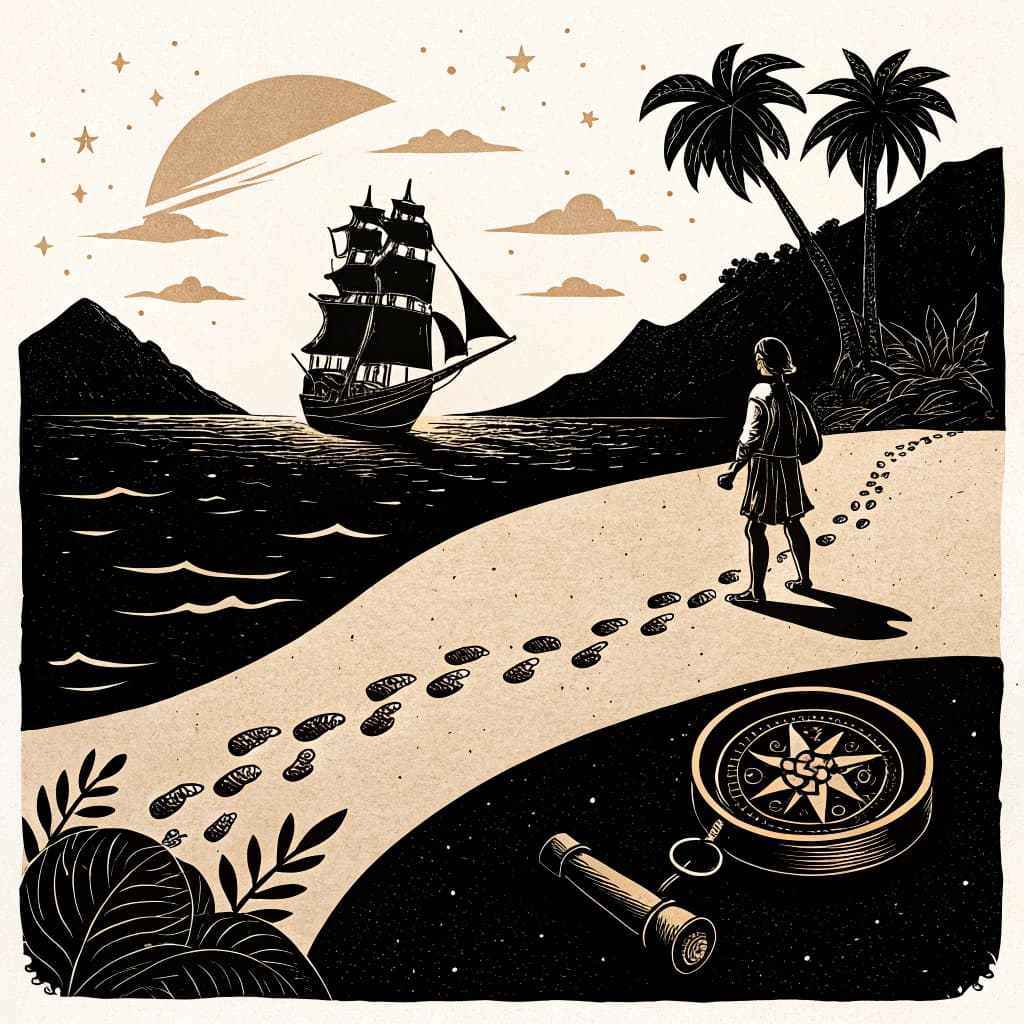
Motivations for Global Exploration
Examine the diverse reasons behind the Age of Exploration, including trade routes, resource acquisition, religious spread, and national prestige.
TL;DR:Active learning helps students grasp the complex motives behind global exploration by making abstract economic, political, and religious factors tangible. When students role-play decisions or analyze real costs, they move beyond memorizing names to understanding why nations risked everything for spices or souls.
About This Topic
The Age of Exploration was driven by a complex mix of motives that changed the course of world history. This topic examines why European nations were willing to fund expensive and dangerous voyages across the globe. Key drivers included the search for new trade routes to the 'Spice Islands,' the desire for gold and wealth, the spread of religion, and the simple human urge for curiosity and scientific discovery.
For Year 4 students, understanding these 'push and pull' factors helps them see explorers not just as adventurers, but as agents of their governments. It connects to the curriculum by exploring the causes and effects of global expansion. This topic is particularly effective when students can rank and debate these motivations through collaborative problem-solving scenarios.
Key Questions
- Analyze the economic and political factors that drove European nations to explore globally.
- Compare the motivations of different explorers and their sponsoring countries.
- Evaluate whether exploration was primarily about 'discovery' or 'conquest'.
Learning Objectives
- Analyze the primary economic, political, and religious motivations behind European global exploration during the Age of Exploration.
- Compare and contrast the motivations of different European nations sponsoring exploration, citing specific examples.
- Evaluate the extent to which European exploration was driven by a desire for discovery versus a drive for conquest and resource acquisition.
- Explain the role of trade routes and resource acquisition in fueling the Age of Exploration.
- Identify key historical figures and their sponsoring countries, linking them to specific exploration motivations.
Before You Start
Why: Students need a basic understanding of the world's geography to comprehend the scale and challenge of global exploration.
Why: Familiarity with European countries and their basic social structures helps students understand the context of sponsorship and national goals.
Key Vocabulary
| Trade Routes | Established paths used for the exchange of goods and commodities between different regions or countries, often across long distances. |
| Resource Acquisition | The act of obtaining valuable materials such as gold, spices, or land from new territories for economic or strategic benefit. |
| National Prestige | The high standing and respect a country holds among other nations, often enhanced by achievements like successful exploration and expansion. |
| Sponsorship | The financial or political support provided by a government or wealthy individual to fund expeditions and explorers. |
| Circumnavigation | The act of sailing or traveling all the way around the world, a major achievement during the Age of Exploration. |
Watch Out for These Misconceptions
Common MisconceptionExplorers just wanted to have an adventure.
What to Teach Instead
Exploration was a high-stakes business often funded by governments or wealthy companies looking for profit. Using a 'business plan' activity where students list the costs and expected profits of a voyage helps them see the economic reality behind the adventure.
Common MisconceptionExploration was only done by the British.
What to Teach Instead
The Portuguese, Spanish, Dutch, and French were all major players in the Age of Exploration. A 'Station Rotation' featuring different national flags and their specific goals helps students understand the intense competition between European powers.
Active Learning Ideas
See all activities→Think-Pair-Share
The Spice Challenge
Give students small samples of spices like cinnamon, cloves, or nutmeg to smell. In pairs, they discuss why these were once worth their weight in gold and brainstorm what they would be willing to risk to get them if they were a merchant in the 1500s.
Formal Debate
Gold, God, or Glory?
Divide the class into three teams, each representing one of the 'Three Gs' of exploration. Students must argue why their assigned motive was the most important reason for kings and queens to fund voyages, using historical examples.
Simulation Game
The King's Council
Students act as advisors to a monarch. They are presented with three different voyage proposals (e.g., a new route to China, a mission to spread religion, a scientific mapping trip). They must weigh the risks and rewards and decide which one to fund.
Real-World Connections
- Modern global trade relies on complex shipping routes, similar to the early trade routes sought by explorers. Companies like Maersk manage vast fleets of container ships that transport goods worldwide, connecting producers and consumers across continents.
- The search for valuable resources continues today, though often through scientific research and ethical extraction rather than conquest. Geologists and mining engineers identify and extract minerals like lithium and cobalt, essential for new technologies like electric car batteries.
Assessment Ideas
Pose the question: 'If you were a ruler in Europe in the 15th century, which motivation would be most important to you: finding new trade routes, gaining wealth, spreading your religion, or increasing your country's fame? Why?' Facilitate a class debate, encouraging students to justify their choices with evidence from the lesson.
Provide students with a graphic organizer with three columns: 'Motivation,' 'Explorer/Country,' and 'Evidence.' Ask them to fill in at least two rows, identifying a specific motivation, an explorer or country, and one piece of evidence that supports this connection. Review responses for accuracy.
On a small card, ask students to write down the two motivations they believe were the strongest drivers of the Age of Exploration and briefly explain why for each. Collect these to gauge individual understanding of the core concepts.
Frequently Asked Questions
What were the 'Three Gs' of exploration?
Why were spices so important in the past?
How can active learning help students understand Why People Explored?
Did curiosity play a big role in exploration?
More in The Journey of Exploration
Navigational Tools and Techniques
Explore the technologies and methods used by explorers to navigate vast oceans, from the astrolabe and compass to celestial navigation.
8 methodologies
Life Aboard an Explorer's Ship
Simulate the daily life, hardships, and dangers faced by sailors on long exploration voyages, including disease, storms, and limited resources.
8 methodologies
Famous Explorers and Their Routes
Trace the journeys of key global explorers (e.g., Columbus, Magellan, Cook), mapping their routes and understanding their 'discoveries'.
8 methodologies
Impact on Indigenous Peoples Globally
Examine how European exploration affected Indigenous peoples around the world, including cultural clashes, disease, and displacement.
8 methodologies
Mapping the Changing World
Investigate how exploration led to new maps and a changing understanding of the world, from early flat maps to more accurate globes.
8 methodologies
The Exchange of Goods and Ideas
Explore the 'Columbian Exchange' and other global exchanges of plants, animals, diseases, and technologies resulting from exploration.
8 methodologies