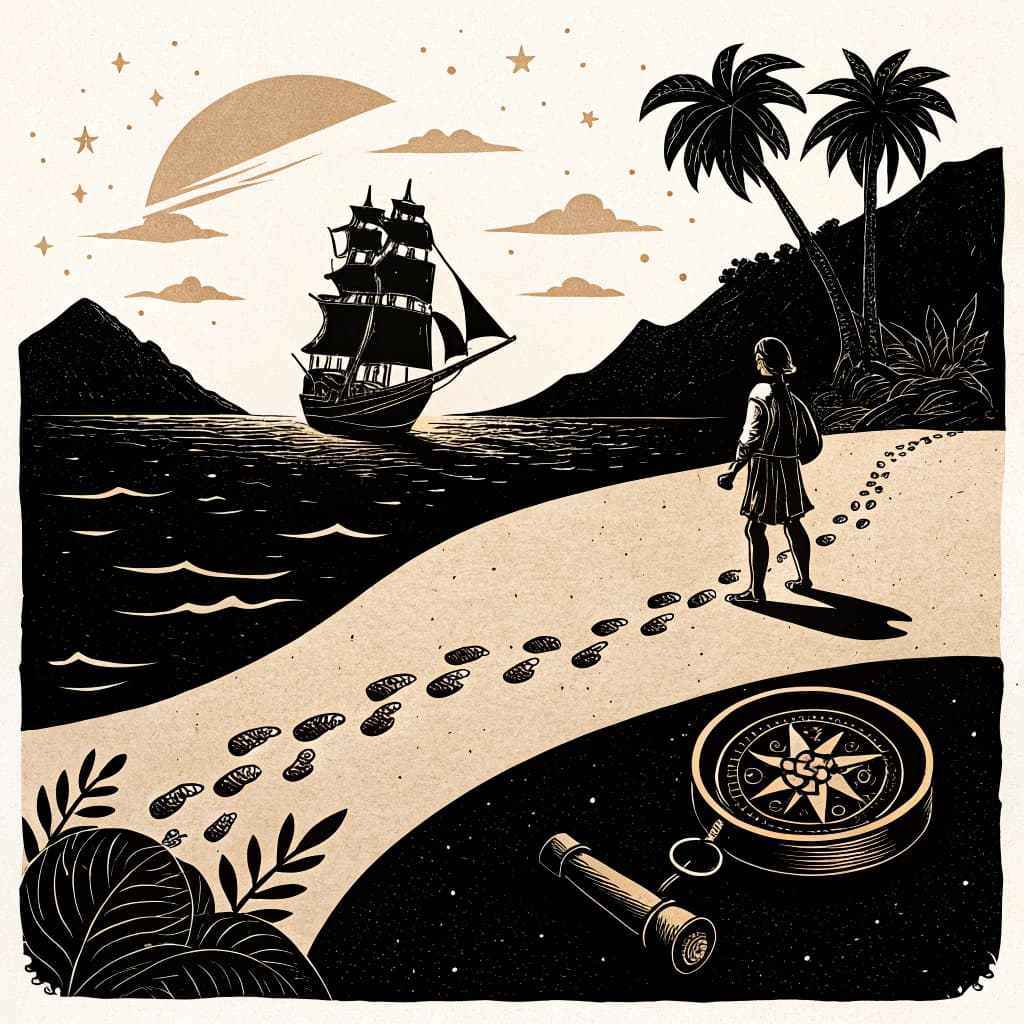
Life Aboard an Explorer's Ship
Simulate the daily life, hardships, and dangers faced by sailors on long exploration voyages, including disease, storms, and limited resources.
TL;DR:Active learning transforms this complex topic into tangible experiences. Students move from abstract ideas about cultural clashes to direct engagement with historical perspectives, making the human impact of exploration vivid and memorable. When they role-play encounters or analyze oral histories, they connect emotionally and intellectually with the lived realities of both explorers and Indigenous peoples.
About This Topic
Life aboard an explorer's ship during long voyages was a stark contrast to modern comforts, filled with daily challenges and constant danger. Students will explore the cramped living quarters, the monotonous and physically demanding work, and the ever-present threat of storms that could shatter a vessel. Limited food supplies, often preserved and lacking in essential nutrients, led to widespread diseases like scurvy, while poor sanitation bred other illnesses. The psychological toll of isolation, fear, and strict discipline also contributed to hardships, sometimes resulting in mutiny or despair among the crew.
Understanding these realities requires students to step into the shoes of these early mariners. They must consider not only the physical discomforts but also the mental fortitude needed to endure months or even years at sea, far from home. This exploration connects directly to historical inquiry skills, encouraging students to analyze primary source accounts and understand the motivations and sacrifices of explorers. It also highlights the importance of resource management and problem-solving in extreme environments.
Active learning is particularly beneficial for this topic because it allows students to experience simulated challenges. Building models of ship conditions or role-playing scenarios can make the abstract concepts of hardship and resilience tangible and memorable.
Key Questions
- Describe the harsh realities of life for sailors during long sea voyages.
- Analyze the strategies explorers used to overcome challenges like scurvy and mutiny.
- Evaluate the resilience required to undertake such perilous journeys.
Watch Out for These Misconceptions
Common MisconceptionSailors on exploration voyages had plenty of fresh food and comfortable living conditions.
What to Teach Instead
Students can research and compare typical shipboard diets of the era with modern diets, using visual aids or creating food charts to highlight the differences. This hands-on comparison reveals the scarcity and poor quality of provisions.
Common MisconceptionStorms at sea were easily managed with modern technology.
What to Teach Instead
Students can build simple ship models and test their stability in controlled 'storm' conditions using fans and water. This practical activity demonstrates the vulnerability of historical ships and the limited control sailors had over the elements.
Active Learning Ideas
See all activities→Simulation Game
Format Name: Shipboard Diary Entry
Students write a diary entry from the perspective of a sailor on an explorer's ship, detailing a specific hardship like a storm, illness, or lack of food. They should include sensory details and emotional responses.
Simulation Game
Format Name: Resource Rationing Challenge
In small groups, students are given a limited 'ration' of craft supplies (e.g., paper, string, tape) to design and build a stable model of a ship's hull that can withstand simulated 'storm' conditions (e.g., a fan blowing air).
Simulation Game
Format Name: Explorer's Dilemma Role-Play
Present students with a historical dilemma faced by explorers, such as dwindling food supplies or a crew member showing signs of scurvy. Students role-play a ship's council meeting to decide on a course of action.
Frequently Asked Questions
What were the main dangers faced by sailors on long exploration voyages?
How did explorers overcome challenges like scurvy?
What skills did sailors need to survive on exploration ships?
How does role-playing help students understand the hardships of life at sea?
More in The Journey of Exploration
Motivations for Global Exploration
Examine the diverse reasons behind the Age of Exploration, including trade routes, resource acquisition, religious spread, and national prestige.
8 methodologies
Navigational Tools and Techniques
Explore the technologies and methods used by explorers to navigate vast oceans, from the astrolabe and compass to celestial navigation.
8 methodologies
Famous Explorers and Their Routes
Trace the journeys of key global explorers (e.g., Columbus, Magellan, Cook), mapping their routes and understanding their 'discoveries'.
8 methodologies
Impact on Indigenous Peoples Globally
Examine how European exploration affected Indigenous peoples around the world, including cultural clashes, disease, and displacement.
8 methodologies
Mapping the Changing World
Investigate how exploration led to new maps and a changing understanding of the world, from early flat maps to more accurate globes.
8 methodologies
The Exchange of Goods and Ideas
Explore the 'Columbian Exchange' and other global exchanges of plants, animals, diseases, and technologies resulting from exploration.
8 methodologies